Gutscheinbedingungen

**Gültig bis 14.09.2026 auf Spielzeug, Schreibwaren, Filme, Geschenke & Trends, Musik, tolino eReader & Zubehör, Hörbücher, nicht preisgebundene Bücher und Kalender in der Thalia App. Einzelne Artikel können ausgeschlossen sein. Aufgrund der Buchpreisbindung sind deutschsprachige Bücher und eBooks ausgenommen. Zusätzlich ausgenommen sind Abos & Flatrates, Games, Geschenkkarten/-boxen, Shelfies, Software, Zeitschriften sowie einzelne Artikel von tonies®. Pro Einkauf einmal einlösbar. Nur gültig mit im Onlineshop hinterlegter Bonuscard. Click & Collect nur bei Onlinevorabzahlung möglich. Keine Barauszahlung. Nicht kombinierbar mit anderen Aktionen und Gutscheinen. Gutschein wird auf max. 500€ Bestellwert angerechnet. Nicht gültig für Versandkosten und Services.

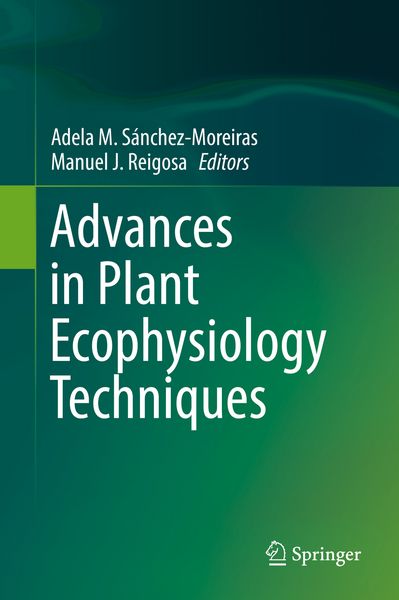
Produktbild: Advances in Plant Ecophysiology Techniques

Advances in Plant Ecophysiology Techniques

229,99 €

inkl. gesetzl. MwSt., Versandkostenfrei


Beschreibung

Produktdetails

Einband

Gebundene Ausgabe

Erscheinungsdatum

06.09.2018

Abbildungen

XI, 497 p. 110 illus., 70 illus. in color.

Herausgeber

Adela M. Sánchez-Moreiras + weitere

Verlag

Springer

Seitenzahl

497

Maße (L/B/H)

24,1/16/3,2 cm

Gewicht

1021 g

Auflage

1st edition 2018

Sprache

Englisch

ISBN

978-3-319-93232-3

Beschreibung

Portrait


Produktdetails

Einband

Gebundene Ausgabe

Erscheinungsdatum

06.09.2018

Abbildungen

XI, 497 p. 110 illus., 70 illus. in color.

Herausgeber

Verlag

Springer

Seitenzahl

497

Maße (L/B/H)

24,1/16/3,2 cm

Gewicht

1021 g

Auflage

1st edition 2018

Sprache

Englisch

ISBN

978-3-319-93232-3

Herstelleradresse

Springer-Verlag GmbH
Tiergartenstr. 17
69121 Heidelberg
DE

Email: ProductSafety@springernature.com

Noch keine Bewertungen vorhanden

Verfassen Sie die erste Bewertung zu diesem Artikel

Helfen Sie anderen Kundinnen und Kunden durch Ihre Meinung.

Kundinnen und Kunden meinen

Bewertungen (0)

  • Produktbild: Advances in Plant Ecophysiology Techniques

  • Preface.- 1. In vitro and in vivo bioassays.- 2. Root morphology.- 3. Plant photosynthetic pigments: Methods and tricks for correct quantification and identification.- 4. Measuring photosynthesis and respiration with infrared gas analysers.- 5. Chlorophyll fluorescence: a practical approach to study ecophysiology of green plants.- 6. Thermoluminescence: a tool to study ecophysiology of green plants.- 7. Determining plant water relations.- 8. Thermal imaging and infrared sensing in plant ecophysiology.- 9. Photoprotection and photo-oxidative stress markers as useful tools to unravel plant invasion success.- 10. Reactive oxygen species and antioxidant enzymatic systems in plants: role and methods.- 11. Flow cytometric measurement of different physiological parameters.- 12. Flow cytometry: cell cycle.- 13. Mitotic index.- 14. Fluorescent probes and live imaging of plant cells.- 15. Confocal and transmission electron microscopy for plant studies.- 16. Plant programmed cell death (PCD): using cell morphology as a tool to investigate plant PCD.- 17. Visualization of plant microtubules.- 18. Multiprobe in-situ hybridization to whole mount Arabidopsis seedlings.- 19. Proteomics analysis of plant tissues based on two-dimensional gel electrophoresis.- 20. Metabolomics and metabolic profiling – investigation of dynamic plant-environment interactions at the functional level.- 21. SAR / QSAR.- 22. Elucidating the phytotoxic potential of natural compounds.- 23. Exploring plants strategies for allelochemical detoxification.- 24. Chemical characterization of volatile organic compounds (VOCs) through headspace solid phase micro extraction (SPME).- 25. Carbon radiochemicals (
    14
    C) and stable isotopes (
    13
    C): crucial tools to study plant-soil interactions in ecosystems.- 26. Stable-isotope techniques to investigate sources of plant water.- 27. Soil microorganisms.- 28. Computational approach to study ecophysiology.