KI-Beratung Beta

Gutscheinbedingungen

**Gültig bis 05.10.2026 ab einem Mindestbestellwert von 30€ auf Spielzeug, Schreibwaren, Filme, Geschenke & Trends, Musik, tolino eReader & Zubehör, Hörbücher und Hörbuch-Downloads, nicht preisgebundene Bücher und Kalender online auf thalia.at und in der Thalia App. Einzelne Artikel können ausgeschlossen sein. Aufgrund der Buchpreisbindung sind deutschsprachige Bücher und eBooks ausgenommen. Zusätzlich ausgenommen sind Abos & Flatrates, Games, Geschenkkarten/-boxen, Shelfies, Software, Zeitschriften sowie einzelne Artikel von tonies®. Pro Einkauf einmal einlösbar. Nur gültig mit im Onlineshop hinterlegter Bonuscard. Click & Collect nur bei Onlinevorabzahlung möglich. Keine Barauszahlung. Nicht kombinierbar mit anderen Aktionen und Gutscheinen. Gutschein wird auf max. 500€ Bestellwert angerechnet. Nicht gültig für Versandkosten und Services. Preisgebundene Artikel sind vom Mindestbestellwert ausgeschlossen.

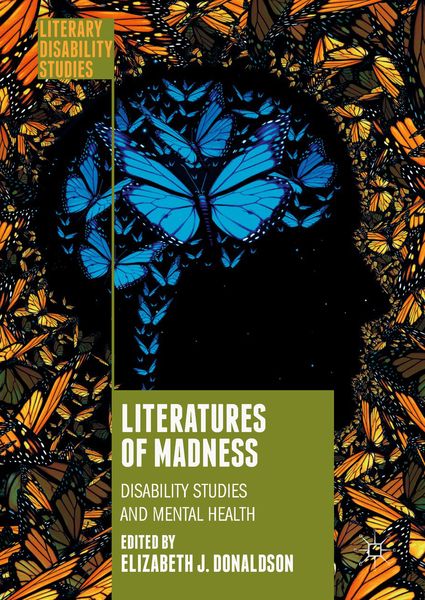
Produktbild: Literatures of Madness

Literatures of Madness Disability Studies and Mental Health

129,99 €

inkl. gesetzl. MwSt., Versandkostenfrei


Beschreibung

Produktdetails

Einband

Gebundene Ausgabe

Erscheinungsdatum

13.08.2018

Abbildungen

XV, 242 p. 5 illus.

Herausgeber

Elizabeth J. Donaldson

Verlag

Springer

Seitenzahl

242

Maße (L/B/H)

21,6/15,3/1,9 cm

Gewicht

453 g

Auflage

1st edition 2018

Sprache

Englisch

ISBN

978-3-319-92665-0

Beschreibung

Rezension

“Literatures of Madness stands as an insightful complement to pivotal mad studies volumes like Brenda A. LeFrançois, Robert Menzies, and Geoffrey Reaume's Mad Matters (2013) and Helen Spandler, Jill Anderson, and Bob Sapey'sMadness, Distress and the Politics of Disablement (2015). The collection is a productive addition to our work as mad readers and teachers, and it can only encourage us to continue learning and addressing the rhetorical and material diversity of our madnesses.” (Hayley C.


“This groundbreaking book takes as its premise a series of commitments to bridging myriad gaps, anew. In its formulations, which critique overtly but likewise adopt necessarily the specificities of academic publication requirements, a plethora of people's divergent disability (‘crip’) identities and variegated mental health/illness (‘mad’) identities no longer need to be split (no pun, here) along an already false binary line.” (Diane R.

Portrait


Elizabeth J. Donaldson
is Associate Professor of English at the New York Institute of Technology, where she directs the Medical Humanities program. She is co-editor of
The Madwoman and the Blindman:
Jane Eyre
, Discourse, Disability
(2012).


Produktdetails

Einband

Gebundene Ausgabe

Erscheinungsdatum

13.08.2018

Abbildungen

XV, 242 p. 5 illus.

Herausgeber

Elizabeth J. Donaldson

Verlag

Springer

Seitenzahl

242

Maße (L/B/H)

21,6/15,3/1,9 cm

Gewicht

453 g

Auflage

1st edition 2018

Sprache

Englisch

ISBN

978-3-319-92665-0

Herstelleradresse

Springer-Verlag GmbH
Tiergartenstr. 17
69121 Heidelberg
DE

Email: ProductSafety@springernature.com

Noch keine Bewertungen vorhanden

Verfassen Sie die erste Bewertung zu diesem Artikel

Helfen Sie anderen Kundinnen und Kunden durch Ihre Meinung.

Kundinnen und Kunden meinen

Bewertungen (0)

  • Produktbild: Literatures of Madness

  • 1. Introduction: Breathing in Airless Spaces, Elizabeth J. Donaldson.- 2. Coming Out Mad, Coming Out Disabled, Elizabeth Brewer.- 3. Going Barefoot: Mad Affiliation, Identity Politics, and Eros, PhebeAnn M. Wolframe.- 4. “Hundreds of People Like Me”: A Search for a Mad Community in
    The Bell Jar, 
    Rose Miyatsu.- 5. Writing Madness in Indigenous Literature: A Hesitation, Erin Soros.- 6. “Is the young lady mad?”: Psychiatric Disability in Louisa May Alcott’s Fiction, Karen Valerius.- 7.
    The Snake Pit
    : Mary Jane Ward’s Asylum Fiction and Mental Health Advocacy, Elizabeth J. Donaldson.
    - 
    8. Alcoholic, Mad, Disabled: Constructing Lesbian Identity in Ann Bannon’s “Beebo Brinker Chronicles”, Tatiana Prorokova.- 9. Seeing Words, Hearing Voices: Hannah Weiner, Dora García, and the Poetic Performance of Radical Dis/Humanism, Andrew McEwan.- 10. “My Difference Is Not My [Mental] Sickness”: Ethnicity and Erasure in Joanne Greenberg’s Jewish American Life Writing, Gail Berkeley Sherman.- 11. Resistance, Suffering, and Psychiatric Disability in Jerry Pinto’s
    Em and the Big Hoom
    and Amandeep Sandhu’s
    Sepia Leaves, 
    Srikanth Mallavarapu.- 12. Mental Disability and Social Value in Michelle Cliff’s
    Abeng, 
    Drew Holladay.- 13. It Doesn’t Add Up: Mental Illness in Paul Hornschemeier’s
    Mother Come Home, 
    Jessica Gross.