Gutscheinbedingungen

**Gültig bis 25.08.2026 ab einem Mindestbestellwert von 30€ auf Spielzeug, Schreibwaren, Filme, Geschenke & Trends, Musik, tolino eReader & Zubehör, Hörbücher und Hörbuch-Downloads (außer Abo), nicht preisgebundene Bücher und Kalender online auf thalia.at und in der Thalia App. Einzelne Artikel können ausgeschlossen sein. Aufgrund der Buchpreisbindung sind deutschsprachige Bücher und eBooks ausgenommen. Zusätzlich ausgenommen sind preisgebundene Artikel, Abos & Flatrates, eBooks, Games, Geschenkkarten/-boxen, Shelfies, Software, Zeitschriften sowie einzelne Artikel von tonies®. Pro Einkauf einmal einlösbar. Click & Collect nur bei Onlinevorabzahlung möglich. Keine Barauszahlung. Nicht kombinierbar mit anderen Aktionen und Gutscheinen. Gutschein wird auf max. 500€ Bestellwert angerechnet. Nicht gültig für Versandkosten und Services. Preisgebundene Artikel sind vom Mindestbestellwert ausgeschlossen.

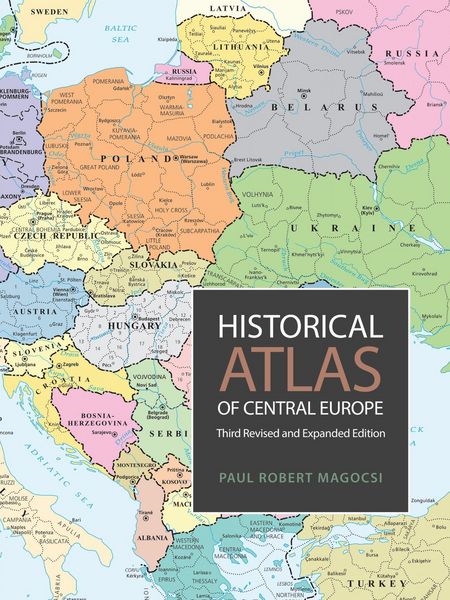
Produktbild: Historical Atlas of Central Europe

Historical Atlas of Central Europe Third Revised and Expanded Edition

74,99 €

inkl. gesetzl. MwSt., Versandkostenfrei


Beschreibung

Produktdetails

Einband

Taschenbuch

Erscheinungsdatum

12.11.2018

Verlag

University of Toronto Press

Seitenzahl

296

Maße (L/B/H)

30,7/22,8/2 cm

Gewicht

1208 g

Sprache

Englisch

ISBN

978-1-4875-2331-2

Beschreibung

Produktdetails

Einband

Taschenbuch

Erscheinungsdatum

12.11.2018

Verlag

University of Toronto Press

Seitenzahl

296

Maße (L/B/H)

30,7/22,8/2 cm

Gewicht

1208 g

Sprache

Englisch

ISBN

978-1-4875-2331-2

Herstelleradresse

Libri GmbH
Europaallee 1
36244 Bad Hersfeld
DE

Email: GPSR Kontakt

Noch keine Bewertungen vorhanden

Verfassen Sie die erste Bewertung zu diesem Artikel

Helfen Sie anderen Kundinnen und Kunden durch Ihre Meinung.

Kundinnen und Kunden meinen

Bewertungen (0)

Die Leseprobe wird geladen.
  • Produktbild: Historical Atlas of Central Europe
  • Introduction to the Original Edition
    Note to the Second Revised and Expanded Edition
    Note to the Third Revised Edition

    1. Central Europe: geographic zones
    2. Central Europe, ca. 400
    3. Central Europe, 7th-8th centuries
    4. Central Europe, 9th century
    5. Early medieval kingdoms, ca. 1050
    6. The period of feudal subdivisions, ca. 1250
    7. Poland, Lithuania, and Bohemia-Moravia, 13th-15th centuries
    8. Hungary-Croatia and Venetia, 14th-15th centuries
    9. Bulgaria, Serbia, Bosnia, and the Ottoman Empire, 14th-15th centuries
    10. Central Europe, ca. 1480
    11. Economic patterns, ca. 1450
    12. The city in medieval times
    13. Ecclesiastical jurisdictions, ca. 1450
    14. Central Europe, ca. 1570
    15. Protestant Reformation, 16th century
    16. Catholic Counter Reformation, 16th-17th centuries
    17. Education and culture through the 18th century
    18. Central Europe, 1648
    19. Poland-Lithuania, the Habsburgs, Hungary-Croatia, and Transylvania, 16th-17th centuries
    20. The Ottoman Empire, the Habsburgs, Hungary-Croatia, and Transylvania, 16th-17th centuries
    21. Central Europe, ca. 1721
    22. Poland, Austria, and the Ottoman Empire, 18th century
    23. The Napoleonic era, 1795-1814
    24. Central Europe, 1815
    25. The Austrian and Austro-Hungarian Empire, 1815-1914
    26. The Balkan Peninsula, 1817-1912
    27. The Balkan Peninsula on the eve of World War I
    28. Canal and railway development before 1914
    29. Population, 1870-1910
    30. Ethnolinguistic distribution, ca. 1900
    31. Cultural and educational institutions before 1914
    32. Germans in Central Europe, ca. 1900
    33. Jews and Armenians in Central Europe, ca. 1900
    34. The Catholic Church, 1900
    35. The Orthodox Church, 1900
    36. Central Europe, 1910
    37. World War I, 1914-1918
    38. Central Europe, 1918-1923
    39. Poland, Danzig, and Lithuania in the 20th century
    40. Belarus and Ukraine in the 20th century
    41. Czechoslovakia, the Czech Republic, and Slovakia in the 20th century
    42. Austria and Hungary in the 20th century
    43. Romania and Moldova in the 20th century
    44. Yugoslavia, Serbia, and Kosovo in the 20th century
    45. Slovenia, Trieste, and Istria in the 20th century
    46. Croatia and Bosnia-Herzegovina in the 20th century
    47. Montenegro, Albania, and Macedonia in the 20th century
    48. Bulgaria and Greece in the 20th century
    49. Central Europe, ca. 1930
    50. World War II, 1939-1942
    51. World War II, 1943-1945
    52. Central Europe after World War II
    53. Population movements, 1944-1948
    54. Population in the 20th century
    55. Ethnolinguistic distribution, ca. 2010
    56. Central Europe, 1980
    57. Industrial development, 1945-1989
    58. Education and re-education in the 20th century
    59. The Catholic Church in the 20th century
    60. The Orthodox Church in the 20th century
    61. Post-Communist Central Europe

    Map sources
    Bibliography
    Index