KI-Beratung Beta

Gutscheinbedingungen

**Gültig bis 11.11.2026 auf Spielzeug, Schreibwaren, Filme, Geschenke & Trends, Musik, tolino eReader & Zubehör, Hörbücher und Hörbuch-Downloads, nicht preisgebundene Bücher und Kalender online auf thalia.at und in der Thalia App. Einzelne Artikel können ausgeschlossen sein. Aufgrund der Buchpreisbindung sind deutschsprachige Bücher und eBooks ausgenommen. Zusätzlich ausgenommen sind Abos & Flatrates, Games, Geschenkkarten/-boxen, Shelfies, Software, Zeitschriften sowie einzelne Artikel von tonies®. Pro Einkauf einmal einlösbar. Click & Collect nur bei Onlinevorabzahlung möglich. Keine Barauszahlung. Nicht kombinierbar mit anderen Aktionen und Gutscheinen. Gutschein wird auf max. 500€ Bestellwert angerechnet. Nicht gültig für Versandkosten und Services.

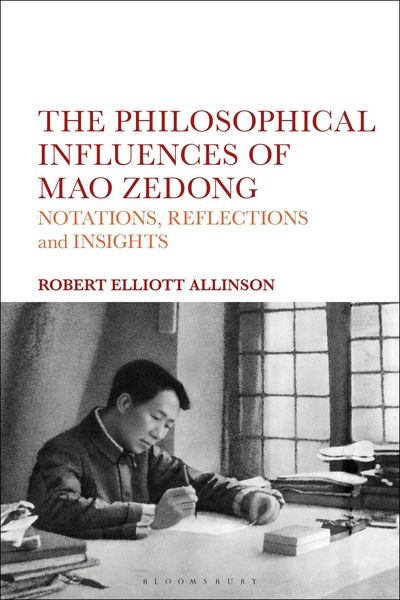
Produktbild: The Philosophical Influences of Mao Zedong

The Philosophical Influences of Mao Zedong Notations, Reflections and Insights

28,99 €

inkl. gesetzl. MwSt., zzgl. Versandkosten


  • Kostenlose Lieferung ab 30 € Einkaufswert
  • Versandkostenfrei für Bonuscard-Kund*innen

Beschreibung

This philosophical Mao is a fresh portrait of the mind of the ruler who changed the face of China in the twentieth century. The book traces the influences of both traditional Chinese and traditional pre-Marxist Western philosophy on the early Mao and how these influences guided the development of his...

Beschreibung

This philosophical Mao is a fresh portrait of the mind of the ruler who changed the face of China in the twentieth century. The book traces the influences of both traditional Chinese and traditional pre-Marxist Western philosophy on the early Mao and how these influences guided the development of his thought. It reveals evidence of the creative dimensions of Mao's thinking and how he wove the yin/yang pattern of change depicted in the Yijing, the Chinese Book of Changes, into the Marxist dialectic to bring ancient Chinese philosophy to mark changes in twentieth century thought. Mao's lifetime philosophical journey includes his interpretations of and comments on both Chinese and Western philosophers. His deep, metaphysical reflections, uncanny prognostications and pensive speculations from his early pre-Marxist period to his later philosophical years prove to be as startling as they are thought-provoking.

Rezension

Mao Ze Dong is celebrated (or cursed) as a revolutionary leader, but the philosophical foundation of his activity is largely ignored. In his superb study, Allinson fills in this lack. Mao's thought is not just located in its historical context; its complex references to the Chinese traditional thought, to Marx and Western philosophy, but also to modern sciences (quantum physics), are explored and documented. A new Mao thus emerges, a Mao whose radical acts are grounded in a thick texture of philosophical reflections. Allinson's Mao is indispensable for everybody who wants to understand not just Mao but the concatenation of philosophy and politics that characterized the twentieth century. Slavoj Zizek, International Director of the Birkbeck Institute for the Humanities, University of London, UK 20190618

Produktdetails

Einband

Taschenbuch

Erscheinungsdatum

19.09.2019

Verlag Bloomsbury
Seitenzahl

256

Produktdetails

Einband

Taschenbuch

Erscheinungsdatum

19.09.2019

Verlag Bloomsbury
Seitenzahl

256

Maße (L/B/H)

23,4/15,9/2,2 cm

Gewicht

416 g

Sprache

Englisch

ISBN

978-1-350-05985-6

Herstelleradresse

Libri GmbH
Europaallee 1
36244 Bad Hersfeld
DE

Email: gpsr@libri.de

Noch keine Bewertungen vorhanden

Verfassen Sie die erste Bewertung zu diesem Artikel

Helfen Sie anderen Kundinnen und Kunden durch Ihre Meinung.

Kundinnen und Kunden meinen

Bewertungen (0)

Die Leseprobe wird geladen.
  • Produktbild: The Philosophical Influences of Mao Zedong
  • Foreword, Irene Eber, Louis Frieberg Professor Emerita of Chinese History and Philosophy and Senior Fellow, Harry S. Truman Research Institute for the Advancement of Peace, Hebrew University of Jerusalem, Israel
    Preface
    Acknowledgements
    1. Introduction to the Philosophical Mao
    2. Mao's Youthful Philosophical Development
    3. Mao in the Margins: Mao's Philosophy of Egoism
    4. Mao's Early Philosophical Influences and Reflections
    5. The Blend of the Influence of Chinese and Western philosophy on Mao's Thought and Parallels in China's Social and Economic Development
    6. Mao's Marxist Thought and the Yijing
    7. Mao as Metaphysician and Literatus
    8. Mao's Contributions to Philosophy
    Notes
    Selected List of References
    Index