KI-Beratung Beta

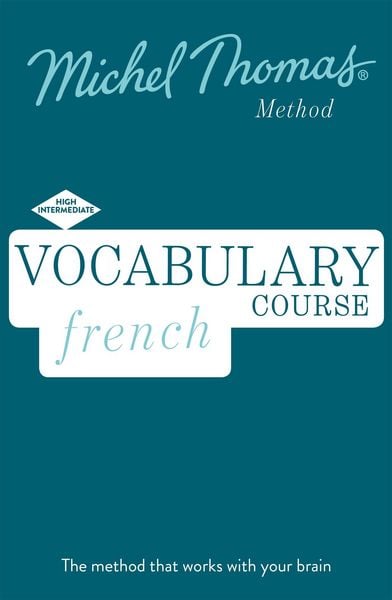
Produktbild: Vocabulary French (Learn French with the Michel Thomas Method)

Vocabulary French (Learn French with the Michel Thomas Method)

74,99 €

inkl. gesetzl. MwSt., Versandkostenfrei


Beschreibung

Produktdetails

Spieldauer

5 Stunden

Erscheinungsdatum

21.05.2019

Hörtyp

Lesung

Fassung

ungekürzt

Medium

CD

Verlag

John Murray Press

Sprache

Englisch

EAN

9781473692732

Beschreibung

Produktdetails

Spieldauer

5 Stunden

Erscheinungsdatum

21.05.2019

Hörtyp

Lesung

Fassung

ungekürzt

Medium

CD

Verlag

John Murray Press

Sprache

Englisch

EAN

9781473692732

Herstelleradresse

Libri GmbH
Europaallee 1
36244 Bad Hersfeld
DE

Email: gpsr@libri.de

Noch keine Bewertungen vorhanden

Verfassen Sie die erste Bewertung zu diesem Artikel

Helfen Sie anderen Kundinnen und Kunden durch Ihre Meinung.

Kundinnen und Kunden meinen

Bewertungen (0)

  • Produktbild: Vocabulary French (Learn French with the Michel Thomas Method)
    • : Introduction: How this course came about, what it does and does not include, how it works, and how it is both faithful to and expands upon the Michel Thomas Language Courses
    • : 1 WHAT YOU ALREADY KNOW - COGNATES
    • : Introduction
    • : Transformation of adjectives ending in -ible
    • : Transformation of adjectives ending in -able
    • : Formation of adjectives ending in -able from -er verbs
    • : Transformation of adjectives beginning with un- and in-
    • : Formation of adjectives ending in -able from -oir, -re and -ir verbs
    • : Transformation of adjectives and nouns ending in -ant
    • : Transformation of adjectives and nouns ending in -ent
    • : Transformation of nouns ending in -tion
    • : Transformation of nouns ending in -sion
    • : Transformation of nouns ending in -ance and -ence
    • : Transformation of nouns ending in -er and -ist
    • : Further transformation of nouns ending in -ance
    • : Transformation of adverbs in -ly
    • : Transformation of adjectives and nouns ending in -ary and -ory
    • : Transformation of adjectives ending in -ive
    • : Transformation of adjectives ending in -ous
    • : Transformation of adjectives ending in -ic and -ical and nouns ending in -ic and -ics
    • : Transformation of nouns ending in -ure
    • : Transformation of nouns ending in -tude
    • : Transformation of nouns ending in -ity
    • : Further transformation of some nouns ending in -y
    • : Transformation of nouns ending in -in and -ine
    • : Transformation of adjectives ending in -ide
    • : Transformation of nouns ending in -ism and -ist
    • : Transformation of adjectives ending in -al
    • : Conclusion.
    • : 2 BEING ON THE RIGHT TRACK - VERBS
    • : Introduction
    • : Verbs in «-er» - present, imperfect and conditional
    • : Verbs in «-er» - imperfect and perfect with être and avoir
    • : Etre en train de, être sur le point de, venir de
    • : Verbs in « -ir » of the « ouvrir », « sortir » and « venir » types
    • : Verbs in « -ir » of the « finir »; en + present participle
    • : Verbs in -re
    • : Verbs in -uire and -ire
    • : Everyday verbs and semi-idiomatic usages: prendre, dire
    • : Further everyday verbs: boire, croire, faire, « savoir » and « connaître »
    • : Reflexive verbs.
    • : 3 EVERYDAY EXPRESSIONS
    • : Common constructions : verbs with à, de and sur
    • : Vouloir dire
    • : Expressions of time: depuis, pendant, il y a, en, dans, avant and après
    • : Talking about days of the week, months and seasons
    • : Telling the time
    • : Expressions of place: -ci and -là, loin and près, à gauche and à droite », « devant » and « derrière », « dessus » and « dessous »
    • : Expressions of quantity : « quelque », « du », « de la », the pronoun « en », « assez », « la plupart de »
    • : Talking about numbers
    • : « Il faut »
    • : The pronoun « y »
    • : « Avoir » and semi-idiomatic expressions
    • : « Etre » and semi-idiomatic expressions
    • : Using negatives: ne ... pas, ne ... plus, ne ... rien, ne ... personne, non ... plus, ni ... ni, ne ... que.
    • : Adjective changing their meaning before the noun : ancien, certain, cher, propre
    • : Making comparisons
    • : Adding emphasis: voici and voilà, c'est ... qui, ce qui, ce que
    • : Using on
    • : Talking about people: using gens and personnes
    • : Talking about opposites
    • : Giving approximations