Beschreibung
Produktdetails
Einband
Taschenbuch
Erscheinungsdatum
29.05.2019
Abbildungen
farbige Illustrationen, schwarz-weiss Illustrationen
Verlag
Wiley-VCHSeitenzahl
416
Maße (L/B/H)
24,5/17,2/3,8 cm
Gewicht
812 g
Auflage
1. Auflage
Sprache
Englisch
ISBN
978-3-527-34577-9
Comprehensively teaches all of the fundamentals of fragrance chemistry
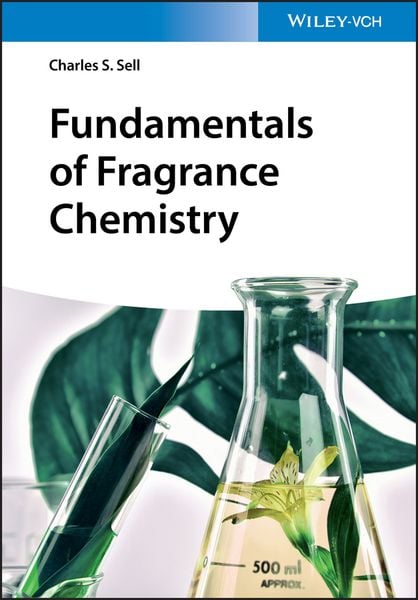
Ernest Beaux, the perfumer who created Chanel No. 5, said, "One has to rely on chemists to find new aroma chemicals creating new, original notes. In perfumery, the future lies primarily in the hands of chemists." This book provides chemists and chemists-to-be with everything they need to know in order to create welcome new fragrances for the world to enjoy. It offers a simplified introduction into organic chemistry, including separation techniques and analytical methodologies; discusses the structure of perfume creation with respect to the many reactive ingredients in consumer products; and shows how to formulate effective and long-lasting scents.
Fundamentals of Fragrance Chemistry starts by covering the structure of matter in order to show how its building blocks are held together. It continues with chapters that look at hydrocarbons and heteroatoms. A description of the three states of matter and how each can be converted into another is offered next, followed by coverage of separation and purification of materials. Other chapters examine acid/base reactions; oxidation and reduction reactions; perfume structure; the mechanism of olfaction; natural and synthetic fragrance ingredients; and much more.
-Concentrates on aspects of organic chemistry, which are of particular importance to the fragrance industry
-Offers non-chemists a simplified yet complete introduction to organic chemistry?from separation techniques and analytical methodologies to the structure of perfume creation
-Provides innovative perfumers with a framework to formulate stable fragrances from the myriad of active ingredients available
-Looks at future trends in the industry and addresses concerns about sustainability and quality management
Fundamentals of Fragrance Chemistry is an ideal resource for students who are new to the subject, as well as for chemists and perfumers already working in this fragrant field of science.
Ernest Beaux, the perfumer who created Chanel No. 5, said, "One has to rely on chemists to find new aroma chemicals creating new, original notes. In perfumery, the future lies primarily in the hands of chemists." This book provides chemists and chemists-to-be with everything they need to know in order to create welcome new fragrances for the world to enjoy. It offers a simplified introduction into organic chemistry, including separation techniques and analytical methodologies; discusses the structure of perfume creation with respect to the many reactive ingredients in consumer products; and shows how to formulate effective and long-lasting scents.
Fundamentals of Fragrance Chemistry starts by covering the structure of matter in order to show how its building blocks are held together. It continues with chapters that look at hydrocarbons and heteroatoms. A description of the three states of matter and how each can be converted into another is offered next, followed by coverage of separation and purification of materials. Other chapters examine acid/base reactions; oxidation and reduction reactions; perfume structure; the mechanism of olfaction; natural and synthetic fragrance ingredients; and much more.
-Concentrates on aspects of organic chemistry, which are of particular importance to the fragrance industry
-Offers non-chemists a simplified yet complete introduction to organic chemistry?from separation techniques and analytical methodologies to the structure of perfume creation
-Provides innovative perfumers with a framework to formulate stable fragrances from the myriad of active ingredients available
-Looks at future trends in the industry and addresses concerns about sustainability and quality management
Fundamentals of Fragrance Chemistry is an ideal resource for students who are new to the subject, as well as for chemists and perfumers already working in this fragrant field of science.
Kundinnen und Kunden meinen
Verfassen Sie die erste Bewertung zu diesem Artikel
Helfen Sie anderen Kund*innen durch Ihre Meinung
Kurze Frage zu unserer Seite
Vielen Dank für Ihr Feedback
Wir nutzen Ihr Feedback, um unsere Produktseiten zu verbessern. Bitte haben Sie Verständnis, dass wir Ihnen keine Rückmeldung geben können. Falls Sie Kontakt mit uns aufnehmen möchten, können Sie sich aber gerne an unseren Kund*innenservice wenden.
zum Kundenservice