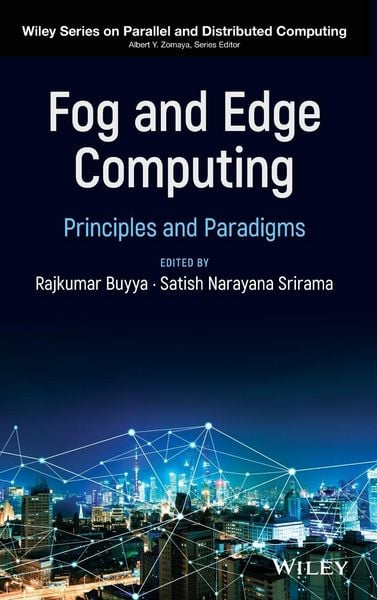
Fog and Edge Computing Principles and Paradigms
-
- Englisch ausgewählt
138,99 €
inkl. gesetzl. MwSt.,
Beschreibung
Produktdetails
Einband
Gebundene Ausgabe
Erscheinungsdatum
30.01.2019
Herausgeber
Rajkumar Buyya + weitereVerlag
John Wiley & SonsSeitenzahl
512
Maße (L/B/H)
23,5/15,7/3,2 cm
Gewicht
878 g
Auflage
1. Auflage
Sprache
Englisch
ISBN
978-1-119-52498-4
A comprehensive guide to Fog and Edge applications, architectures, and technologies
Recent years have seen the explosive growth of the Internet of Things (IoT): the internet-connected network of devices that includes everything from personal electronics and home appliances to automobiles and industrial machinery. Responding to the ever-increasing bandwidth demands of the IoT, Fog and Edge computing concepts have developed to collect, analyze, and process data more efficiently than traditional cloud architecture.
Fog and Edge Computing: Principles and Paradigms provides a comprehensive overview of the state-of-the-art applications and architectures driving this dynamic field of computing while highlighting potential research directions and emerging technologies.
Exploring topics such as developing scalable architectures, moving from closed systems to open systems, and ethical issues rising from data sensing, this timely book addresses both the challenges and opportunities that Fog and Edge computing presents. Contributions from leading IoT experts discuss federating Edge resources, middleware design issues, data management and predictive analysis, smart transportation and surveillance applications, and more. A coordinated and integrated presentation of topics helps readers gain thorough knowledge of the foundations, applications, and issues that are central to Fog and Edge computing. This valuable resource:
- Provides insights on transitioning from current Cloud-centric and 4G/5G wireless environments to Fog Computing
- Examines methods to optimize virtualized, pooled, and shared resources
- Identifies potential technical challenges and offers suggestions for possible solutions
- Discusses major components of Fog and Edge computing architectures such as middleware, interaction protocols, and autonomic management
- Includes access to a website portal for advanced online resources
Fog and Edge Computing: Principles and Paradigms is an essential source of up-to-date information for systems architects, developers, researchers, and advanced undergraduate and graduate students in fields of computer science and engineering.
Noch keine Bewertungen vorhanden
Verfassen Sie die erste Bewertung zu diesem Artikel
Helfen Sie anderen Kundinnen und Kunden durch Ihre Meinung.
Kurze Frage zu unserer Seite
Vielen Dank für Ihr Feedback
Wir nutzen Ihr Feedback, um unsere Produktseiten zu verbessern. Bitte haben Sie Verständnis, dass wir Ihnen keine Rückmeldung geben können. Falls Sie Kontakt mit uns aufnehmen möchten, können Sie sich aber gerne an unseren Kund*innenservice wenden.
zum Kundenservice