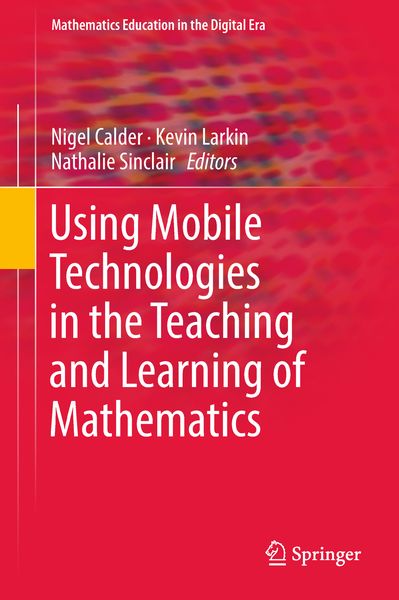
Using Mobile Technologies in the Teaching and Learning of Mathematics
-
- Hardcover ausgewählt
- Taschenbuch
- eBook
-
Sprache:Englisch
149,99 €
inkl. gesetzl. MwSt.,
Beschreibung
Produktdetails
Einband
Gebundene Ausgabe
Erscheinungsdatum
17.08.2018
Abbildungen
VII, 323 p. 84 illus., 54 illus. in color.
Herausgeber
Nigel Calder + weitereVerlag
SpringerSeitenzahl
323
Maße (L/B/H)
24,1/16/2,4 cm
Gewicht
612 g
Auflage
1st ed. 2018
Sprache
Englisch
ISBN
978-3-319-90178-7
Mobile technologies influence the way that we interact with the world, the way that we live. We use them for communication, entertainment, information and research. In education settings, there has been substantial investment in mobile devices, often without a concomitant investment in developing pedagogy and practices. With mobile technologies evolving rapidly, and the number of educational apps growing, there is a need for research into how they facilitate mathematics learning. Such research is of particular importance regarding how such devices may be used to open up new ways of envisaging mathematics and mathematics education, and to help develop conceptual rather than procedural or declarative knowledge.
This volume draws upon international research and reports on a range of research projects that have incorporated mobile technologies for mathematics education. It presents research on the use of mobile technologies, such as iPads, iPods, iPhones, Androids,and Tablets, across a diverse range of cultures, year levels and contexts. It examines the ways in which mobile technologies, including apps, might influence students’ engagement, cognition, collaboration and attitudes, through the reshaping of the learning experience. In addition, the book presents appropriate ways to integrate mobile technologies into teaching and learning programmes.
It is a significant reference book for those involved with teaching mathematics or using mobile technologies in education, while also offering insights and examples that are applicable to the use of digital technologies in education generally.
Noch keine Bewertungen vorhanden
Verfassen Sie die erste Bewertung zu diesem Artikel
Helfen Sie anderen Kundinnen und Kunden durch Ihre Meinung.
Kurze Frage zu unserer Seite
Vielen Dank für Ihr Feedback
Wir nutzen Ihr Feedback, um unsere Produktseiten zu verbessern. Bitte haben Sie Verständnis, dass wir Ihnen keine Rückmeldung geben können. Falls Sie Kontakt mit uns aufnehmen möchten, können Sie sich aber gerne an unseren Kund*innenservice wenden.
zum Kundenservice