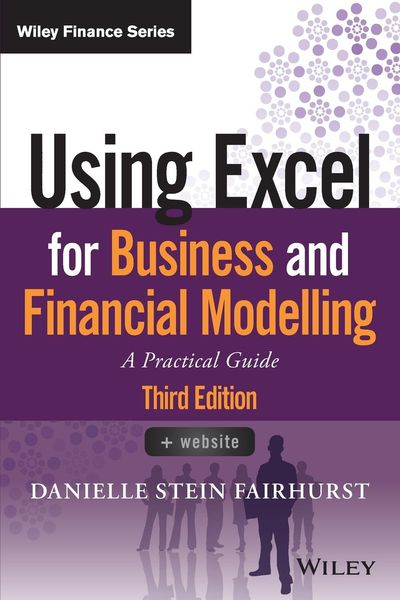
Using Excel for Business and Financial Modelling A Practical Guide
Aus der Reihe
Wiley Finance
-
- Englisch ausgewählt
89,99 €
inkl. gesetzl. MwSt.,
Beschreibung
Produktdetails
Einband
Taschenbuch
Erscheinungsdatum
05.04.2019
Verlag
John Wiley & Sons IncSeitenzahl
424
Maße (L/B/H)
22,9/15,2/2,3 cm
Gewicht
612 g
Auflage
3. Auflage
Sprache
Englisch
ISBN
978-1-119-52038-2
A hands-on guide to using Excel in the business context
First published in 2012, Using Excel for Business and Financial Modelling contains step-by-step instructions of how to solve common business problems using financial models, including downloadable Excel templates, a list of shortcuts and tons of practical tips and techniques you can apply straight away.
Whilst there are many hundreds of tools, features and functions in Excel, this book focuses on the topics most relevant to finance professionals. It covers these features in detail from a practical perspective, but also puts them in context by applying them to practical examples in the real world. Learn to create financial models to help make business decisions whilst applying modelling best practice methodology, tools and techniques.
* Provides the perfect mix of practice and theory
* Helps you become a DIY Excel modelling specialist
* Includes updates for Excel 2019/365 and Excel for Mac
* May be used as an accompaniment to the author's online and face-to-face training courses
Many people are often overwhelmed by the hundreds of tools in Excel, and this book gives clarity to the ones you need to know in order to perform your job more efficiently. This book also demystifies the technical, design, logic and financial skills you need for business and financial modelling.
First published in 2012, Using Excel for Business and Financial Modelling contains step-by-step instructions of how to solve common business problems using financial models, including downloadable Excel templates, a list of shortcuts and tons of practical tips and techniques you can apply straight away.
Whilst there are many hundreds of tools, features and functions in Excel, this book focuses on the topics most relevant to finance professionals. It covers these features in detail from a practical perspective, but also puts them in context by applying them to practical examples in the real world. Learn to create financial models to help make business decisions whilst applying modelling best practice methodology, tools and techniques.
* Provides the perfect mix of practice and theory
* Helps you become a DIY Excel modelling specialist
* Includes updates for Excel 2019/365 and Excel for Mac
* May be used as an accompaniment to the author's online and face-to-face training courses
Many people are often overwhelmed by the hundreds of tools in Excel, and this book gives clarity to the ones you need to know in order to perform your job more efficiently. This book also demystifies the technical, design, logic and financial skills you need for business and financial modelling.
Kundinnen und Kunden meinen
Verfassen Sie die erste Bewertung zu diesem Artikel
Helfen Sie anderen Kund*innen durch Ihre Meinung
Kurze Frage zu unserer Seite
Vielen Dank für Ihr Feedback
Wir nutzen Ihr Feedback, um unsere Produktseiten zu verbessern. Bitte haben Sie Verständnis, dass wir Ihnen keine Rückmeldung geben können. Falls Sie Kontakt mit uns aufnehmen möchten, können Sie sich aber gerne an unseren Kund*innenservice wenden.
zum Kundenservice