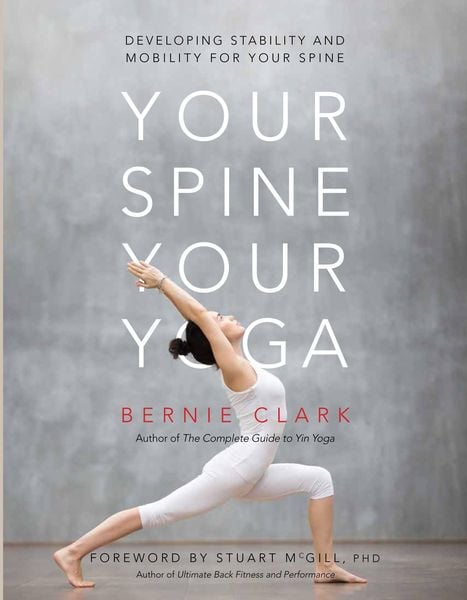
Produktbild: Your Spine, Your Yoga

Your Spine, Your Yoga Developing stability and mobility for your spine

29,99 €

inkl. gesetzl. MwSt., zzgl. Versandkosten


  • Kostenlose Lieferung ab 30 € Einkaufswert
  • Versandkostenfrei für Bonuscard-Kund*innen

Beschreibung

Produktdetails

Verkaufsrang

23475

Einband

Taschenbuch

Erscheinungsdatum

01.11.2018

Abbildungen

Illustrations, unspecified

Herausgeber

McCall Timothy

Verlag

Wild Strawberry

Maße (L/B/H)

27,9/21,5/2 cm

Gewicht

970 g

Sprache

Englisch

ISBN

978-0-9687665-5-2

Beschreibung

Produktdetails

Verkaufsrang

23475

Einband

Taschenbuch

Erscheinungsdatum

01.11.2018

Abbildungen

Illustrations, unspecified

Herausgeber

McCall Timothy

Verlag

Wild Strawberry

Maße (L/B/H)

27,9/21,5/2 cm

Gewicht

970 g

Sprache

Englisch

ISBN

978-0-9687665-5-2

Herstelleradresse

Libri GmbH
Europaallee 1
36244 Bad Hersfeld
DE

Email: gpsr@libri.de

Noch keine Bewertungen vorhanden

Verfassen Sie die erste Bewertung zu diesem Artikel

Helfen Sie anderen Kundinnen und Kunden durch Ihre Meinung.

Kundinnen und Kunden meinen

Bewertungen (0)

Weitere Artikel finden Sie in

Die Leseprobe wird geladen.
  • Produktbild: Your Spine, Your Yoga
  • Table of Contents for Your Spine, Your Yoga
    Gratitude
    How to read this book
    Preface
    Foreword
    Summary of key concepts
    Intentions

    Chapter 1: The axial body
    Overview of the axial body
    • Axial landmarks
    • Spinal segments
    • Variations of the spine
    • Curves of the spine
    • Posture perfect?
    • Bones of the axis
    • Ligaments and fascia
    • Movements of the spine
    • The kinds of stress in the spine
    • Spinal nerves and neurodynamics
    Overview summary

    Chapter 2: The sacral complex

    Form
    • The architecture of the sacral complex
    • Bones and cartilage
    • Joints and ligaments
    • Muscles of the sacral complex
    • Fascial trains of the sacral complex
    Function: Application in yoga postures
    • Normal ranges of motion within the sacral complex
    • Stressing and supporting the sacroiliac joint in yoga postures
    • Normal ranges of motion of the whole sacral complex
    Sacral complex summary

    Chapter 3: The lumbar segment

    Form
    • The architecture of the lumbar segment
    • The bones of the lumbar segment
    • Axial fascia and muscles
    • Lumbar and thoracic muscles
    Function: application in yoga postures
    • Normal ranges of motion
    • Sources of tension
    • Sources of compression
    • Variation in ranges of motion for flexion and extension
    • Yoga and the lumbar spine
    The lumbar spine summary

    The thoracic spinal segment

    Form
    • The architecture of the thoracic spine
    • The bones of the thorax
    • Joints and ligaments
    • Thoracic fascia
    • Thoracic muscles
    Function: application in yoga postures
    • Normal ranges of motion
    • Sources of tension
    • Sources of compression
    • Variation in ranges of motion for twists and side bends
    • Biomechanics of the breath and its variations
    Thoracic spine summary

    The Cervical Complex

    Form
    • The Architecture of the cervical spine
    • The bones of the cervical complex
    • Joints and ligaments
    • Muscles of the cervical complex
    • Fascia of the cervical complex
    Function: application in yoga postures
    • Normal ranges of motion
    • Movements and their restrictions: tensions and compressions
    • Variation in ranges of motion
    Cervical spine summary

    Volume 3: Summary

    Major Sidebars

    It’s important
    The flaw of averages
    The myth of the static ideal
    Where is the neutral spine?
    The myth of the static ideal
    What does "stable" mean?
    Early morning yoga and yoga after sitting
    Stress, stretch, flexibility, mobility and hypermobility
    Defining some terms
    Yoga poses, sitting postures and sleeping position can overstretch nerves
    Yoga and the sacral complex
    In standing yoga postures, should we tuck the tailbone?
    Defining the core muscles
    Stiffness and stability
    Our orientation to gravity affects the amount of stress on the spine
    Different yoga postures stress the vertebral discs in different ways
    Avoid twisting the spine when it is flexed or extended and under load
    For deeper backbends, relax the extensor muscles!
    Bracing and Spacing
    Building endurance
    Of bent knees and straight spines
    Maintaining our vital capacity as we age
    Slowing the breath is better than deepening the breath
    Galileo, scaling laws and Headstand
    The vertebral arteries
    As you get older, be careful of weight bearing neck movements!
    Returning the head to neutral
    Shoulder stand—a high risk, low reward posture
    Headstand—a high risk, low reward posture

    It’s complicated
    Statistics
    Approximation and Distraction
    Shear is stressful
    Naming the nerves and their routes
    The sciatic nerve
    Force closure and form closure
    Details of the sacrum
    The perineum
    The ways the sacrum moves
    Does the sacrum nutate or counternutate in backbends?
    Is it possible to therapeutically adjust the sacrum?
    Changing the alignment of your hips before twisting
    Snaps, cracks and pops—noisy sacrum
    Lumbar lordosis in sports
    Variations between the lumbar vertebrae
    The spines of contortionists
    Deep fascia and aponeuroses
    The strength and stiffness of the spinal ligaments
    A functional view of the erector spinae
    The strength of the back muscles
    How can our spines lift heavy loads?
    How much stress can our spines tolerate?
    Variations of the thoracic vertebrae
    The diaphragm pulls and pushes on the heart
    Membranes and ligaments between the skull and neck
    Coupled movements
    The neck does not move as one unit
    Whiplash and sports trauma

    Note to teachers
    Learning to sense the spine
    To hinge or not to hinge?
    A philosophy for counterposes
    Moola bandha and Kegel exercises
    Can you feel relative movements of the ilia or of the sacrum?
    Stress, twists and the sacroiliac joint
    Don’t be fooled by the apparent curve in the lower back!
    We cannot isolate and activate individual muscles
    Watch your students!
    Keep watching your students!
    A flat back does not create a neutral spine
    Strengthening the bones of the spine
    Combatting hyperkyphosis
    Sometimes it is okay to do only one side of a pose!
    Variation in breast size will affect some women’s yoga practice
    Movement can enhance breath, breath can enhance movement—sometimes!
    Jalandhara bandha

    Web appendices
    Measuring the curves of the spine
    Body size and spinal curves
    Orientation of the facets
    Creep and counterposes
    Thickness of the discs and vertebral bodies
    Hypermobility and Yin Yoga
    Spinal biotensegrity
    Variations in the shapes and sizes the auricular area of the sacroiliac joint
    Pelvic parameters and variations
    Accessory joints of the sacral complex
    Myofascial meridians
    Sacral, low back and neck pain and problems
    Moment arms, torque and force
    Wedging of the vertebrae and discs
    Alignment of the spinous processes
    Prying open the anterior discs in deep backbends
    The thoracolumbar fascial train
    More on the strength of the spinal ligaments
    Folding forward with arms overhead increases stress in the spine
    Axial rotation and lateral flexion can create flexion and extension
    How yoga affects our blood chemistry
    Other anterior neck muscles
    Muscles of the face and jaw