KI-Beratung Beta

Gutscheinbedingungen

**Gültig am 20.11.2026 ab einem Mindestbestellwert von 30€ auf Spielzeug, Schreibwaren, Filme, Geschenke & Trends, Musik, tolino eReader & Zubehör, Hörbücher und Hörbuch-Downloads, nicht preisgebundene Bücher und Kalender online auf thalia.at und in der Thalia App. Einzelne Artikel können ausgeschlossen sein. Aufgrund der Buchpreisbindung sind deutschsprachige Bücher und eBooks ausgenommen. Zusätzlich ausgenommen sind Abos & Flatrates, Games, Geschenkkarten/-boxen, Shelfies, Software, Zeitschriften sowie einzelne Artikel von tonies®. Pro Einkauf einmal einlösbar. Click & Collect nur bei Onlinevorabzahlung möglich. Keine Barauszahlung. Nicht kombinierbar mit anderen Aktionen und Gutscheinen. Gutschein wird auf max. 500€ Bestellwert angerechnet. Nicht gültig für Versandkosten und Services. Preisgebundene Artikel sind vom Mindestbestellwert ausgeschlossen.

Produktbild: Polyphenols: Prevention and Treatment of Human Disease

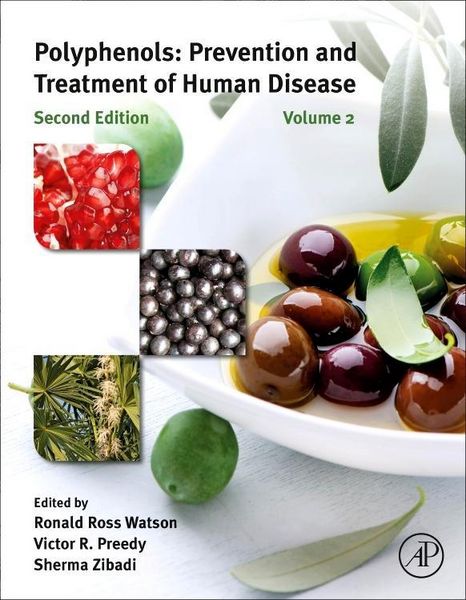
Polyphenols: Prevention and Treatment of Human Disease

215,99 €

inkl. gesetzl. MwSt., Versandkostenfrei


Beschreibung

Polyphenols in Prevention and Treatment of Human Disease, Second Edition authoritatively covers evidence of the powerful health benefits of polyphenols, touching on cardiovascular disease, cancer, obesity, diabetes and osteoporosis. This collection represents the contributions of an international group...

Beschreibung

Polyphenols in Prevention and Treatment of Human Disease, Second Edition authoritatively covers evidence of the powerful health benefits of polyphenols, touching on cardiovascular disease, cancer, obesity, diabetes and osteoporosis. This collection represents the contributions of an international group of experts in polyphenol research who share their expertise in endocrinology, public health, cardiology, pharmacology, agriculture and veterinary science. Researchers from diverse backgrounds will gain insight into how clinical observations and practices can feed back into the research cycle, thus allowing them to develop more targeted insights into the mechanisms of disease.

This reference fills a void in research where nutritionists and alternative therapies may be applicable.

Portrait

Ronald Ross Watson, PhD, is Professor of Health Promotion Sciences at the University of Arizona, Mel and Enid Zuckerman College of Public Health. Dr. Watson began his research in public health at the Harvard School of Public Health as a Fellow in 1971 doing field work on vaccines in Saudi Arabia. He has done clinical studies in Colombia, Iran, Egypt, Saudi Arabia and the United States which provides a broad international view of public health. He has served in the military reserve hospital for 17 years with extensive training in medical responses to disasters as the chief biochemistry officer of a general hospital, retiring as a Lt. Colonel. He is a distinguished member of several national and international nutrition, immunology, and cancer societies. Dr. Watson's career has involved studying many lifestyle aspects for their uses in health promotion. He has edited over 100 biomedical reference books and 450 papers and chapters. His teaching and research focuses on alcohol, tobacco, and drugs of abuse in heart function and disease in mouse models.

Victor R. Preedy, BSc, PhD, DSc, FRSB, FRSPH, FRCPath, FRSC, FRSM, is Professor of Clinical Biochemistry (Hon) at King's College Hospital and Emeritus Professor of Nutritional Biochemistry at King's College London. He also holds an Honorary Professorship at the University of Suffolk and served as the long-term Director of the Genomics Centre at King's College London from 2006 to 2020. Professor Preedy graduated with an Honours Degree in Biology and Physiology with Pharmacology and later obtained his PhD from the University of London. He subsequently received Membership of the Royal College of Pathologists and later earned his second doctorate (DSc) in recognition of his contributions to protein metabolism. He is a Fellow of the Royal Society of Medicine, the Royal Society of Biology, the Royal College of Pathologists, the Royal Society for the Promotion of Health, the Royal Institute of Public Health and Hygiene, the Royal Society for Public Health, and the Royal Society of Chemistry. Professor Preedy has conducted research while affiliated with Imperial College London, the School of Pharmacy (now part of University College London), and the MRC Centre at Northwick Park Hospital. He has collaborated widely with international research groups in Finland, Japan, Australia, the USA, and Germany. His longstanding academic interests include health and well-being. He has published more than 750 works, including peer-reviewed research articles, abstracts, symposium presentations, reviews, and edited books.

Dr. Sherma Zibadi received her Ph.D. in Nutritional Sciences from the University of Arizona. Her medical degree and training were done at the Mashhad University of Medical Sciences. She then completed her post-doctoral research fellowship awarded by the American Heart Association where her research involved cardiology and complementary medicine studies. Her research has involved maladaptive cardiac remodeling process, which helps to identify new targets for treatment of heart failure. Dr. Zibadi's research interest also extends into foods as medicines, exploring the preventive and therapeutic effects of dietary supplements on heart failure and its major risk factors in both basic animal and clinical studies, translating lab research findings into clinical practice. Dr. Zibadi is an author of more than 35 research papers in peer reviewed journals. She has been an editor on 8 scientific books like this one being proposed. She has edited on a variety of clinical topics: breast milk, bottle feeding, wheat and rice in health, polyphenols and health, omega 3 fatty acids, dietary supplements in immune modulation, and dietary fat and health. She and Dr. Watson have collaborated extensively on both laboratory research and editing.
Produktdetails

Einband

Gebundene Ausgabe

Erscheinungsdatum

15.08.2018

Herausgeber Ronald Ross Watson + weitere
Verlag Elsevier LTD, Oxford

Produktdetails

Einband

Gebundene Ausgabe

Erscheinungsdatum

15.08.2018

Herausgeber
Verlag Elsevier LTD, Oxford
Seitenzahl

484

Maße (B/H)

21,6/27,6 cm

Gewicht

1520 g

Auflage

2. Auflage

Sprache

Englisch

ISBN

978-0-12-813008-7

Noch keine Bewertungen vorhanden

Verfassen Sie die erste Bewertung zu diesem Artikel

Helfen Sie anderen Kundinnen und Kunden durch Ihre Meinung.

Kundinnen und Kunden meinen

Bewertungen (0)

Die Leseprobe wird geladen.
  • Produktbild: Polyphenols: Prevention and Treatment of Human Disease
  • 1. The Pharmacology of Avenanthramides: Polyphenols
    2. Folate Production by Lactic Acid Bacteria
    3. A Triterpenoid Commonly Found in Human Diet: Ursolic Acid
    4. The Major Flavonoid of Grapefruit: Naringin
    5. Structural Evaluation and Toxicological Study of a Bitter Masking Bioactive Flavanone, 'Eriodictyol'
    6. Postprandial Effects of Wine Consumption Along with a Meal on the Main Pathophysiological Systems
    7. Cellular and Molecular Mechanisms of Polyphenol-Induced Beneficial Effects on Cardiac Remodeling
    8. Effect of Cranberry Polyphenols and Metabolites on Microbial Activity and Impact on Urinary Tract Health
    9. Cranberry Polyphenols: Effects on Cardiovascular Risk Factors
    10. An Insight of Polyphenols in Lung Cancer Chemoprevention
    11. Mushroom Polyphenols as Chemopreventive Agents
    12. Pleiotropic Molecular Effects of Dietary Polyphenols Resveratrol and Apigeninin Leukemia
    13. The Polyphenolic Compound Apigenin and Applications to Cervical Cancer
    14. An Outside-In and a Reciprocal Inside-Out Hypothesis Combining Resveratrol and Its High Affinity Protein NQO2 to Target iASPP for Reinstating the Activation and Stabilization of Dysfunctional WTp53 as a Melanoma Chemopreventive Approach
    15. Counteracting Resistance to BRAF V600E Mutation in Melanoma Using Dietary Polyphenols
    16. Role of Natural Compounds in Prevention and Treatment of Chronic Lymphocytic Leukemia
    17. Polyphenols and Breast Cancer Prevention-A Summary of the Epidemiologic Evidence
    18. Resveratrol Inhibitory Effects Against a Malignant Tumor: A Molecular Insight
    19. Biological Activity of Resveratrol on an Ovarian Cancer Cell 231
    20. Antiarthritic Effects of Turmeric and Curcumin: A Revisit
    21. Effects of Polyphenols on Inflammatory-Allergic Conditions: Experimental and Clinical Evidences
    22. Polyphenols and Immune System
    23. Antioxidants and Polyphenols in Inflammatory Bowel Disease: Ulcerative Colitis and Crohn Disease
    24. Red Propolis: Phenolics, Polyphenolics, and Applications to Microbiological Health and Disease
    25. Viral Disease and Use of Polyphenolic Compounds
    26. Hepatoprotective Effects of Curcumin in Alcohol-Induced Hepatotoxicity: A Memoir on the Preclinical Studies
    27. Turmeric and Its Principal Polyphenol Curcumin as a Nontoxic Gastroprotective Agent: Recent Update
    28. Anti-inflammatory, Immunomodulatory, and Prebiotic Properties of Dietary Flavonoids
    29. Polyphenols and Polyphenol-Derived Compounds from Plants and Contact Dermatitis 349
    30. Plant Polyphenols: The Futuristic Bioactive Therapeutics for Skin Care
    31. Antiinflammatory Activity of Polyphenols on Dendritic Cells
    32. Effects and Usage of a Citrus Compound, Limonene
    33. A Phytoestrogen Puerarin and Its Health Effects
    34. Galangin as a Plant Phenolic and Usage in Health and Disease
    35. Can Green Tea Polyphenols Improve Phenotypes Associated with Down Syndrome?