Gutscheinbedingungen

**Gültig am 28.06.2026 auf Spielzeug, Schreibwaren, Filme, Geschenke & Trends, Musik, tolino eReader & Zubehör, Hörbücher und Hörbuch-Downloads (außer Abo), nicht preisgebundene Bücher und Kalender online auf thalia.at und in der Thalia App. Einzelne Artikel können ausgeschlossen sein. Aufgrund der Buchpreisbindung sind deutschsprachige Bücher und eBooks ausgenommen. Zusätzlich ausgenommen sind preisgebundene Artikel, Abos & Flatrates, eBooks, Games, Geschenkkarten/-boxen, Shelfies, Software, Zeitschriften sowie einzelne Artikel von tonies®. Pro Einkauf einmal einlösbar. Click & Collect nur bei Onlinevorabzahlung möglich. Keine Barauszahlung. Nicht kombinierbar mit anderen Aktionen und Gutscheinen. Gutschein wird auf max. 500€ Bestellwert angerechnet. Nicht gültig für Versandkosten und Services.

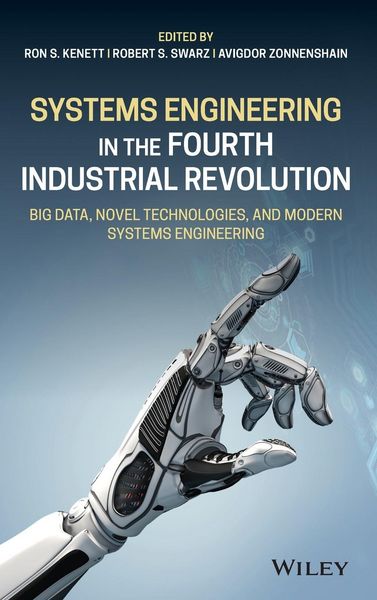
Produktbild: Systems Engineering in the Fourth Industrial Revolution

Systems Engineering in the Fourth Industrial Revolution Big Data, Novel Technologies, and Modern Systems Engineering

159,99 €

inkl. gesetzl. MwSt., Versandkostenfrei


Produktdetails

Einband

Gebundene Ausgabe

Erscheinungsdatum

24.12.2019

Herausgeber

Ron S. Kenett + weitere

Verlag

Wiley

Seitenzahl

656

Maße (L/B/H)

23,5/15,7/3,9 cm

Gewicht

1083 g

Sprache

Englisch

ISBN

978-1-119-51389-6

Produktdetails

Einband

Gebundene Ausgabe

Erscheinungsdatum

24.12.2019

Herausgeber

Verlag

Wiley

Seitenzahl

656

Maße (L/B/H)

23,5/15,7/3,9 cm

Gewicht

1083 g

Sprache

Englisch

ISBN

978-1-119-51389-6

Herstelleradresse

Libri GmbH
Europaallee 1
36244 Bad Hersfeld
DE

Email: gpsr@libri.de

Kundinnen und Kunden meinen

0 Bewertungen

Informationen zu Bewertungen

Zur Abgabe einer Bewertung ist eine Anmeldung im Konto notwendig. Die Authentizität der Bewertungen wird von uns nicht überprüft. Wir behalten uns vor, Bewertungstexte, die unseren Richtlinien widersprechen, entsprechend zu kürzen oder zu löschen.

Die Bewertungen sind nach Format, Anzahl Sterne und Datum sortiert.

Verfassen Sie die erste Bewertung zu diesem Artikel

Helfen Sie anderen Kund*innen durch Ihre Meinung

Kundinnen und Kunden meinen

0 Bewertungen filtern

Die Leseprobe wird geladen.
  • Produktbild: Systems Engineering in the Fourth Industrial Revolution
  • Preface xvii

    List of Contributors xxv

    1 Systems Engineering, Data Analytics, and Systems Thinking 1
    Ron S. Kenett, Robert S. Swarz, and Avigdor Zonnenshain

    1.1 Introduction 2

    1.2 The Fourth Industrial Revolution 4

    1.3 Integrating Reliability Engineering with Systems Engineering 6

    1.4 Software Cybernetics 7

    1.5 Using Modeling and Simulations 8

    1.6 Risk Management 11

    1.7 An Integrated Approach to Safety and Security Based on Systems Theory 13

    1.8 Applied Systems Thinking 15

    1.9 Summary 17

    References 18

    2 Applied Systems Thinking 21
    Robert Edson

    2.1 Systems Thinking: An Overview 22

    2.2 The System in Systems Thinking 24

    2.3 Applied Systems Thinking 25

    2.4 Applied Systems Thinking Approach 26

    2.5 Problem Definition: Entry Point to Applied Systems Thinking 27

    2.6 The System Attribute Framework: The Conceptagon 29

    2.7 Soft Systems Methodology 36

    2.8 Systemigram 37

    2.9 Causal Loop Diagrams 39

    2.10 Intervention Points 40

    2.11 Approach, Tools, and Methods - Final Thoughts 41

    2.12 Summary 41

    References 42

    3 The Importance of Context in Advanced Systems Engineering 45
    Adam D. Williams

    3.1 Introduction to Context for Advanced Systems Engineering 45

    3.2 Traditional View(s) of Context in Systems Engineering 47

    3.3 Challenges to Traditional View(s) of Context in the Fourth Industrial Revolution 48

    3.4 Nontraditional Approaches to Context in Advanced Systems Engineering 51

    3.5 Context of Use in Advanced Systems Engineering 60

    3.6 An Example of the Context of Use: High Consequence Facility Security 63

    3.7 Summary 70

    References 72

    4 Architectural Technical Debt in Embedded Systems 77
    Antonio Martini and Jan Bosch

    4.1 Technical Debt and Architectural Technical Debt 78

    4.2 Methodology 80

    4.3 Case Study Companies 81

    4.4 Findings: Causes of ATD 82

    4.5 Problem Definition: Entry Point to Applied Systems Thinking 85

    4.6 Findings: Long-Term Implications of ATD Accumulation 91

    4.7 Solutions for ATD Management 91

    4.8 Solution: A Systematic Technical Debt Map 92

    4.9 Solution: Using Automated Architectural Smells Tools for the Architectural Technical Debt Map 96

    4.10 Solution: Can We Calculate if it is Convenient to Refactor Architectural Technical Debt? 97

    4.11 Summary 100

    References 101

    5 Relay Race: The Shared Challenge of Systems and Software Engineering 105
    Amir Tomer

    5.1 Introduction 105

    5.2 Software-Intensive Systems 107

    5.3 Engineering of Software-Intensive Systems 109

    5.4 Role Allocation and the Relay Race Principles 110

    5.5 The Life Cycle of Software-Intensive Systems 110

    5.6 Software-Intensive System Decomposition 114

    5.7 Functional Analysis: Building a Shared Software-Intensive Architecture 120

    5.8 Summary 127

    References 131

    5.A Appendix 132

    6 Data-Centric Process Systems Engineering for the Chemical Industry 4.0 137
    Marco S. Reis and Pedro M. Saraiva

    6.1 The Past 50 Years of Process Systems Engineering 138

    6.2 Data-Centric Process Systems Engineering 141

    6.3 Challenges in Data-Centric Process Systems Engineering 149

    6.4 Summary 152

    References 154

    7 Virtualization of the Human in the Digital Factory 161
    Daniele Regazzoni and Caterina Rizzi

    7.1 Introduction 162

    7.2 The Problem 163

    7.3 Enabling Technologies 165

    7.4 Digital Human Models 168

    7.5 Exemplary Applications 173

    7.6 Summary 183

    References 1 85

    8 The Dark Side of Using Augmented Reality (AR) Training Systems in Industry 191
    Nirit Gavish

    8.1 The Variety of Options of AR Systems in Industry 191

    8.2 Look Out! The Threats in Using AR Systems for Training Purposes 192

    8.3 Threat #1: Physical Fidelity vs. Cognitive Fidelity 193

    8.4 Threat #2: The Effect of Feedback 194

    8.5 Threat #3: Enhanced Information Channels 195

    8.6 Summary 196

    References 197

    9 Condition-Based Maintenance via a Targeted Bayesian Network Meta-Model 203
    Aviv Gruber, Shai Yanovski, and Irad Ben-Gal

    9.1 Introduction 203

    9.2 Background to Condition-Based Maintenance and Bayesian Networks 206

    9.3 The Targeted Bayesian Network Learning Framework 212

    9.4 A Demonstration Case Study 213

    9.5 Summary 221

    References 224

    10 Reliability-Based Hazard Analysis and Risk Assessment: A Mining Engineering Case Study 227
    H. Sebnem Duzgun

    10.1 Introduction 227

    10.2 Data Collection 229

    10.3 Hazard Assessment 231

    10.4 Summary 237

    References 239

    11 OPCloud: An OPM Integrated Conceptual-Executable Modeling Environment for Industry 4.0 243
    Dov Dori, Hanan Kohen, Ahmad Jbara, Niva Wengrowicz, Rea Lavi, Natali Levi Soskin, Kfir Bernstein, and Uri Shani

    11.1 Background and Motivation 244

    11.2 What Does MBSE Need to be Agile and Ready for Industry 4.0? 248

    11.3 OPCloud:The Industry 4.0-Ready OPM Modeling Framework 249

    11.4 Main OPCloud Features 252

    11.5 Software Architecture Data Structure 260

    11.6 Development Methodology and Software Testing 262

    11.7 Model Integrity 263

    11.8 Model Complexity Metric and Comprehension 264

    11.9 Educational Perspectives of OPCloud Through edX 266

    11.10 Summary 267

    References 268

    12 Recent Advances Toward the Industrialization of Metal Additive Manufacturing 273
    Federico Mazzucato, Oliver Avram, Anna Valente, and Emanuele Carpanzano

    12.1 State of the Art 274

    12.2 Metal Additive Manufacturing 279

    12.3 Industrialization of Metal AM: Roadmap Setup at the ARM Laboratory 287

    12.4 Future Work 314

    12.5 Summary 315

    References 316

    13 Analytics as an Enabler of Advanced Manufacturing 321
    Ron S. Kenett, Inbal Yahav, and Avigdor Zonnenshain

    13.1 Introduction 322

    13.2 A Literature Review 323

    13.3 Analytic Tools in Advanced Manufacturing 326

    13.4 Challenges of Big Data and Analytic Tools in Advanced Manufacturing 330

    13.5 An Information Quality (InfoQ) Framework for Assessing Advanced Manufacturing 333

    13.6 Summary 335

    References 336

    13.A Appendix 340

    14 Hybrid Semiparametric Modeling: A Modular Process Systems Engineering Approach for the Integration of Available Knowledge Sources 345
    Cristiana Rodrigues de Azevedo, Victor Grisales Díaz, Oscar Andrés Prado-Rubio, Mark J.Willis,  Véronique Préat, Rui Oliveira, and Moritz von Stosch

    14.1 Introduction 346

    14.2 A Hybrid Semiparametric Modeling Framework 348

    14.3 Applications 352

    14.4 Summary 365

    Acknowledgments 367

    References 367

    15 System Thinking Begins with Human Factors: Challenges for the 4th Industrial Revolution 375
    Avi Harel

    15.1 Introduction 376

    15.2 Systems 378

    15.3 Human Factors 380

    15.4 Human Factor Challenges Typical of the 3rd Industrial Revolution 387

    15.5 Summary 408

    References 409

    16 Building More Resilient Cybersecurity Solutions for Infrastructure Systems 415
    Danie l Wagner

    16.1 A Heightened State of Vulnerability 415

    16.2 The Threat is Real 416

    16.3 A Particularly Menacing Piece of Malware 421

    16.4 Anatomy of An Attack 422

    16.5 The Evolving Landscape 424

    16.6 The Growing Threat Posed by Nuclear Facilities 425

    16.7 Not Even Close to Ready 426

    16.8 Focusing on Cyber Resiliency 428

    16.9 Enter DARPA 430

    16.10 The Frightening Prospect of "Smart" Cities 431

    16.11 Lessons from Petya 434

    16.12 Best Practices 436

    16.13 A Process Rather than a Product 437

    16.14 Building a Better Mousetrap 439

    16.15 Summary 440

    References 441

    17 Closed-Loop Mission Assurance Based on Flexible Contracts: A Fourth Industrial Revolution Imperative 445
    Azad M. Madni and Michael Sievers

    17.1 Introduction 446

    17.2 Current MA Approach 447

    17.3 Flexible Contract Construct 449

    17.4 Closed-Loop MA Approach 453

    17.5 POMDP Concept of Operations for Exemplar Problem 454

    17.6 An Illustrative Example 457

    17.7 Summary 461

    Acknowledgments 462

    References 462

    18 FlexTech: From Rigid to Flexible Human-Systems Integration 465
    Guy A. Boy

    18.1 Industry 4.0 and Human-Systems Integration 466

    18.2 HSI Evolution: From Interface to Interaction to Organizational Integration 468

    18.3 What Does the Term "System" Mean? 470

    18.4 HSI as Function Allocation 472

    18.5 The Tangibility Issue in Human-Centered Design 473

    18.6 Automation as Function Transfer 475

    18.7 From Rigid Automation to Flexible Autonomy 477

    18.8 Concluding Remarks 478

    18.9 Summary 479

    References 480

    19 Transdisciplinary Engineering Systems 483
    Nel Wognum, John Mo, and Josip Stjepandi¿

    19.1 Introduction 483

    19.2 Transdisciplinary Engineering Projects 486

    19.3 Introduction to Transdisciplinary Systems 493

    19.4 Transdisciplinary System 495

    19.5 Example 1: Online Hearing Aid Service and Service Development 498

    19.6 Example 2: License Approach for 3D Printing 502

    19.7 Summary 506

    References 507

    20 Entrepreneurship as a Multidisciplinary Project 511
    Arnon Katz

    20.1 Introduction to Entrepreneurship 511

    20.2 Entrepreneurship as a Project 513

    20.3 Approaching Change, Risk, and Uncertainty Systematically 516

    20.4 The Need for a Systemic Transdisciplinary Concept - Conclusions of Case Studies and Experience 518

    20.5 Assimilating System Concepts in Entrepreneurship Management 523

    20.6 Overview of Entrepreneurship Elements 531

    20.7 Summary 534

    References 535

    21 Developing and Validating an Industry Competence and Maturity for Advanced Manufacturing Scale 537
    Eitan Adres, Ron S. Kenett, and Avigdor Zonnenshain

    21.1 Introduction to Industry Competence and Maturity for Advanced Manufacturing 538

    21.2 Maturity Levels Toward the Fourth Industrial Revolution 538

    21.3 The Dimensions of Industry Maturity for Advanced Manufacturing 540

    21.4 Validating the Construct of the Scale 541

    21.5 Analysis of Assessments from Companies in Northern Israel 544

    21.6 Identifying Strengths and Weaknesses 547

    21.7 Summary 548

    Acknowledgments 551

    References 551

    21.A A Literature Review on Models for Maturity Assessment of Companies and Manufacturing Plants 553

    21.A.1 General 553

    21.A.2 CMMI - Capability Maturity Mode Integration 553

    21.A.3 Models for Assessing Readiness Levels 554

    21.A.4 Models for Assessing the Digital Maturity of Organizations 555

    21.A.5 National Models and Standards for Assessing the Readiness of Industry 556

    21.B The IMAM Questionnaire 557

    22 Modeling the Evolution of Technologies 563
    Yair Shai

    22.1 Introduction to Reliability of Technologies 564

    22.2 Definitions of Technology 566

    22.3 The Birth of New Technologies 567

    22.4 Adoption and Dispersion of Technologies 574

    22.5 Aging and Obsolescence of Technologies 580

    22.6 Reliability of Technologies: A New Field of Research 582

    22.7 Quantitative Holistic Models 585

    22.8 Summary 595

    References 598

    Acronyms 603

    Biographical Sketches of Editors 609

    Index 611