KI-Beratung Beta

Gutscheinbedingungen

**Gültig am 25.11.2026 auf fremdsprachige Bücher online auf thalia.at und in der Thalia App. Einzelne Artikel können ausgeschlossen sein. Ausgenommen sind preisgebundene Artikel & eBooks. Pro Einkauf einmal einlösbar. Click & Collect nur bei Onlinevorabzahlung möglich. Keine Barauszahlung. Nicht kombinierbar mit anderen Aktionen und Gutscheinen. Gutschein wird auf max. 500€ Bestellwert angerechnet. Nicht gültig für Geschenkkarten, Versandkosten und Services.

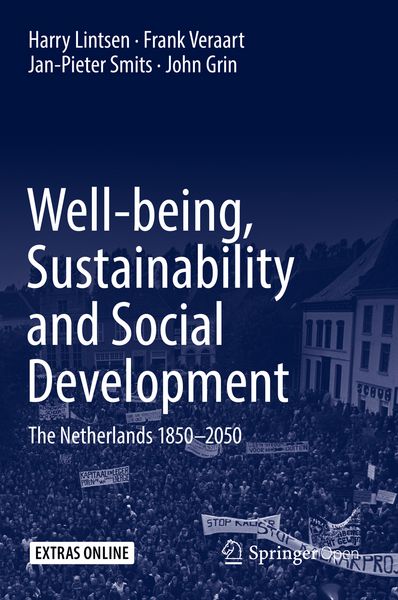
Produktbild: Well-being, Sustainability and Social Development

Well-being, Sustainability and Social Development The Netherlands 1850–2050

51,99 €

inkl. gesetzl. MwSt., Versandkostenfrei


Beschreibung

This open access book examines more than two centuries of societal development using novel historical and statistical approaches. It applies the well-being monitor developed by Statistics Netherlands that has been endorsed by a significant part of the international, statistical community. 

It features...

Beschreibung

This open access book examines more than two centuries of societal development using novel historical and statistical approaches. It applies the well-being monitor developed by Statistics Netherlands that has been endorsed by a significant part of the international, statistical community. 

It features The Netherlands as a case study, which is an especially interesting example; although it was one of the world’s richest countries around 1850, extreme poverty and inequality were significant problems of well-being at the time. Monitors of 1850, 1910, 1970 and 2015 depict the changes in three dimensions of well-being: the quality of life 'here and now', 'later' and 'elsewhere'. The analysis of two centuries shows the solutions to the extreme poverty problem and the appearance of new sustainability problems, especially in domestic and foreign ecological systems. 

The study also reveals the importance of natural capital: soil, air, water and subsoil resources, showing their relation with the social structure of the ‘here and now´. Treatment and trade of natural resources also impacted on the quality of life ‘later’ and ‘elsewhere.’ Further, the book illustrates the role of natural capital by dividing the capital into three types of raw materials and concomitant material flows: bio-raw materials, mineral and fossil subsoil resources. 

Additionally, the analysis of the institutional context identifies the key roles of social groups in well-being development. The book ends with an assessment of the solutions and barriers offered by the historical anchoring of the well-being and sustainability issues. This unique analysis of well-being and sustainability and its institutional analysis appeals to historians, statisticians and policy makers.

Rezension

“This work should be read as a groundbreaking model of applied history that addresses a target audience far beyond the scholarly community. Such target groups include stakeholders in the political realm, who long for sound expertise from the humanities on the seminal question, how to transition to a society that does justice to both well-being and sustainability in the broadest sense.” (Helmuth Trischler, Technology and Culture, Vol. 61 (3), 2020)

Produktdetails

Einband

Gebundene Ausgabe

Erscheinungsdatum

05.07.2018

Abbildungen

XXXII, 572 p. 86 illus., 59 illus. in color.

Verlag Springer

Produktdetails

Einband

Gebundene Ausgabe

Erscheinungsdatum

05.07.2018

Abbildungen

XXXII, 572 p. 86 illus., 59 illus. in color.

Verlag Springer
Seitenzahl

572

Maße (L/B/H)

24,1/16/3,6 cm

Gewicht

1121 g

Auflage

1st edition 2018

Sprache

Englisch

ISBN

978-3-319-76695-9

Herstelleradresse

Springer-Verlag GmbH
Europaplatz 3
69115 Heidelberg
DE

Email: ProductSafety@springernature.com

Noch keine Bewertungen vorhanden

Verfassen Sie die erste Bewertung zu diesem Artikel

Helfen Sie anderen Kundinnen und Kunden durch Ihre Meinung.

Kundinnen und Kunden meinen

Bewertungen (0)

  • Produktbild: Well-being, Sustainability and Social Development
  • 1. Introduction.- 2. Appreciations.- 3. The Dutch Case.- 4. Method and Theory.- 5. The Big Picture .- 6. Residual Issues.- 7. Suggestions for future research.