Gutscheinbedingungen

**Gültig bis 14.09.2026 auf Spielzeug, Schreibwaren, Filme, Geschenke & Trends, Musik, tolino eReader & Zubehör, Hörbücher, nicht preisgebundene Bücher und Kalender in der Thalia App. Einzelne Artikel können ausgeschlossen sein. Aufgrund der Buchpreisbindung sind deutschsprachige Bücher und eBooks ausgenommen. Zusätzlich ausgenommen sind Abos & Flatrates, Games, Geschenkkarten/-boxen, Shelfies, Software, Zeitschriften sowie einzelne Artikel von tonies®. Pro Einkauf einmal einlösbar. Nur gültig mit im Onlineshop hinterlegter Bonuscard. Click & Collect nur bei Onlinevorabzahlung möglich. Keine Barauszahlung. Nicht kombinierbar mit anderen Aktionen und Gutscheinen. Gutschein wird auf max. 500€ Bestellwert angerechnet. Nicht gültig für Versandkosten und Services.

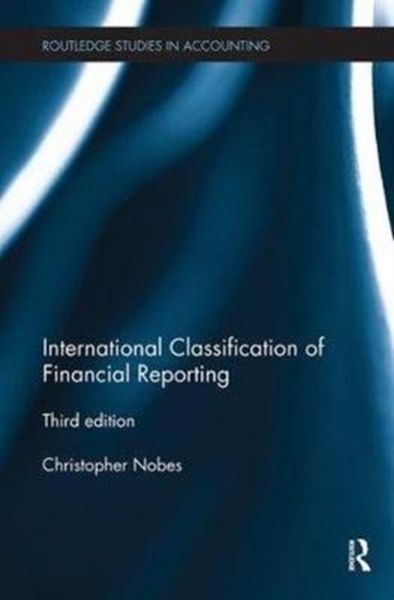
Produktbild: Nobes, C: International Classification of Financial Reportin

Nobes, C: International Classification of Financial Reportin

62,99 €

inkl. gesetzl. MwSt., Versandkostenfrei


Beschreibung

Produktdetails

Einband

Taschenbuch

Erscheinungsdatum

12.02.2018

Abbildungen

20 SW-Abb., 20 SW-Zeichn., 45 Tabellen

Verlag

Taylor & Francis

Seitenzahl

160

Maße (L/B/H)

23,4/15,6/0,9 cm

Gewicht

256 g

Sprache

Englisch

ISBN

978-1-138-49734-4

Beschreibung

Rezension

'The third edition of this valuable book by Chris Nobes highlights the continuing importance of international classification in accounting even in a World where International Financial Reporting Standards (IFRS) are growing in importance. Nobes demonstrates comprehensively how we can use international classification schemes to better understand continuing variations in national systems as well as the different extents and also ways IFRS has been adopted and implemented.'

Sid Gray, Professor, University of Sydney, Australia.

'Classifications are invaluable aids in research as well as in teaching. That applies to international accounting as much as to languages, legal systems, biology and many other disciplines. This new edition provides a much needed update on Christopher Nobes' work on the classification of financial reporting systems for a time when IFRS have been internationally widely implemented but, for many reasons outlined in this book, financial reporting continues to differ internationally.'

Lisa Evans, Professor, University of Stirling, UK.

'Drawing on his extensive knowledge in accounting as well as other subjects - history, natural sciences, humanities and social sciences - Professor Nobes turns the art of classification into a tool for seeing the accounting discipline in a wider perspective.'

Erlend Kvaal, Professor, BI Norwegian Business School, Norway.

'This book is very well written and constitutes a major contribution to the international accounting literature. It provides a refreshing antidote to the rather fatalistic view of some commentators who suggest that the advent of IFRS might imply the end of international accounting as an important field of study. In this regard, the analysis offered in this book has opened up new avenues for research in comparative international accounting and will be welcomed by students, teachers, researchers, practitioners, and policy-makers in this field.'

Charles Elad, The International Journal of Accounting

Produktdetails

Einband

Taschenbuch

Erscheinungsdatum

12.02.2018

Abbildungen

20 SW-Abb., 20 SW-Zeichn., 45 Tabellen

Verlag

Taylor & Francis

Seitenzahl

160

Maße (L/B/H)

23,4/15,6/0,9 cm

Gewicht

256 g

Sprache

Englisch

ISBN

978-1-138-49734-4

Noch keine Bewertungen vorhanden

Verfassen Sie die erste Bewertung zu diesem Artikel

Helfen Sie anderen Kundinnen und Kunden durch Ihre Meinung.

Kundinnen und Kunden meinen

Bewertungen (0)

Die Leseprobe wird geladen.
  • Produktbild: Nobes, C: International Classification of Financial Reportin
  • Prefaces 1. Introduction  2. The Purposes and Processes of Classification  3. International Differences in Accounting  4. An Overview of Accounting Classification  5. Extrinsic Classifications  6. Intrinsic Classifications in the pre-IFRS era  7. Classification in the IFRS era  8. Are the Classifications Merely Arbitrary? Appendices