Gutscheinbedingungen

**Gültig bis 15.06.2026 auf Spiele & Spielzeug online auf thalia.at, in der Thalia App ab einem Mindestbestellwert von 30€ und in allen Thalia Buchhandlungen in Österreich. In den Buchhandlungen nur gültig auf lagernde Ware. Einzelne Artikel können ausgeschlossen sein. Ausgenommen sind preisgebundene Artikel sowie online auf thalia.at und in der Thalia App einzelne Artikel von tonies®. Pro Einkauf einmal einlösbar. Nur gültig gegen Vorlage oder im Onlineshop hinterlegter Bonuscard. Infos zur Einlösung in der Buchhandlung sind auf der Bonuscard-Vorteilspreisseite zu finden. Click & Collect nur bei Onlinevorabzahlung möglich. Keine Einlösung bei Scan & Go-Bezahlung. Keine Barauszahlung. Nicht kombinierbar mit anderen Aktionen und Gutscheinen. Gutschein wird auf max. 500€ Bestellwert angerechnet. Nicht gültig für Geschenkkarten, Versandkosten und Services.

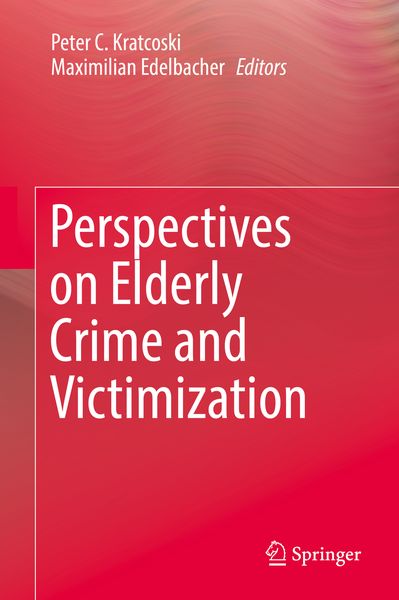
Produktbild: Perspectives on Elderly Crime and Victimization
- 10%

Perspectives on Elderly Crime and Victimization

10% sparen

83,99 € UVP 93,49 €

inkl. gesetzl. MwSt., Versandkostenfrei


Beschreibung

Produktdetails

Einband

Gebundene Ausgabe

Erscheinungsdatum

13.04.2018

Abbildungen

XVIII, 11 illus. in color., farbige Illustrationen

Herausgeber

Peter C. Kratcoski + weitere

Verlag

Springer

Seitenzahl

272

Maße (L/B/H)

24,1/16/2,1 cm

Gewicht

628 g

Auflage

1st ed. 2018

Sprache

Englisch

ISBN

978-3-319-72681-6

Beschreibung

Portrait

Peter C. Kratcoski earned  a PhD in sociology from the Pennsylvania State University, University Park,  Pennsylvania, a MA in sociology from the University of Notre Dame, Notre Dame, Indiana, and a BA in sociology from King’s College, Wilkes-Barre, Pennsylvania.  He was selected for several post-doctoral grants by the National Science Foundation. He taught at the College of St. Thomas, St Paul, Minnesota, and at the Pennsylvania State University before assuming the position of assistant professor of sociology at Kent State University in 1969. He retired as professor of criminal justice studies and chairman of the Department of Criminal Justice Studies at Kent State in 1997, where he is currently a professor emeritus and adjunct professor. He has published many books, chapters in books, and journal articles in the areas of juvenile delinquency, juvenile justice, international policing, crime prevention, corrections and victimology. His most recent writingand research has centered on juvenile justice, collaborative policing, correctional counseling, financial crimes, corruption and fraud and victimization of the elderly. He is co-editor of  Collaborative Policing CRC Press (2016), co-editor of Corruption, Fraud, Organized Crime, and the Shadow Economy, CRC Press (2016) and author of Correctional Counseling and Treatment,  (6th edition), Springer, 2017.

Maximilian Edelbacher graduated from Vienna University (Mag, Jur.) and was Hofrat of the Federal Police of Austria, chief of the Major Crime Bureau, and an international expert for the Council of Europe, OSCE, and UNO. He also chaired the Austrian Antifraud Insurance Bureau and has lectured at several universities, including the Vienna University of Economics and Business Administration, Danube University in Krems, Kent State University in the U.S.A., and Vienna University, Department of Sociology. He was appointed as special investigator of the AVUS Group on white collar crime cases, served as vice president of the Vienna Liaison Office  of the Academic Council on the United Nations, and is a director of the International Police Executive Symposium. He is the author of a number of books and journal articles. His most recent publications include co-editor of Corruption, Fraud, Organized Crime, and the Shadow Economy, CRC Press, 2016 and co-editor of Collaborative Policing, CRC Press, 2016. 

Produktdetails

Einband

Gebundene Ausgabe

Erscheinungsdatum

13.04.2018

Abbildungen

XVIII, 11 illus. in color., farbige Illustrationen

Herausgeber

Verlag

Springer

Seitenzahl

272

Maße (L/B/H)

24,1/16/2,1 cm

Gewicht

628 g

Auflage

1st ed. 2018

Sprache

Englisch

ISBN

978-3-319-72681-6

Herstelleradresse

Springer Heidelberg
Tiergartenstr. 17
69121 Heidelberg
DE
buchhandel-buch@springer.com

Kundinnen und Kunden meinen

0 Bewertungen

Informationen zu Bewertungen

Zur Abgabe einer Bewertung ist eine Anmeldung im Konto notwendig. Die Authentizität der Bewertungen wird von uns nicht überprüft. Wir behalten uns vor, Bewertungstexte, die unseren Richtlinien widersprechen, entsprechend zu kürzen oder zu löschen.

Die Bewertungen sind nach Format, Anzahl Sterne und Datum sortiert.

Verfassen Sie die erste Bewertung zu diesem Artikel

Helfen Sie anderen Kund*innen durch Ihre Meinung

Kundinnen und Kunden meinen

0 Bewertungen filtern

  • Produktbild: Perspectives on Elderly Crime and Victimization
  • Part I- Trends in the criminal behavior of the elderly.- Introduction to Part 1: Overview of trends in elderly crime in various parts of the world.- Chapter 1: Trends in types of crimes committed by the Elderly the United States Characteristics of Elderly Offenders.- Chapter 2: Trends and types of crimes by the elderly in Europe.- Chapter 3:  Trends in types and amount of crimes committed by the elderly in  China.- Chapter 4: Elderly crime in the United Kingdom and Wales.- Chapter 5: The Older person as a criminal and as a victim of crime: A South African overview.- Part ll: Overview of Criminal Victimization of the Elderly.- Chapter 6 : Victim offender relationship in the victimization of the elderly in the United States.- Chapter 7- Elder abuse in communities of color in the United States.- Chapter 8: Elderly victimization in aging Japan.- Chapter 9: The victim- perpetrator problem in elder abuse  and neglect.- Chapter 10: Abuse and neglect of the elderly.- Chapter 11- Victimization of elderly women, witches and widows.- Part III- Introduction: The criminal justice response to the prevention of elderly crime and  treatment of the elderly offender.- Chapter 12- Justice  system  response to elderly criminality.- Chapter 13-Treatment of older offender with  mental health problems.- Chapter 14: Summary; Comparative analysis of trends in elderly crime and victimization.