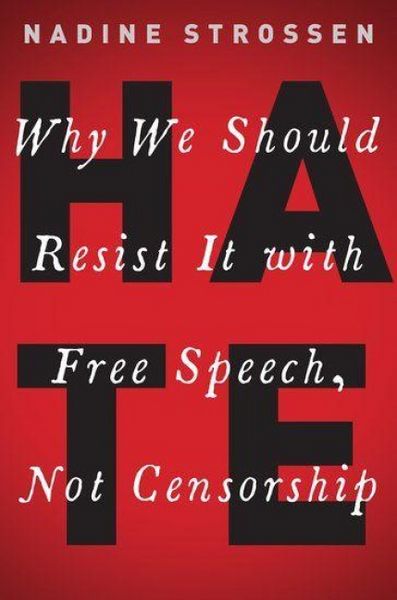
Produktbild: Hate

Hate Why We Should Resist It with Free Speech, Not Censorship

26,99 €

inkl. gesetzl. MwSt., zzgl. Versandkosten


  • Kostenlose Lieferung ab 30 € Einkaufswert
  • Versandkostenfrei für Bonuscard-Kund*innen

Beschreibung

Produktdetails

Einband

Gebundene Ausgabe

Erscheinungsdatum

01.05.2018

Verlag

Oxford Academic

Seitenzahl

232

Maße (L/B/H)

21,8/14,8/2,2 cm

Gewicht

386 g

Sprache

Englisch

ISBN

978-0-19-085912-1

Beschreibung

Produktdetails

Einband

Gebundene Ausgabe

Erscheinungsdatum

01.05.2018

Verlag

Oxford Academic

Seitenzahl

232

Maße (L/B/H)

21,8/14,8/2,2 cm

Gewicht

386 g

Sprache

Englisch

ISBN

978-0-19-085912-1

Herstelleradresse

Libri GmbH
Europaallee 1
36244 Bad Hersfeld
DE

Email: gpsr@libri.de

Noch keine Bewertungen vorhanden

Verfassen Sie die erste Bewertung zu diesem Artikel

Helfen Sie anderen Kundinnen und Kunden durch Ihre Meinung.

Kundinnen und Kunden meinen

Bewertungen (0)

Die Leseprobe wird geladen.
  • Produktbild: Hate
    • GLOSSARY

    • INTRODUCTION

    • Distinguishing between vile words and violent conduct

    • U.S. law's appropriate distinction between protected and punishable discriminatory speech

    • More speech, not less

    • CHAPTER 1) Overview

    • "Top 10" conclusions

    • What is "hate speech"?

    • "Hate speech" laws endanger both freedom and equality

    • Campus censorship

    • Why should we specially protect "verbal conduct"?

    • Beyond the First Amendment

    • The U.S. law approach has substantial international support

    • "Hate speech" laws long were opposed by other democracies

    • The anti-democratic enforcement of "hate speech" laws even in democracies

    • Private sector institutions should protect speech

    • Cost-benefit analysis of "hate speech" laws

    • President Obama's opposition to "hate speech" laws

    • Non-censorial alternatives

    • CHAPTER 2) Distinctions between punishable and protected discriminatory speech

    • Under U.S. law, much discriminatory speech may be punished, and all may be condemned

    • The multiple contexts in which discriminatory speech may be outlawed

    • Private sector

    • Government

    • Content-neutral regulations

    • Special-purpose facilities

    • Symbolic endorsement

    • Counterspeech

    • Punishing discriminatory speech under the emergency test

    • True threats

    • Punishable incitement

    • --Punishable fighting words

    • Punishable harassment

    • --Targeted harassment

    • --Hostile environment harassment

    • Facilitating criminal conduct

    • Bias crime

    • Civil lawsuits by private citizens

    • Invasion of privacy

    • Intentional infliction of emotional distress

    • Group defamation claims undermine free speech and equality

    • Constitutionally protected "hate speech"

    • The content neutrality and emergency principles: essential pillars of liberty and equality

    • CHAPTER 3) "Hate speech" laws' inherent vagueness and overbreadth

    • From the frying pan to the fire: too flexible or too rigid

    • One person's hateful, hated speech is another's loving, cherished speech

    • Endangering minority views and speakers

    • Targeting dissent

    • Targeting minority groups

    • Campus "hate speech" codes

    • Social media bans on "hate speech"

    • Current targeting of marginalized views in comparable democracies

    • France: Bob Dylan criminally charged because of a statement in a magazine interview

    • Britain: European Parliament candidate arrested during a campaign speech

    • for quoting Winston Churchill

    • Netherlands: Member of Parliament convicted because of a question he asked at a political rally

    • Denmark: Member of Parliament and three other public figures convicted for criticizing aspects of Islam

    • Sweden: Political party leader convicted for assertion about immigrants' crimes

    • Austria: A citizen's Facebook post criticizing a public official is deemed "hate speech" that Facebook must delete worldwide

    • Many European countries: Christian and Muslim religious leaders charged for quoting their sacred texts

    • The slippery slope

    • CHAPTER 4) Would censoring constitutionally protected "hate speech" reduce its potential harmful impact?

    • Would "hate speech" laws reduce any feared harm?

    • Inevitable underenforcement

    • Targeting only blatant expression

    • Driving some expression underground

    • Incentivizing more palatable speech

    • Increasing attention and support

    • Enforcement frustrations

    • Would "hate speech" laws reduce....

    • ....inter-group hostility?

    • ...retaliatory violence?

    • ...psychic harms?

    • No correlation with reduced discrimination or violence

    • The rise of Nazism in Germany despite "hate speech" laws

    • No inter-country correlation

    • No intra-country correlation

    • Would "hate speech" laws have a positive symbolic value?

    • What potential contribution does constitutionally protected "hate speech" make to the feared harms?

    • Inherently limited contribution

    • Studies about violence and pornography

    • Countless contributory factors

    • Some discriminatory speech does not spur negative psychic reactions

    • "Hate speech" law advocates cite much discriminatory speech that is already punishable

    • Substantial factual changes since the pioneering legal articles advocating "hate speech" laws

    • Increasing counterspeech by disparaged people

    • The cost-benefit analysis so far

    • CHAPTER 5) What non-censorial measures would reduce the feared harmful impact of constitutionally protected "hate speech"?

    • Counterspeech

    • Responsive

    • Proactive

    • Government

    • All of us

    • Online

    • Education

    • Developing thicker and thinner skin

    • Apologies

    • Anti-discrimination laws

    • Monitoring discriminatory violence

    • Improving police interactions with minority communities

    • Proactive outreach and interaction

    • More inclusive campuses

    • Self-restraint and social pressure

    • Self-regulation

    • CHAPTER 6) What are the potential costs of "hate speech" laws?

    • What potential costs to equality and societal harmony?

    • Undermining a mainstay of equal rights movements

    • Deflecting responsibility from people who engage in discriminatory conduct

    • Disempowering disparaged people

    • Diverting us from more effective strategies

    • Undermining constitutional challenges to discriminatory policies

    • What potential costs to free speech and democracy?

    • Freedom of speech's intrinsic and instrumental value

    • Freedom of speech is essential ...

    • ...for individuals to form and express their thoughts

    • ...for individuals to convey their emotions

    • ....for democratic self-government

    • ...for defending all other rights

    • Essential protection of messages that are disfavored or feared to have a general bad tendency

    • Dangers of subjective criteria in speech regulations

    • Speech conveying disfavored ideas may well be self-refuting

    • The appropriate response to disfavored speech is counterspeech

    • Government may not suppress speech...

    • ...to shield unwilling listeners in public places

    • ...to outlaw certain words

    • ...because it is motivated by hate

    • ...because it is hurtful

    • ...due to feared retaliatory violence

    • Government may censor speech in accordance with the emergency principle

    • The comparative risks of freedom and censorship

    • Democratic legitimacy

    • "Hate speech" laws' costs outweigh their benefits

    • CHAPTER 7) Do It Yourself challenge: Try to craft an acceptable "hate speech" law

    • How should a "hate speech" law define the newly punishable subset of what is now constitutionally protected "hate speech"?

    • What personal characteristics should it protect?

    • Should it protect beliefs?

    • Should it bar statements about historical events?

    • If it requires any showing about potential harm...

    • ...what kind of potential harm?

    • ...how likely should it be to materialize?

    • ...how direct and imminent should the connection be between the speech and the potential harm?

    • ...should the potential harm be assessed by a subjective or objective standard?

    • What mental state should be required?

    • Should the speech have to target an individual or small group?

    • Should it extend to speech in private places, and to personal conversations?

    • Should it take into account...

    • ...the identities of the speaker and the disparaged people?

    • ...any other contextual factors?

    • Should it provide any affirmative defenses?

    • Should it exempt speech by public officials or candidates?

    • Should it be criminal or civil?

    • What remedies and penalties should it provide?

    • Should there be any threshold procedural requirements?

    • How have you done?

    • APPEN DIX A: Protected personal characteristics and beliefs under various "hate speech" laws

    • APPENDIX B: Punishable messages under various "hate speech" laws

    • CHAPTER 8) Conclusion: looking back - and forward