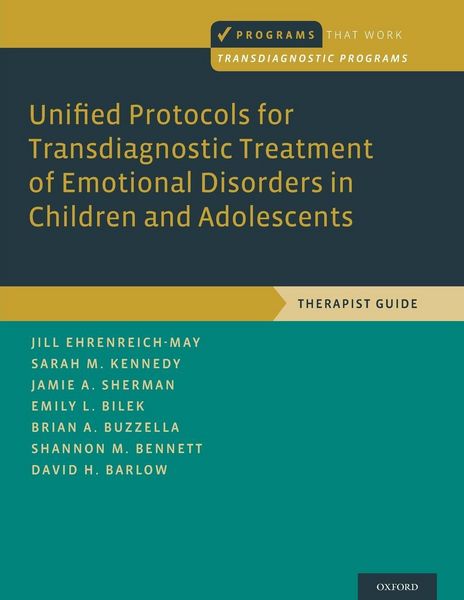
Produktbild: Unified Protocols for Transdiagnostic Treatment of Emotional Disorders in Children and Adolescents

Unified Protocols for Transdiagnostic Treatment of Emotional Disorders in Children and Adolescents Therapist Guide

136,99 €

inkl. gesetzl. MwSt., Versandkostenfrei


Beschreibung

Produktdetails

Einband

Taschenbuch

Erscheinungsdatum

19.01.2018

Verlag

Oxford University Press

Seitenzahl

446

Maße (L/B/H)

28/21,6/2,5 cm

Gewicht

1021 g

Sprache

Englisch

ISBN

978-0-19-934098-9

Beschreibung

Produktdetails

Einband

Taschenbuch

Erscheinungsdatum

19.01.2018

Verlag

Oxford University Press

Seitenzahl

446

Maße (L/B/H)

28/21,6/2,5 cm

Gewicht

1021 g

Sprache

Englisch

ISBN

978-0-19-934098-9

Herstelleradresse

Libri GmbH
Europaallee 1
36244 Bad Hersfeld
DE

Email: gpsr@libri.de

Kundinnen und Kunden meinen

0 Bewertungen

Informationen zu Bewertungen

Zur Abgabe einer Bewertung ist eine Anmeldung im Konto notwendig. Die Authentizität der Bewertungen wird von uns nicht überprüft. Wir behalten uns vor, Bewertungstexte, die unseren Richtlinien widersprechen, entsprechend zu kürzen oder zu löschen.

Die Bewertungen sind nach Format, Anzahl Sterne und Datum sortiert.

Verfassen Sie die erste Bewertung zu diesem Artikel

Helfen Sie anderen Kund*innen durch Ihre Meinung

Kundinnen und Kunden meinen

0 Bewertungen filtern

Die Leseprobe wird geladen.
  • Produktbild: Unified Protocols for Transdiagnostic Treatment of Emotional Disorders in Children and Adolescents
    • Introduction to the Unified Protocols for the Transdiagnostic Treatment of Emotional Disorders in Children (UP-C) and Adolescents (UP-A)

    • PART ONE: ADOLESCENTS (UP-A)

    • Chapter 1

    • Core Module 1: Building and Keeping Motivation

    • Chapter 2

    • Core Module 2: Getting to Know your Emotions and Behaviors

    • Chapter 3

    • Core Module 3: Introduction to Emotion-Focused Behavioral Experiments

    • Chapter 4

    • Core Module 4: Awareness of Physical Sensations

    • Chapter 5

    • Core Module 5: Being Flexible in Your Thinking

    • Chapter 6

    • Core Module 6: Awareness of Emotional Experiences

    • Chapter 7

    • Core Module 7: Situational Emotion Exposure

    • Chapter 8

    • Core Module 8: Reviewing Accomplishments and Looking Ahead

    • Chapter 9

    • Module P: Parenting the Emotional Adolescent

    • PART TWO: CHILDREN (UP-C)

    • Chapter 10

    • Introduction to the Unified Protocol for the Transdiagnostic Treatment of Emotional Disorders in Children (UP-C)

    • Chapter 11

    • UP-C Session 1: Introduction to the Unified Protocol for the Transdiagnostic Treatment of Emotional Disorders in Children

    • C Skill: Consider How I Feel

    • Chapter 12

    • UP-C Session 2: Getting to Know Your Emotions

    • C Skill: Consider How I Feel

    • Chapter 13

    • UP-C Session 3: Using Science Experiments to Change our Emotions and Behavior

    • C Skill: Consider How I Feel

    • Chapter 14

    • UP-C Session 4: Our Body Clues

    • C Skill: Consider How I Feel

    • Chapter 15

    • UP-C Session 5: Look at My Thoughts

    • L Skill: Look at My Thoughts

    • Chapter 16

    • UP-C Session 6: Use Detective Thinking

    • U Skill: Use Detective Thinking and Problem Solving

    • Chapter 17

    • UP-C Session 7: Problem Solving and Conflict Management

    • U Skill: Use Detective Thinking and Problem Solving

    • Chapter 18

    • UP-C Session 8: Awareness of Emotional Experiences

    • E Skill: Experience My Feelings

    • Chapter 19

    • UP-C Session 9: Introduction to Emotion Exposure

    • E Skill: Experience My Feelings

    • Chapter 20

    • UP-C Session 10: Facing Our Feelings-Part 1

    • E Skill: Experience My Feelings

    • Chapter 21

    • UP-C Sessions 11-14: Facing Our Feelings-Part 2

    • E Skill: Experience My Feelings

    • Chapter 22

    • UP-C Session 15: Wrap Up and Relapse Prevention

    • S Skill: Stay Healthy and Happy

    • PART THREE: VARIATIONS AND ADAPTATIONS

    • Chapter 23

    • UP Group and Individual Therapy Variations, Other Adaptations

    • Considerations for adapting UP-A and UP-C for use with different populations