KI-Beratung Beta

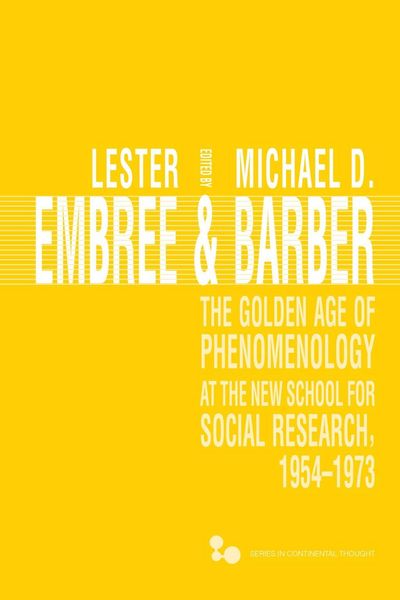
Produktbild: The Golden Age of Phenomenology at the New School for Social Research, 1954-1973

The Golden Age of Phenomenology at the New School for Social Research, 1954-1973

108,00 €

inkl. gesetzl. MwSt.

Beschreibung

This collection focuses on the introduction of phenomenology to the United States by the community of scholars who taught and studied at the New School for Social Research from 1954 through 1973. During those years, Dorion Cairns, Alfred Schutz, and Aron Gurwitsch-all former students of Edmund Husserl-came...

Beschreibung

This collection focuses on the introduction of phenomenology to the United States by the community of scholars who taught and studied at the New School for Social Research from 1954 through 1973. During those years, Dorion Cairns, Alfred Schutz, and Aron Gurwitsch-all former students of Edmund Husserl-came together in the department of philosophy to establish the first locus of phenomenology scholarship in the country. This founding trio was soon joined by three other prominent scholars in the field: Werner Marx, Thomas M. Seebohm, and J. N. Mohanty. The Husserlian phenomenology that they brought to the New School has subsequently spread through the Anglophone world as the tradition of Continental philosophy. The first part of this volume includes original works by each of these six influential teachers of phenomenology, introduced either by one of their students or, in the case of Seebohm and Mohanty, by the thinkers themselves. The second part comprises contributions from twelve leading scholars of phenomenology who trained at the New School during this period. The result is a powerful document tracing the lineage and development of phenomenology in the North American context, written by members of the first two generations of scholars who shaped the field. Contributors: Michael Barber, Lester Embree, Jorge García-Gómez, Fred Kersten, Thomas M. T. Luckmann, William McKenna, J. N. Mohanty, Giuseppina C. Moneta, Thomas Nenon, George Psathas, Osborne P. Wiggins, Matthew M. Seebohm, and Richard M. Zaner.

Produktdetails

Format

ePUB

Kopierschutz

Ja

Family Sharing

Nein

Text-to-Speech

Ja

Produktdetails

Format

ePUB

Format

eBooks im ePUB-Format erlauben eine dynamische Anpassung des Inhalts an die jeweilige Display-Größe des Lesegeräts. Das Format eignet sich daher besonders für das Lesen auf mobilen Geräten, wie z.B. Ihrem tolino, Tablets oder Smartphones.

Kopierschutz

Ja

Kopierschutz

Zum Lesen dieses eBooks auf Geräten der tolino Familie sowie auf sonstigen eReadern und am PC benötigen Sie eine Adobe ID. Weitere Hinweise zum Lesen von kopiergeschützten eBooks finden Sie unter Hilfe/Downloads.

Family Sharing

Nein

Family Sharing

Mit Family Sharing können Sie eBooks innerhalb Ihrer Familie (max. sechs Mitglieder im gleichen Haushalt) teilen. Sie entscheiden selbst, welches Buch Sie mit welchem Familienmitglied teilen möchten. Auch das parallele Lesen durch verschiedene Familienmitglieder ist durch Family Sharing möglich. Um eBooks zu teilen oder geteilt zu bekommen, muss jedes Familienmitglied ein Konto bei Thalia oder einem anderen tolino-Buchhändler haben. Weitere Informationen finden Sie unter Hilfe/Family-Sharing.

Text-to-Speech

Ja

Text-to-Speech

Bedeutet Ihnen Stimme mehr als Text? Mit der Funktion Text-to-Speech können Sie sich im tolino webReader und in der aktuellen Thalia – Lesen & Hören App das eBook vorlesen lassen. Weitere Informationen finden Sie unter Hilfe/Text-to-Speech.

Erscheinungsdatum

11.09.2017

Herausgeber
Verlag Ohio University Press
Seitenzahl

412 (Printausgabe)

Dateigröße

760 KB

Auflage

1. Auflage

Sprache

Englisch

EAN

9780821445518

Barrierefreiheit
  • keine Information zur Barrierefreiheit bekannt

Noch keine Bewertungen vorhanden

Verfassen Sie die erste Bewertung zu diesem Artikel

Helfen Sie anderen Kundinnen und Kunden durch Ihre Meinung.

Kundinnen und Kunden meinen

Bewertungen (0)

Weitere Artikel finden Sie in

Die Leseprobe wird geladen.
  • Produktbild: The Golden Age of Phenomenology at the New School for Social Research, 1954-1973