KI-Beratung Beta

Gutscheinbedingungen

**Gültig am 01.10.2026 ab einem Mindestbestellwert von 30€ auf Spielzeug, Schreibwaren, Filme, Geschenke & Trends, Musik, tolino eReader & Zubehör, Hörbücher und Hörbuch-Downloads, nicht preisgebundene Bücher und Kalender online auf thalia.at und in der Thalia App. Einzelne Artikel können ausgeschlossen sein. Aufgrund der Buchpreisbindung sind deutschsprachige Bücher und eBooks ausgenommen. Zusätzlich ausgenommen sind Abos & Flatrates, Games, Geschenkkarten/-boxen, Shelfies, Software, Zeitschriften sowie einzelne Artikel von tonies®. Pro Einkauf einmal einlösbar. Click & Collect nur bei Onlinevorabzahlung möglich. Keine Barauszahlung. Nicht kombinierbar mit anderen Aktionen und Gutscheinen. Gutschein wird auf max. 500€ Bestellwert angerechnet. Nicht gültig für Versandkosten und Services. Preisgebundene Artikel sind vom Mindestbestellwert ausgeschlossen.

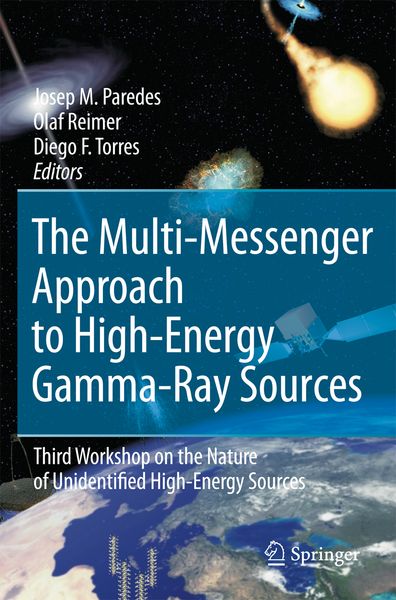
Produktbild: The Multi-Messenger Approach to High-Energy Gamma-Ray Sources
- 12%

The Multi-Messenger Approach to High-Energy Gamma-Ray Sources Third Workshop on the Nature of Unidentified High-Energy Sources

12% sparen

144,99 € UVP 164,99 €

inkl. gesetzl. MwSt., Versandkostenfrei


Beschreibung

Produktdetails

Einband

Taschenbuch

Erscheinungsdatum

23.08.2016

Abbildungen

VI, 544 p.

Herausgeber

Josep M. Paredes + weitere

Verlag

Springer Netherland

Seitenzahl

544

Maße (L/B/H)

27,9/21/3 cm

Gewicht

1328 g

Auflage

Softcover Reprint of the Original 1st 2007 edition

Sprache

Englisch

ISBN

978-94-017-7648-6

Beschreibung

Produktdetails

Einband

Taschenbuch

Erscheinungsdatum

23.08.2016

Abbildungen

VI, 544 p.

Herausgeber

Verlag

Springer Netherland

Seitenzahl

544

Maße (L/B/H)

27,9/21/3 cm

Gewicht

1328 g

Auflage

Softcover Reprint of the Original 1st 2007 edition

Sprache

Englisch

ISBN

978-94-017-7648-6

Herstelleradresse

Springer Netherland
Heidelberger Platz 3
14197 Berlin
Deutschland
Email: sdc-bookservice@springer.com
Fax: +49 6221 3454229

Noch keine Bewertungen vorhanden

Verfassen Sie die erste Bewertung zu diesem Artikel

Helfen Sie anderen Kundinnen und Kunden durch Ihre Meinung.

Kundinnen und Kunden meinen

Bewertungen (0)

  • Produktbild: The Multi-Messenger Approach to High-Energy Gamma-Ray Sources
  • Preface.- Preface.- New INTEGRAL sources and TeV emission.- Status of identification of VHE ?-ray sources.- INTEGRAL/XMM views on the MeV source GRO J1411-64.- Evidence for a new MeV source observed by the COMPTEL experiment aboard CGRO.- Transient X-ray sources in the field of the unidentified gamma-ray source TeV J2032+4130 in Cygnus.- Source population synthesis and the Galactic diffuse gamma-ray emission.- Population studies of the unidentified EGRET sources.- Gamma-ray source stacking analysis at low galactic latitudes.- Identification of high energy gamma-ray sources and source populations in the era of deep all-sky coverage.- The blazar sequence: validity and predictions.- Gamma-ray luminosity function of blazars and the cosmic gamma-ray background: evidence for the luminosity-dependent density evolution.- Unidentified EGRET sources and the extragalactic gamma-ray background.- Blazar duty-cycle at ?-ray frequencies: constraints from extragalactic background radiation and prospects for AGILE and GLAST.- Modeling the emission processes in blazars.- Internal absorption of gamma-rays in relativistic blobs of active galactic nuclei.- Observations of AGNs using PACT.- Fermi acceleration in astrophysical jets.- High-energy cosmology.- HESS observations of extragalactic objects.- FIRST radio counterpart candidates to ULXs: a catalogue.- Numerical studies on the structure of the cosmic ray electron halo in starburst galaxies.- Synchrotron emission in the fast cooling regime: which spectra can be explained?.- Spectral properties of shocked accretion flows— a self-consistent study.- Particle acceleration at multiple internal relativistic shocks.- Mechanism of light curve variability in the gamma ray bursts.- High energy processes in pulsar wind nebulae.- Nucleonicgamma-ray production in pulsar wind nebulae.- Associations of very high energy gamma-ray sources discovered by H.E.S.S. with pulsar wind nebulae.- Demystifying an unidentified EGRET source by VHE gamma-ray observations.- Multiwavelength observations of the two unidentified EGRET sources 3EG J0616-3310 and 3EG J1249-8330.- INTEGRAL observations of TeV plerions.- The Geminga fraction.- An algorithm for solving the pulsar equation.- Pulsar simulation tools for GLAST.- Pulsar sensitivity studies of the GLAST large area telescope.- Population statistics study of radio and gamma-ray pulsars in the Galactic plane.- Radio-to-TeV ?-ray emission from PSR B1259–63.- Modulation of the high energy ?-ray flux from PSR B1259-63/SS2883 due to the orbital variation of the maximum energy of accelerated electrons.- Gamma-ray binaries.- Supermassive binary black holes among cosmic gamma-ray sources.- H.E.S.S. observations of LS 5039.- Results from MAGIC’s first observation cycle on galactic sources.- INTEGRAL serendipitous detection of the gamma-ray microquasar LS 5039.- Whipple telescope observations of LS I +61 303: 2004–2006.- Spectral fit of Cygnus X-1 in high energy— a self-consistent study.- The search for hot spots associated with the Cygnus X-3 relativistic jet.- The black-hole candidate XTE J1817-330 as seen by XMM-Newton and INTEGRAL.- Theoretical overview on high-energy emission in microquasars.- High-energy gamma-ray emission from the inner jet of LS I +61 303: the hadronic contribution revisited.- Secondary leptons synchrotron emission from microquasar jets.- Collective effects of stellar winds and unidentified gamma-ray sources.- Gamma rays from colliding winds of massive stars.- Gamma rays from halos around stars and the Sun.- Gamma rays from molecularclouds.- 3EG J2020+4017, the ?-Cygni source—before GLAST.- Morphological and spectral studies of the shell-type supernova remnants RX J1713.7–3946 and RX J0852.0–4622 with H.E.S.S..- Gamma-ray emission expected from Kepler’s SNR.- New evidence for strong nonthermal effects in Tycho’s supernova remnant.- Hard X-ray emission from the SNR G337.2+0.1.- A possible explanation of photon emission from supernova remnants by jitter radiation.- Cosmic neutrinos from the sources of galactic and extragalactic cosmic rays.- Detection potential to point-like neutrino sources with the NEMO-km3 telescope.- Upper limits on neutrino fluxes from point-like sources with AMANDA-II.- Potential neutrino signals in a northern hemisphere neutrino telescope from galactic gamma-ray sources.- Underground water Cherenkov muon detector array with the Tibet air shower array for gamma-ray astronomy in the 100 TeV region.- Study on the possible detection of Gamma Ray Bursts with the ANTARES neutrino telescope.- Determination of the atmospheric neutrino flux from experimental data.- On origin of ultra high energy cosmic rays.- Gamma ray signatures of ultra high energy cosmic ray accelerators: electromagnetic cascade versus synchrotron radiation of secondary electrons.- Search for correlations of GRB and cosmic rays.- Cosmology and VHE gamma ray astrophysics: connections and perspectives.- A low density of the extragalactic background light revealed by the H.E.S.S. spectra of the BL Lac objects 1ES?1101-232 and H?2356-309.- Observations of extragalactic sources with the MAGIC telescope.- Dark matter: the connection with gamma-ray astrophysics.- The impact of subhalos on the gamma-ray signal from dark matter annihilation.- GLAST large area telescope multiwavelength planning.-Unravelling unidentified ?-ray sources with the large millimeter telescope.- Search for GRB related prompt optical emission and other fast varying objects with “Pi of the Sky” detector.- GRBs search results with the ARGO-YBJ experiment operated in scaler mode.- The design of diamond Compton telescope.