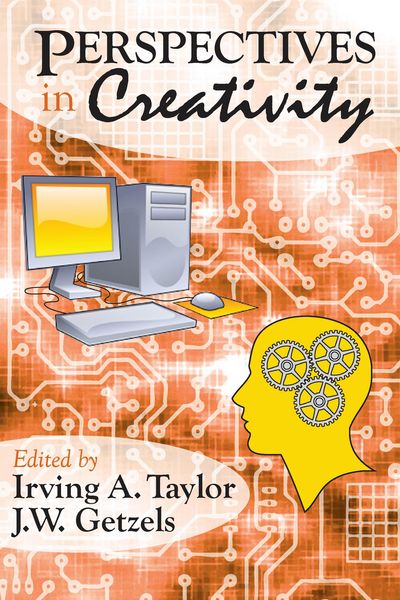
Perspectives in Creativity
-
- Taschenbuch
- eBook ausgewählt
-
Form:Einzelkauf Download
-
Sprache:Englisch
-
eBook Format:ePUB 3
- ePUB 3 69,90 € ausgewählt
- PDF 69,90 €
69,90 €
inkl. gesetzl. MwSt.Beschreibung
Produktdetails
Format
ePUB 3
Kopierschutz
Ja
Family Sharing
Nein
Text-to-Speech
Ja
Erscheinungsdatum
12.07.2017
Verlag
Taylor & Francis eBooksSeitenzahl
353 (Printausgabe)
Dateigröße
3649 KB
Sprache
Englisch
EAN
9781351500104
In Perspectives in Creativity experts in the psychology of creativity take stock of the field by examining their own experiences. The contributors relate how they embarked on their work, how their ideas developed, what in their thinking remained the same, what had changed, and how they evaluate their successes and failures.
The introductory chapter provides a historical context for subsequent contributions. J. P. Guilford then describes the development of the field of creativity from the perspective of the Structure of Intellect model. Donald W. MacKinnon describes his work at the Institute of Personality Assessment and Research. J. W. Getzels and Mihalyi Csikszentmihalyi recount in the following chapter how, though starting with a conception of creativity as a problem-solving process, they were driven through their work with artists to a conception of creativity as also a problem-finding process. In the fifth chapter, Frank M. Andrews describes his investigations of the social and psychological factors in scientific laboratories.
Frank Barron examines the problem of creativity and alienation. Anne Roe analyzes the sources and development of paintings as reported by twenty artists. In the following chapter, Salvatore Maddi examines the widely held belief that social integration and a permissive environment are conducive to creative endeavor. In chapter 9, Calvin Taylor and Richard Ellison describe the development of the Utah program of assessment and intervention with regard to the creativity of children in the classroom. Next, Sidney Parnes discusses his work on "brainstorming" and its emphasis on a balance between imagination and judgment, freedom, and discipline. George Prince tells of the development of "synectics" since its early formulation and recounts its application to creative production in industry. E. Paul Torrance then examines recent creativity in the schools and describes his own efforts in devising diagnostic tests and educati
Noch keine Bewertungen vorhanden
Verfassen Sie die erste Bewertung zu diesem Artikel
Helfen Sie anderen Kundinnen und Kunden durch Ihre Meinung.
Kurze Frage zu unserer Seite
Vielen Dank für Ihr Feedback
Wir nutzen Ihr Feedback, um unsere Produktseiten zu verbessern. Bitte haben Sie Verständnis, dass wir Ihnen keine Rückmeldung geben können. Falls Sie Kontakt mit uns aufnehmen möchten, können Sie sich aber gerne an unseren Kund*innenservice wenden.
zum Kundenservice