KI-Beratung Beta

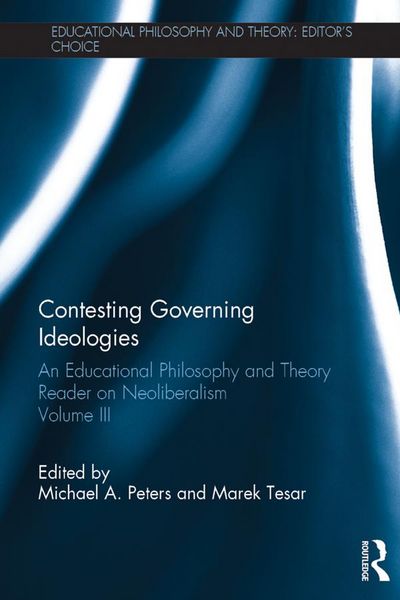
Produktbild: Contesting Governing Ideologies

Contesting Governing Ideologies An Educational Philosophy and Theory Reader on Neoliberalism, Volume III

47,80 €

inkl. gesetzl. MwSt.

Beschreibung

Contesting Governing Ideologies is the third volume in the Educational Philosophy and Theory: Editor's Choice series and represents a collection of texts that provide a cutting-edge analysis of the philosophy and theory of performances of neoliberal ideology in education. In past decades, philosophy...

Beschreibung

Contesting Governing Ideologies is the third volume in the Educational Philosophy and Theory: Editor's Choice series and represents a collection of texts that provide a cutting-edge analysis of the philosophy and theory of performances of neoliberal ideology in education. In past decades, philosophy of education has provided a critical commentary on problematic areas of neoliberal ideology. As such, this collection argues, philosophy of education can be considered as an intellectual struggle that runs through the contemporary ideological landscape and has roots that go back to the Enlightenment in its traditions.

This book covers multiple philosophical and educational theoretical perspectives of what we know about the ideology of neoliberalism, and many of its practices and projects. Neoliberalism is difficult to define, but what is certain is that it has significantly matured as a political doctrine and set of policy practices. This collection covers questions of ideology, politics, and policy in relation to the subject and the institution alike. The chapters in this book provide rich and diverse reading, allowing readers to rethink established discourses and contest ideologies, providing a thorough and careful philosophical and theoretical analysis of the story of neoliberalism over the past decades.

Contesting Governing Ideologies will be key reading for academics, researchers and postgraduate students in the fields of philosophy of education, philosophy, education, educational theory, post-structural theory, the policy and politics of education, and the pedagogy of education.

Produktdetails

Format

PDF

Kopierschutz

Ja

Family Sharing

Nein

Text-to-Speech

Nein

Produktdetails

Format

PDF

Format

eBooks im PDF-Format haben eine festgelegte Seitengröße und eignen sich daher nur bedingt zum Lesen auf einem tolino eReader oder Smartphone. Für den vollen Lesegenuss empfehlen wir Ihnen bei PDF-eBooks die Verwendung eines Tablets oder Computers.

Kopierschutz

Ja

Kopierschutz

Zum Lesen dieses eBooks auf Geräten der tolino Familie sowie auf sonstigen eReadern und am PC benötigen Sie eine ByteBook-ID. Weitere Hinweise zum Lesen von kopiergeschützten eBooks finden Sie unter Hilfe/Downloads.

Family Sharing

Nein

Family Sharing

Mit Family Sharing können Sie eBooks innerhalb Ihrer Familie (max. sechs Mitglieder im gleichen Haushalt) teilen. Sie entscheiden selbst, welches Buch Sie mit welchem Familienmitglied teilen möchten. Auch das parallele Lesen durch verschiedene Familienmitglieder ist durch Family Sharing möglich. Um eBooks zu teilen oder geteilt zu bekommen, muss jedes Familienmitglied ein Konto bei Thalia oder einem anderen tolino-Buchhändler haben. Weitere Informationen finden Sie unter Hilfe/Family-Sharing.

Text-to-Speech

Nein

Text-to-Speech

Bedeutet Ihnen Stimme mehr als Text? Mit der Funktion Text-to-Speech können Sie sich im tolino webReader und in der aktuellen Thalia – Lesen & Hören App das eBook vorlesen lassen. Weitere Informationen finden Sie unter Hilfe/Text-to-Speech.

Erscheinungsdatum

20.07.2017

Herausgeber
Verlag Taylor & Francis eBooks
Seitenzahl

224 (Printausgabe)

Dateigröße

847 KB

Sprache

Englisch

EAN

9781351600903

Barrierefreiheit
  • keine Vorlesefunktionen des Lesesystems deaktiviert

Noch keine Bewertungen vorhanden

Verfassen Sie die erste Bewertung zu diesem Artikel

Helfen Sie anderen Kundinnen und Kunden durch Ihre Meinung.

Kundinnen und Kunden meinen

Bewertungen (0)

Weitere Artikel finden Sie in

Die Leseprobe wird geladen.
  • Produktbild: Contesting Governing Ideologies