KI-Beratung Beta

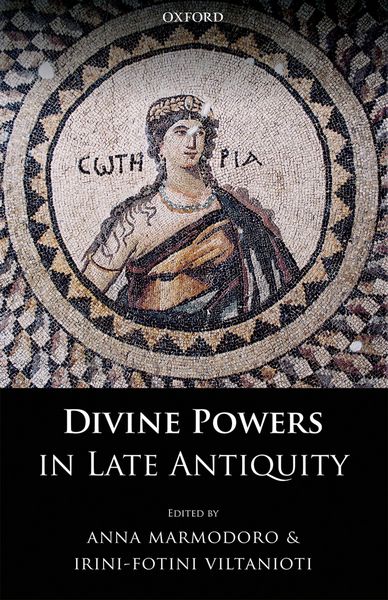
Produktbild: Divine Powers in Late Antiquity

Divine Powers in Late Antiquity

111,10 €

inkl. gesetzl. MwSt.

Beschreibung

Is power the essence of divinity, or are divine powers distinct from divine essence? Are they divine hypostases or are they divine attributes? Are powers such as omnipotence, omniscience, etc. modes of divine activity? How do they manifest? In which way can we apprehend them? Is there a multiplicity...

Beschreibung

Is power the essence of divinity, or are divine powers distinct from divine essence? Are they divine hypostases or are they divine attributes? Are powers such as omnipotence, omniscience, etc. modes of divine activity? How do they manifest? In which way can we apprehend them? Is there a multiplicity of gods whose powers fill the cosmos or is there only one God from whom all power(s) derive(s) and whose power(s) permeate(s) everything? These are questions that become central to philosophical and theological debates in Late Antiquity (roughly corresponding to the period 2nd to the 6th centuries). On the one hand, the Pagan Neoplatonic thinkers of this era postulate a complex hierarchy of gods, whose powers express the unlimited power of the ineffable One. On the other hand, Christians proclaim the existence of only one God, one divine power or one 'Lord of all powers'. Divided into two main sections, the first part of Divine Powers in Late Antiquity examines aspects of the notion of divine power as developed by the four major figures of Neoplatonism: Plotinus (c. 204-270), Porphyry (c. 234-305), Iamblichus (c.245-325), and Proclus (412-485). It focuses on an aspect of the notion of divine power that has been so far relatively neglected in the literature. Part two investigates the notion of divine power in early Christian authors, from the New Testament to the Alexandrian school (Clement of Alexandria, Origen, Athanasius the Great) and, further, to the Cappadocian Fathers (Basil the Great, Gregory of Nyssa), as well as in some of these authors' sources (the Septuagint, Philo of Alexandria). The traditional view tends to overlook the fact that the Bible, particularly the New Testament, was at least as important as Platonic philosophical texts in the shaping of the early Christian thinking about the Church's doctrines. Whilst challenging the received interpretation by redressing the balance between the Bible and Greek philosophical texts, the essays in the second section of this book nevertheless argue for the philosophical value of early Christian reflections on the notion of divine power. The two groups of thinkers that each of the sections deal with (the Platonic-Pagan and the Christian one) share largely the same intellectual and cultural heritage; they are concerned with the same fundamental questions; and they often engage in more or less public philosophical and theological dialogue, directly influencing one another.

Produktdetails

Format

PDF

Kopierschutz

Ja

Family Sharing

Nein

Text-to-Speech

Nein

Produktdetails

Format

PDF

Format

eBooks im PDF-Format haben eine festgelegte Seitengröße und eignen sich daher nur bedingt zum Lesen auf einem tolino eReader oder Smartphone. Für den vollen Lesegenuss empfehlen wir Ihnen bei PDF-eBooks die Verwendung eines Tablets oder Computers.

Kopierschutz

Ja

Kopierschutz

Zum Lesen dieses eBooks auf Geräten der tolino Familie sowie auf sonstigen eReadern und am PC benötigen Sie eine ByteBook-ID. Weitere Hinweise zum Lesen von kopiergeschützten eBooks finden Sie unter Hilfe/Downloads.

Family Sharing

Nein

Family Sharing

Mit Family Sharing können Sie eBooks innerhalb Ihrer Familie (max. sechs Mitglieder im gleichen Haushalt) teilen. Sie entscheiden selbst, welches Buch Sie mit welchem Familienmitglied teilen möchten. Auch das parallele Lesen durch verschiedene Familienmitglieder ist durch Family Sharing möglich. Um eBooks zu teilen oder geteilt zu bekommen, muss jedes Familienmitglied ein Konto bei Thalia oder einem anderen tolino-Buchhändler haben. Weitere Informationen finden Sie unter Hilfe/Family-Sharing.

Text-to-Speech

Nein

Text-to-Speech

Bedeutet Ihnen Stimme mehr als Text? Mit der Funktion Text-to-Speech können Sie sich im tolino webReader und in der aktuellen Thalia – Lesen & Hören App das eBook vorlesen lassen. Weitere Informationen finden Sie unter Hilfe/Text-to-Speech.

Erscheinungsdatum

26.01.2017

Herausgeber
Verlag Oxford University Press
Seitenzahl

280 (Printausgabe)

Dateigröße

1988 KB

Sprache

Englisch

EAN

9780191079955

Barrierefreiheit
  • keine Information zur Barrierefreiheit bekannt

Noch keine Bewertungen vorhanden

Verfassen Sie die erste Bewertung zu diesem Artikel

Helfen Sie anderen Kundinnen und Kunden durch Ihre Meinung.

Kundinnen und Kunden meinen

Bewertungen (0)

Weitere Artikel finden Sie in

Die Leseprobe wird geladen.
  • Produktbild: Divine Powers in Late Antiquity