KI-Beratung Beta

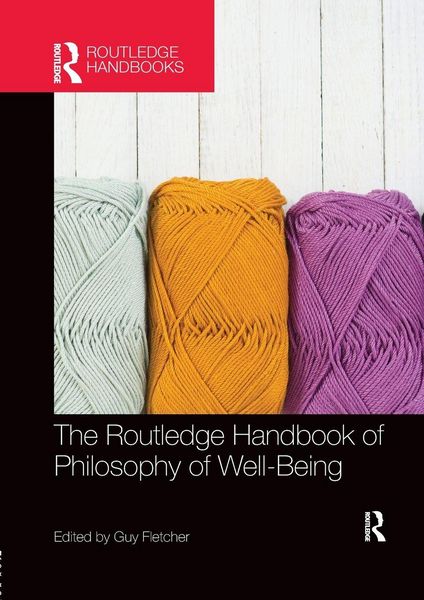
  • Produktbild: The Routledge Handbook of Philosophy of Well-Being
  • Produktbild: The Routledge Handbook of Philosophy of Well-Being

The Routledge Handbook of Philosophy of Well-Being

78,99 €

inkl. gesetzl. MwSt., Versandkostenfrei


Beschreibung

The concept of well-being is one of the oldest and most important topics in philosophy and ethics, going back to ancient Greek philosophy. Following the boom in happiness studies in the last few years it has moved to centre stage, grabbing media headlines and the attention of scientists, psychologists...

Beschreibung

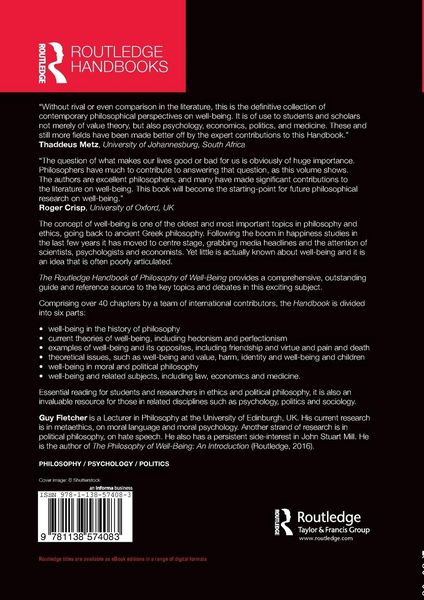
The concept of well-being is one of the oldest and most important topics in philosophy and ethics, going back to ancient Greek philosophy. Following the boom in happiness studies in the last few years it has moved to centre stage, grabbing media headlines and the attention of scientists, psychologists and economists. Yet little is actually known about well-being and it is an idea that is often poorly articulated.

The Routledge Handbook of Philosophy of Well-Being provides a comprehensive, outstanding guide and reference source to the key topics and debates in this exciting subject.

Comprising over 40 chapters by a team of international contributors, the Handbook is divided into six parts:

  • well-being in the history of philosophy
  • current theories of well-being, including hedonism and perfectionism
  • examples of well-being and its opposites, including friendship and virtue and pain and death
  • theoretical issues, such as well-being and value, harm, identity and well-being and children
  • well-being in moral and political philosophy
  • well-being and related subjects, including law, economics and medicine.

Essential reading for students and researchers in ethics and political philosophy, it is also an invaluable resource for those in related disciplines such as psychology, politics and sociology.

Rezension

"Without rival or even comparison in the literature, this is the definitive collection of contemporary philosophical perspectives on well-being. It is of use to students and scholars not merely of value theory, but also psychology, economics, politics, and medicine. These and still more fields have been made better off by the expert contributions to this Handbook." - Thaddeus Metz, University of Johannesburg, South Africa

"The question of what makes our lives good or bad for us is obviously of huge importance. Philosophers have much to contribute to answering that question, as this volume shows. The authors are excellent philosophers, and many have made significant contributions to the literature on well-being. This book will become the starting-point for future philosophical research on well-being." - Roger Crisp, University of Oxford, UK

Produktdetails

Einband

Taschenbuch

Erscheinungsdatum

13.10.2017

Herausgeber Guy Fletcher
Verlag Taylor & Francis

Produktdetails

Einband

Taschenbuch

Erscheinungsdatum

13.10.2017

Herausgeber Guy Fletcher
Verlag Taylor & Francis
Seitenzahl

548

Maße (L/B/H)

24,6/17,4/2,9 cm

Gewicht

964 g

Farbe

Schwarz / Koralle

Sprache

Englisch

ISBN

978-1-138-57408-3

Herstelleradresse

Libri GmbH
Europaallee 1
36244 Bad Hersfeld
DE

Email: gpsr@libri.de

Noch keine Bewertungen vorhanden

Verfassen Sie die erste Bewertung zu diesem Artikel

Helfen Sie anderen Kundinnen und Kunden durch Ihre Meinung.

Kundinnen und Kunden meinen

Bewertungen (0)

Die Leseprobe wird geladen.
  • Produktbild: The Routledge Handbook of Philosophy of Well-Being
  • Produktbild: The Routledge Handbook of Philosophy of Well-Being
  • Introduction Guy Fletcher

    Part 1: Well-Being in the History of Moral Philosophy

    1. Plato Eric Brown

    2. Aristotle on Well-Being Richard Kraut

    3. Hedonistic Theories of Well Being in Antiquity Tim O'Keefe

    4. Well-Being and Confucianism Richard Kim

    5. Well-Being and Daoism Justin Tiwald

    6. Well-Being in the Buddhist tradition Christopher Gowans

    7. Well-Being in the Christian tradition William Lauinger

    8. The Later British Moralists Robert Shaver

    Part 2: Theories of Well-Being

    9. Hedonism Alex Gregory

    10. Perfectionism Gwen Bradford

    11. Desire-Fulfilment theory Chris Heathwood

    12. Objective List Theory Guy Fletcher

    13. Hybrid Theories Chris Woodard

    14. Subject-Sensitive theories Alicia Hall and Valerie Tiberius

    15. Eudaimonism Lorraine Besser-Jones

    Part 3: Particular Goods and Bads

    16. Pleasure Ben Bramble

    17. Pain Guy Kahane

    18. Health, Disability, and Well-Being Drew Schroeder

    19. Friendship Diane Jeske

    20. Virtue Anne Baril

    21. Epistemic Goods Allan Hazlett

    22. Achievements Gwen Bradford and Simon Keller

    23. Meaningfulness Antti Kauppinen

    24. Needs Marco Grix and Philip McKibbin

    25. Happiness Neera Badhwar

    26. Death Ben Bradley

    Part 4: Theoretical Issues

    27. Monism and Pluralism Eden Lin

    28. Atomism and Holism in the Theory of Personal Well-Being Jason Raibley

    29. The Experience Machine and the Experience Requirement Jennifer Hawkins

    30. Children's Well-being A Philosophical Analysis Anthony Skelton

    31. Well-Being and Animals Christopher Rice

    32. The Science of Well-Being Anna Alexandrova

    33. The Concept of Well-Being Steve Campbell

    Part 5: Well-Being in Moral and Political Philosophy

    34. Welfarism Dale Dorsey

    35. Well-Being and the Non-Identity Problem Molly Gardner

    36. Well-Being, Paternalism, Autonomy Sarah Conly

    37. Well-Being and Disadvantage Jonathan Wolff and Doug Reeve

    38. Feminism and Well-Being Jules Holroyd

    Part 6: Well-being and other disciplines

    39. Well-Being and Law Alex Sarch

    40. Well-Being and Economics Erik Angner

    41. Medicine and Well-Being Daniel Groll.

    Index