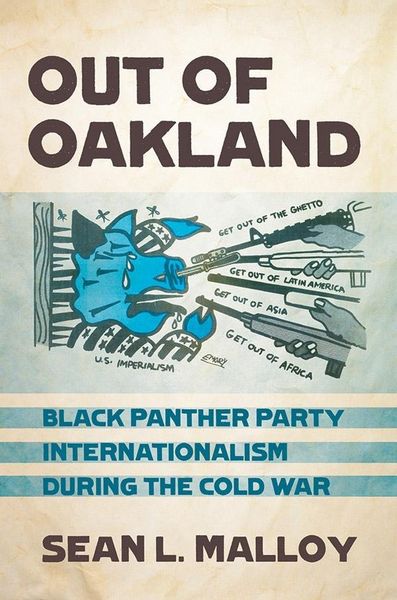
Out of Oakland Black Panther Party Internationalism during the Cold War
-
- Taschenbuch
- eBook ausgewählt
-
Form:Einzelkauf Download
-
Sprache:Englisch
-
eBook Format:ePUB
- PDF 165,95 €
- ePUB 15,39 € ausgewählt
15,39 €
inkl. gesetzl. MwSt.Beschreibung
Produktdetails
Format
ePUB
Kopierschutz
Nein
Family Sharing
Nein
Text-to-Speech
Ja
Erscheinungsdatum
06.06.2017
Verlag
Cornell University PressSeitenzahl
280 (Printausgabe)
Dateigröße
2994 KB
Sprache
Englisch
EAN
9781501712708
Out of Oakland offers a wonderful case study in the possibilities and limitations of transnational organizing. â. Diplomatic History
In Out of Oakland, Sean L. Malloy explores the evolving internationalism of the Black Panther Party (BPP); the continuing exile of former members, including Assata Shakur, in Cuba is testament to the lasting nature of the international bonds that were forged during the party's heyday. Founded in Oakland, California, in October 1966 by Huey P. Newton and Bobby Seale, the BPP began with no more than a dozen members. Focused on local issues, most notably police brutality, the Panthers patrolled their West Oakland neighborhood armed with shotguns and law books. Within a few years, the BPP had expanded its operations into a global confrontation with what Minister of Information Eldridge Cleaver dubbed "the international pig power structure."
Malloy traces the shifting intersections between the black freedom struggle in the United States, Third World anticolonialism, and the Cold War. By the early 1970s, the Panthers had chapters across the United States as well as an international section headquartered in Algeria and support groups and emulators as far afield as England, India, New Zealand, Israel, and Sweden. The international section served as an official embassy for the BPP and a beacon for American revolutionaries abroad, attracting figures ranging from Black Power skyjackers to fugitive LSD guru Timothy Leary. Engaging directly with the expanding Cold War, BPP representatives cultivated alliances with the governments of Cuba, North Korea, China, North Vietnam, and the People's Republic of the Congo as well as European and Japanese militant groups and the Palestinian Liberation Organization.
In an epilogue, Malloy directly links the legacy of the BPP to contemporary questions raised by the Black Lives Matter movement.
Noch keine Bewertungen vorhanden
Verfassen Sie die erste Bewertung zu diesem Artikel
Helfen Sie anderen Kundinnen und Kunden durch Ihre Meinung.
Kurze Frage zu unserer Seite
Vielen Dank für Ihr Feedback
Wir nutzen Ihr Feedback, um unsere Produktseiten zu verbessern. Bitte haben Sie Verständnis, dass wir Ihnen keine Rückmeldung geben können. Falls Sie Kontakt mit uns aufnehmen möchten, können Sie sich aber gerne an unseren Kund*innenservice wenden.
zum Kundenservice