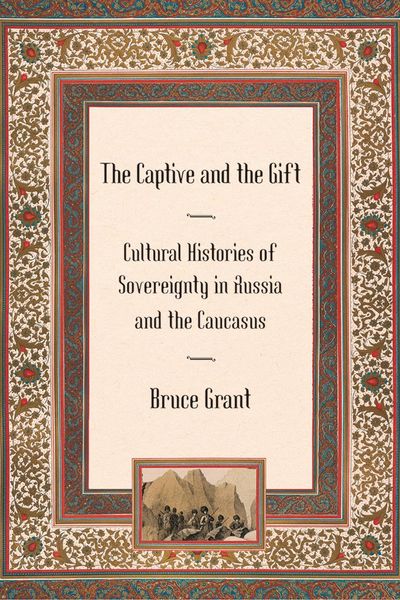
The Captive and the Gift Cultural Histories of Sovereignty in Russia and the Caucasus
-
- Einzelkauf Download ausgewählt
-
Sprache:Englisch
25,29 €
inkl. gesetzl. MwSt.Beschreibung
Produktdetails
Format
ePUB
Kopierschutz
Nein
Family Sharing
Nein
Text-to-Speech
Ja
Erscheinungsdatum
15.05.2016
Verlag
Cornell University PressSeitenzahl
216 (Printausgabe)
Sprache
Englisch
EAN
9781501702860
The Caucasus region of Eurasia, wedged in between the Black and Caspian Seas, encompasses the modern territories of Armenia, Azerbaijan, and Georgia, as well as the troubled republic of Chechnya in southern Russia. A site of invasion, conquest, and resistance since the onset of historical record, it has earned a reputation for fearsome violence and isolated mountain redoubts closed to outsiders. Over extended efforts to control the Caucasus area, Russians have long mythologized stories of their countrymen taken captive by bands of mountain brigands.
In The Captive and the Gift, the anthropologist Bruce Grant explores the long relationship between Russia and the Caucasus and the means by which sovereignty has been exercised in this contested area. Taking his lead from Aleksandr Pushkin's 1822 poem "Prisoner of the Caucasus," Grant explores the extraordinary resonances of the themes of violence, captivity, and empire in the Caucasus through mythology, poetry, short stories, ballet, opera, and film.
Grant argues that while the recurring Russian captivity narrative reflected a wide range of political positions, it most often and compellingly suggested a vision of Caucasus peoples as thankless, lawless subjects of empire who were unwilling to acknowledge and accept the gifts of civilization and protection extended by Russian leaders. Drawing on years of field and archival research, Grant moves beyond myth and mass culture to suggest how real-life Caucasus practices of exchange, by contrast, aimed to control and diminish rather than unleash and increase violence.
The result is a historical anthropology of sovereign forms that underscores how enduring popular narratives and close readings of ritual practices can shed light on the management of pluralism in long-fraught world areas.
Noch keine Bewertungen vorhanden
Verfassen Sie die erste Bewertung zu diesem Artikel
Helfen Sie anderen Kundinnen und Kunden durch Ihre Meinung.
Kurze Frage zu unserer Seite
Vielen Dank für Ihr Feedback
Wir nutzen Ihr Feedback, um unsere Produktseiten zu verbessern. Bitte haben Sie Verständnis, dass wir Ihnen keine Rückmeldung geben können. Falls Sie Kontakt mit uns aufnehmen möchten, können Sie sich aber gerne an unseren Kund*innenservice wenden.
zum Kundenservice