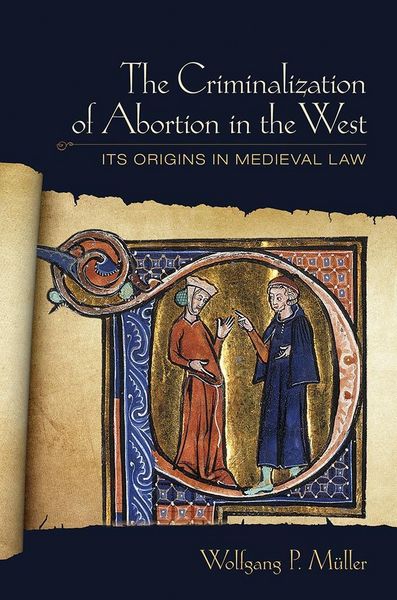
The Criminalization of Abortion in the West Its Origins in Medieval Law
-
- Taschenbuch
- eBook ausgewählt
-
Form:Einzelkauf Download
-
Sprache:Englisch
-
eBook Format:ePUB
- PDF 165,95 €
- ePUB 20,89 € ausgewählt
20,89 €
inkl. gesetzl. MwSt.Beschreibung
Produktdetails
Format
ePUB
Kopierschutz
Nein
Family Sharing
Nein
Text-to-Speech
Ja
Erscheinungsdatum
22.05.2012
Verlag
Cornell University PressSeitenzahl
280 (Printausgabe)
Dateigröße
1520 KB
Sprache
Englisch
EAN
9780801464621
Anyone who wants to understand how abortion has been treated historically in the western legal tradition must first come to terms with two quite different but interrelated historical trajectories. On one hand, there is the ancient Judeo-Christian condemnation of prenatal homicide as a wrong warranting retribution; on the other, there is the juristic definition of "crime" in the modern sense of the word, which distinguished the term sharply from "sin" and "tort" and was tied to the rise of Western jurisprudence. To find the act of abortion first identified as a crime in the West, one has to go back to the twelfth century, to the schools of ecclesiastical and Roman law in medieval Europe.
In this book, Wolfgang P. Müller tells the story of how abortion came to be criminalized in the West. As he shows, criminalization as a distinct phenomenon and abortion as a self-standing criminal category developed in tandem with each other, first being formulated coherently in the twelfth century at schools of law and theology in Bologna and Paris. Over the ensuing centuries, medieval prosecutors struggled to widen the range of criminal cases involving women accused of ending their unwanted pregnancies. In the process, punishment for abortion went from the realm of carefully crafted rhetoric by ecclesiastical authorities to eventual implementation in practice by clerical and lay judges across Latin Christendom. Informed by legal history, moral theology, literature, and the history of medicine, Müller's book is written with the concerns of modern readers in mind, thus bridging the gap that might otherwise divide modern and medieval sensibilities.
Noch keine Bewertungen vorhanden
Verfassen Sie die erste Bewertung zu diesem Artikel
Helfen Sie anderen Kundinnen und Kunden durch Ihre Meinung.
Kurze Frage zu unserer Seite
Vielen Dank für Ihr Feedback
Wir nutzen Ihr Feedback, um unsere Produktseiten zu verbessern. Bitte haben Sie Verständnis, dass wir Ihnen keine Rückmeldung geben können. Falls Sie Kontakt mit uns aufnehmen möchten, können Sie sich aber gerne an unseren Kund*innenservice wenden.
zum Kundenservice