Gutscheinbedingungen

**Gültig bis 06.07.2026 auf fremdsprachige Bücher online auf thalia.at, in der Thalia App ab einem Mindestbestellwert von 30€ und in allen Thalia Buchhandlungen in Österreich. In den Buchhandlungen nur gültig auf lagernde Ware. Einzelne Artikel können ausgeschlossen sein. Ausgenommen sind preisgebundene Artikel & eBooks. Pro Einkauf einmal einlösbar. Nur gültig gegen Vorlage oder im Onlineshop hinterlegter Bonuscard. Infos zur Einlösung in der Buchhandlung sind auf der Bonuscard-Vorteilspreisseite zu finden. Click & Collect nur bei Onlinevorabzahlung möglich. Keine Einlösung bei Scan & Go-Bezahlung. Keine Barauszahlung. Nicht kombinierbar mit anderen Aktionen und Gutscheinen. Gutschein wird auf max. 500€ Bestellwert angerechnet. Nicht gültig für Versandkosten und Services.

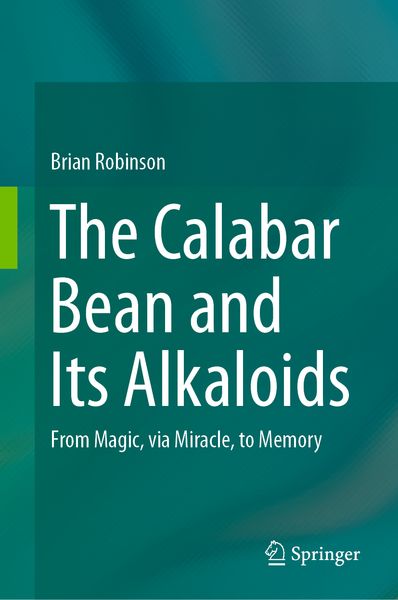
  • Produktbild: The Calabar Bean and its Alkaloids
  • Produktbild: The Calabar Bean and its Alkaloids
- 13%

The Calabar Bean and its Alkaloids From Magic, via Miracle, to Memory

13% sparen

171,99 € UVP 197,99 €

inkl. gesetzl. MwSt., Versandkostenfrei


Beschreibung

Produktdetails

Einband

Gebundene Ausgabe

Erscheinungsdatum

25.03.2023

Abbildungen

XXVI, 240 illus., schwarz-weiss Illustrationen

Verlag

Springer Netherland

Seitenzahl

267

Maße (L/B/H)

24,1/16/2,2 cm

Gewicht

555 g

Auflage

1st ed. 2023

Sprache

Englisch

ISBN

978-94-024-1190-4

Beschreibung

Produktdetails

Einband

Gebundene Ausgabe

Erscheinungsdatum

25.03.2023

Abbildungen

XXVI, 240 illus., schwarz-weiss Illustrationen

Verlag

Springer Netherland

Seitenzahl

267

Maße (L/B/H)

24,1/16/2,2 cm

Gewicht

555 g

Auflage

1st ed. 2023

Sprache

Englisch

ISBN

978-94-024-1190-4

Herstelleradresse

Springer-Verlag KG
Sachsenplatz 4-6
1201 Wien
AT

Email: GPSR Kontakt

Noch keine Bewertungen vorhanden

Verfassen Sie die erste Bewertung zu diesem Artikel

Helfen Sie anderen Kundinnen und Kunden durch Ihre Meinung.

Kundinnen und Kunden meinen

Bewertungen (0)

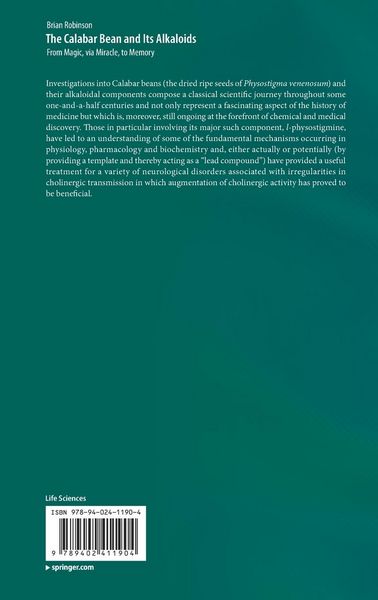
  • Produktbild: The Calabar Bean and its Alkaloids
  • Produktbild: The Calabar Bean and its Alkaloids
  • Chronology.-  Abbreviations.- Preface and acknowledgements.- 1. Introduction.- 2. l-Physostigmine (eserine).- 2.1. Natural occurrence.- 2.2. Structure elucidation.- 2.3. Synthesis of:- 2.3.1. by early approaches, including the first to be successful.- 2.3.2. l-physostigmine and the 3a-alkyl-1,2,3,3a,8,8a-hexahydropyrrolo[2,3-b]indole ring system.- 2.3.3.  d-physostigmine.- 2.4. Absolute configuration, together with that of the other structurally-established alkaloids of the Calabar bean.- 2.5. Biogenesis.- 2.6. Ultraviolet absorption spectrum and reaction in an acidic medium.- 2.7. Mass spectrum.- 2.8. Detection, assay and instability.- 2.8.1. Qualitative and quantitative analysis.- 2.8.2. Rubreserine.- 2.8.3. Eserine blue.- 2.8.4. Eserine brown.- 3. l-Physovenine.- 3.1. Isolation and structure elucidation.- 3.2. Synthesis of the:- 3.2.1. racemate.- 3.2.2. l<- and d-enantiomers.- 3.2.3. 3a-alkyl-3,3a,8,8a-tetrahydro-2H<-furo[2,3-b]indole ring system.- 3.3. Biogenesis.- 4. l-Eseramine.- 4.1. Isolation and structure elucidation.- 4.2. Synthesis of the:- 4.2.1. racemate.- 4.2.2. l-enantiomer.- 5. l-N(8)-Norphysostigmine.- 5.1. Isolation and structure elucidation.- 5.2. Synthesis of the l-enantiomer.- 6. l-Geneserine.- 6.1. Isolation and structure elucidation.- 6.2. Synthesis of the l-enantiomer and the racemate.- 7. 1H-, 13C- and 15N-Nuclear magnetic resonance spectra of the alkaloids of the Calabar bean.- 8. Other alkaloids of, as yet, unknown structures that have been isolated, or allegedly so, from the Calabar bean.- 8.1. Calabarine.- 8.2. Eseridine.- 8.3. Isophysostigmine.- 8.4. Calabatine and calabacine.- 8.5. Investigations still to be effected.- 9. Non-alkaloidal components of the Calabar bean.- 10. Biological activities of the alkaloids of the Calabar bean.- 10.1. AntiAchE activity.- 10.1.1. AchE – its function in neurohumoral transmission, structure and inhibition.- 10.2. Pharmacology of l-physostigmine.- 10.3. Role of l-physostigmine in the discovery of the mechanism of neurohumoral transmission.- 10.4. AntiAchE activities of the minor alkaloids of the Calabar bean – the l-physostigmine pharmacophore.- 10.5. Clinical use of l-physostigmine in ophthalmology – miotic activity and the reduction of intraocular pressure in glaucoma.- 10.6. Clinical use of l-physostigmine in the treatment of:- 10.6.1. Myasthenia gravis.- 10.6.2. Paraplegic anejaculation.- 10.7. Use of l-physostigmine in the:- 10.7.1. Prophylactic protection against intoxication by organophosphates (including “nerve gases”).- 10.7.2. Enhancement of cognition and memory (including antiamnesic activity in dementia of the Alzheimer’s type – Alzheimer’s disease).- 10.8. Bactericidal and insecticidal activities of l-physostigmine.- 10.9. Prophylactic protection with d-physostigmine against intoxication by organophosphates (including “nerve gases”).- 10.10. Other clinical uses of l-physostigmine.- 10.11. Antinociceptive activity of l-eseroline and its synthetic analogues.- 10.12. Cytotoxicities of rubreserine and another structurally-related degradation product of l-physostigmine.- 10.13. Poisonings (either accidental or malicious) with the Calabar bean.- 11. Notes.- 12. References.- 13. Index.