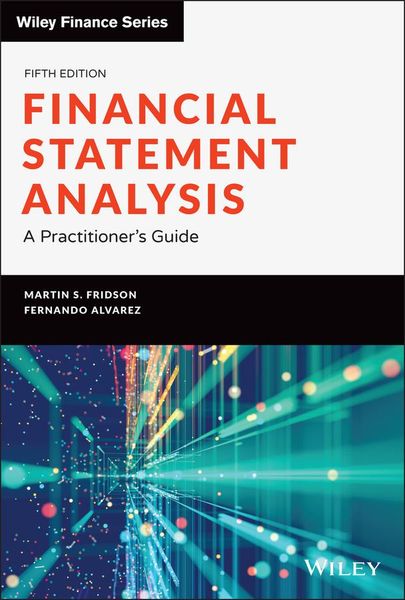
Financial Statement Analysis A Practitioner's Guide
-
- Englisch ausgewählt
94,99 €
inkl. gesetzl. MwSt.,
Beschreibung
Produktdetails
Einband
Gebundene Ausgabe
Erscheinungsdatum
19.05.2022
Verlag
John Wiley & SonsSeitenzahl
448
Maße (L/B/H)
23,4/15,8/3,9 cm
Gewicht
630 g
Auflage
5. Auflage
Sprache
Englisch
ISBN
978-1-119-45714-5
PRAISE FOR FINANCIAL STATEMENT ANALYSIS, FIFTH EDITION
"Anyone can get lucky in the short term, but to succeed in the long term requires expert financial skills. There is no better guide than Marty Fridson."
-John Paulson, President, Paulson & Co.
"Read Financial Statement Analysis and avoid getting duped by financial shenanigans. This book will protect you and your investments."
- Wesley R. Gray, PhD, CEO of Alpha Architect, and co-author of Quantitative Value and Quantitative Momentum
"Financial Statement Analysis is an almost indispensable book for portfolio managers, securities analysts, and businessmen who want deep insights into how financial statements can be misleading and how they can be helpful in understanding the true strengths and weaknesses of companies. The book should be required reading for all students interested in careers in finance or general business."
- Edgar Wachenheim III, CEO, founder, and chairman of Greenhaven Associates; author of Common Stocks and Common Sense: The Strategies, Analyses, Decisions, and Emotions of a Particularly Successful Value Investor
"Once again, Fridson and Alvarez provide analysts and investors with the necessary, but all too often overlooked truth about how to approach financial statement and corporate profit analysis. Anyone who wants to understand business should study the lessons in this book."
-David Trainer, CEO, New Constructs
"Most financial analysis books are written by academics with limited to no real-life experience. This book is unique since it clearly reflects the extensive practical experience of the authors, along with their knowledge of relevant research. I particularly liked the chapters on data reliability, M&As, fraud, forecasting, and credit analysis. This book is at the top of financial analysis books available, to be used as a text in university financial analysis courses, as well as a source of knowledge to investment professionals."
- Baruch Lev, Philip Bardes Professor of Accounting and Finance, New York University; author of The End of Accounting and the Path Forward for Investors and Managers
"Over my decades of involvement with high-yield bonds, Marty Fridson has been the leading speaker of truth. As he so accurately states in Financial Statement Analysis, the credit investor is required to engage in a game of cat-and-mouse with company's management intent on minimizing their cost of capital by putting a positive gloss on their financial statements. The Fifth Edition of Marty's terrific book is the bible on how to detect and deal with these efforts."
-Howard Marks, Co-Chairman, Oaktree Capital Management
Noch keine Bewertungen vorhanden
Verfassen Sie die erste Bewertung zu diesem Artikel
Helfen Sie anderen Kundinnen und Kunden durch Ihre Meinung.
Kurze Frage zu unserer Seite
Vielen Dank für Ihr Feedback
Wir nutzen Ihr Feedback, um unsere Produktseiten zu verbessern. Bitte haben Sie Verständnis, dass wir Ihnen keine Rückmeldung geben können. Falls Sie Kontakt mit uns aufnehmen möchten, können Sie sich aber gerne an unseren Kund*innenservice wenden.
zum Kundenservice