Gutscheinbedingungen

**Gültig bis 06.07.2026 auf fremdsprachige Bücher online auf thalia.at, in der Thalia App ab einem Mindestbestellwert von 30€ und in allen Thalia Buchhandlungen in Österreich. In den Buchhandlungen nur gültig auf lagernde Ware. Einzelne Artikel können ausgeschlossen sein. Ausgenommen sind preisgebundene Artikel & eBooks. Pro Einkauf einmal einlösbar. Nur gültig gegen Vorlage oder im Onlineshop hinterlegter Bonuscard. Infos zur Einlösung in der Buchhandlung sind auf der Bonuscard-Vorteilspreisseite zu finden. Click & Collect nur bei Onlinevorabzahlung möglich. Keine Einlösung bei Scan & Go-Bezahlung. Keine Barauszahlung. Nicht kombinierbar mit anderen Aktionen und Gutscheinen. Gutschein wird auf max. 500€ Bestellwert angerechnet. Nicht gültig für Versandkosten und Services.

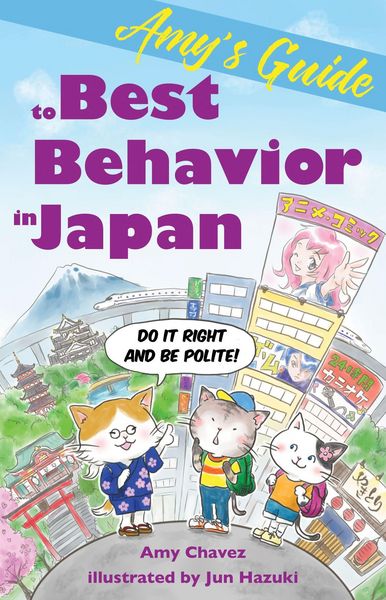
Produktbild: Amy's Guide to Best Behavior in Japan

Amy's Guide to Best Behavior in Japan Do It Right and Be Polite!

12,99 €

inkl. gesetzl. MwSt., zzgl. Versandkosten


  • Kostenlose Lieferung ab 30 € Einkaufswert
  • Versandkostenfrei für Bonuscard-Kund*innen

Beschreibung

Produktdetails

Einband

Taschenbuch

Erscheinungsdatum

19.06.2018

Illustriert von

Jun Hazuki

Verlag

Stone Bridge Press

Seitenzahl

144

Maße (L/B/H)

17,7/11,3/1,2 cm

Gewicht

142 g

Sprache

Englisch

ISBN

978-1-61172-043-3

Beschreibung

Rezension

Foreword Indie Awards Gold Winner in Travel

"You are headed to Japan for the first time and you've heard Japanese are very courteous and that good manners are very important in their country... Chavez covers about every situation where manners are important in Japan, from transportation and accommodation to food and drink consumption to business meetings, dating, weddings, cell phones, etc. It is 140 pages of how to be on your best behavior."
-Japan Visitor

"For many American and international fans of anime and manga, visiting Japan is a dream come true. But because Japan has a very unique culture, how can tourists make sure they're not accidentally saying or doing the wrong things? Amy's Guide to Best Behavior in Japan is here to help."
-OtakuUSA Magazine

"Want to delve into the nitty-gritty of Japanese manners? Amy's Guide to Best Behavior in Japan: Do it Right and Be Polite! might be the guide for you."
-Kotaku

"Both humorous and remains informative for anyone needing a little guidance on avoiding the pitfalls that sometimes await travelers in the land of the rising sun."
-Gaijin Pot

"A quick, easy-to-read overview of how to fully enjoy your experience in Japan and best incorporate the complexities of Japanese customs and etiquette into your homestay, study abroad, or quick jaunt to Japan."
-JQ Magazine

"A comprehensive overview of Japanese etiquette for visitors to Japan. Topics are well organized and easy-to-read with personal anecdotes and cute illustrations that present very practical 'do's and don'ts' as well as some of their underlying cultural perceptions. I highly recommend Amy's Guide, not just to avoid making mistakes while in Japan but also to enjoy this intriguing side of its culture and people."
-Cathy Hirano, translator of Marie Kondo's The Life-Changing Magic of Tidying Up and Nahoko Uehashi's The Beast Player

"A long-needed succinct, comprehensive, and easily understood guide to the mores of Japan."
-Paul Christie, CEO, Walk Japan

"A thoroughly 'user friendly' guide for businessmen and vacationers to the common courtesy, acceptable behaviors, and expected manners that are essential for any visitor to Japan. You'll gain the respect of your hosts and in the end get even better service and enjoyment during your travels."
-Midwest Book Review

"Sixteen years of writing on the country have honed her take on the subject, and it is in her experience as a writer and an observer that her strengths lie."
-Kyoto Journal

"In my 60-plus years of attempting to describe what it means to be Japanese and how to interact effectively with them, I found Amy Chavez's book . . . the most novel, the most fascinating, and one of the most insightful descriptions of the Japanese character"
-Boye Lafayette De Mente, author of 30+ pioneer books on Japan

Produktdetails

Einband

Taschenbuch

Erscheinungsdatum

19.06.2018

Illustriert von

Jun Hazuki

Verlag

Stone Bridge Press

Seitenzahl

144

Maße (L/B/H)

17,7/11,3/1,2 cm

Gewicht

142 g

Sprache

Englisch

ISBN

978-1-61172-043-3

Herstelleradresse

Libri GmbH
Europaallee 1
36244 Bad Hersfeld
DE

Email: gpsr@libri.de

Noch keine Bewertungen vorhanden

Verfassen Sie die erste Bewertung zu diesem Artikel

Helfen Sie anderen Kundinnen und Kunden durch Ihre Meinung.

Kundinnen und Kunden meinen

Bewertungen (0)

Die Leseprobe wird geladen.
  • Produktbild: Amy's Guide to Best Behavior in Japan
  • INTRODUCTION

    • Hospitality and Thoughtfulness in Japan
    • The Role of the Outsider (You)
    • Manners = Gratitude

    10 Things You Should Never Do in Japan

    10 Things You Should Always Do in Japan

    Money

    • talking about money
    • money envelopes
    • tipping
    • monetary gifts
    • paying the bill at a restaurant
    • paying someone for their time or for a favor
    • Anecdote/commentary

    Bowing & Shaking Hands

    • when to bow
    • how to bow
    • the head-bow
    • kowtowing
    • bowing while exchanging business cards
    • shaking hands while exchanging business cards
    • Anecdote/commentary

    Conversation

    • when to speak
    • voice level
    • adjusting you speech for non-native speakers
    • listening
    • good topics
    • bad topics (see Taboo Subjects)
    • making suggestions
    • how to be firm but polite
    • asking for help
    • expressing interest without creating obligation
    • apologizing
    • expressing disagreement
    • expressing disappointment
    • dealing with embarrassing situations and mistakes
    • Anecdote/commentary

    Taboo Subjects

    • burakumin
    • yakuza
    • suicide
    • racism
    • gays/lesbians
    • foreigners
    • money
    • about tattoos and piercings
    • Anecdote/commentary

    Showing Appreciation

    • thanking
    • gift-giving
    • turning thoughtfulness into a habit
    • returning favors
    • omiyage
    • gifts of anticipation
    • thanking someone the next time you see them
    • Anecdote/commentary

    Romance and Flirting

    • dating
    • holding hands
    • visiting someone's house
    • dating
    • sex
    • texting and use of emoji
    • Anecdote/commentary

    Queuing

    • waiting to get into a restaurant
    • queuing on the train platform
    • middle-aged women who don't que
    • giving up your seat on the train to an aged person
    • Anecdote/commentary

    Eating in Public

    • on the train
    • eating while walking
    • standing while eating
    • what to do with your garbage after eating
    • foods you shouldn't eat on the train to not cause offense (kimchee
    • etc)
    • how to put your bento box back together before throwing it away (chopsticks back in sleeve
    • uneaten food covered with lid and bound with elastic
    • all that put back into plastic bag)
    • Anecdote/commentary

    Eating in Restaurants

    • letting your host order for you
    • choosing shareable dishes
    • eating leisurely
    • chopstick etiquette
    • types of food and protocol (nabe
    • okonomiyaki
    • etc)
    • vegetarians
    • Anecdote/commentary

    Drinking

    • in public
    • at parties or functions
    • ohanami parties
    • kompai etiquette
    • pouring beer
    • refiling others' beer glasses
    • wine
    • sake
    • Anecdote/commentary

    Drinking Establishments

    • izakaya
    • bars
    • hostess clubs
    • cafes Asking for waiter/waitress
    • paying
    • tipping
    • who pays
    • Anecdote/commentary

    Shoes

    • the genkan
    • taking off shoes
    • properly taking off shoes
    • lining up shoes
    • using slippers
    • bare feet & tatami mat
    • toilet slippers
    • outdoor slippers
    • using shoe boxes
    • Anecdote/commentary

    Toilets

    • J-style
    • Western style
    • washlets
    • hygiene
    • big and small flush
    • how to knock on stall door
    • the "sound princess," old style pit toilets
    • Anecdote/commentary

    At the Hotel

    • tipping
    • how to complain
    • dealing with staff
    • letting yourself be taken care of
    • using the bath and other common facilities
    • Anecdote/commentary

    On the Subway/Train/Bus

    • finding a seat in an unreserved compartment or train
    • eating
    • sound levels
    • use of electronics, headphones, and cell phones
    • making conversation (or not) with fellow passengers
    • asking for help
    • solving ticketing and reservation problems

    When You “Take a Meeting” in Japan

    • greetings
    • basic workplace etiquette
    • to bring a gift or not?
    • to receive a gift or not?
    • who pays for lunch?
    • where and when to use your phone
    • thank yous at day’s end
    • how to listen
    • how to say no or “I’ll think about it”

    Bringing Good Manners Home With You

    Index