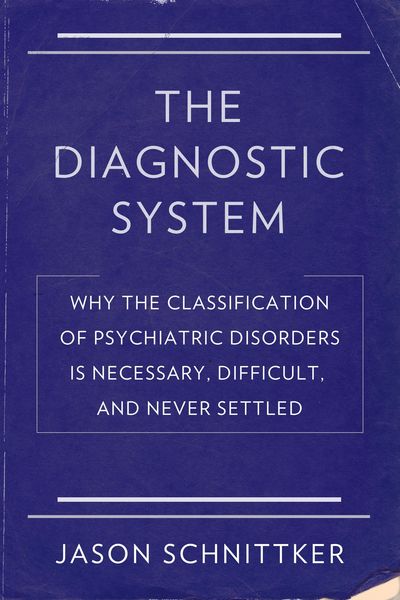
The Diagnostic System Why the Classification of Psychiatric Disorders Is Necessary, Difficult, and Never Settled
-
- Einzelkauf Download ausgewählt
-
Sprache:Englisch
32,90 €
inkl. gesetzl. MwSt.Beschreibung
Produktdetails
Format
ePUB
Kopierschutz
Nein
Family Sharing
Nein
Text-to-Speech
Ja
Erscheinungsdatum
08.08.2017
Verlag
Columbia University PressSeitenzahl
368 (Printausgabe)
Dateigröße
1965 KB
Sprache
Englisch
EAN
9780231544597
Mental illness is many things at once: It is a natural phenomenon that is also shaped by society and culture. It is biological but also behavioral and social. Mental illness is a problem of both the brain and the mind, and this ambiguity presents a challenge for those who seek to accurately classify psychiatric disorders. The leading resource we have for doing so is the American Psychiatric Association's Diagnostic and Statistical Manual, but no edition of the manual has provided a decisive solution, and all have created controversy. In The Diagnostic System, the sociologist Jason Schnittker looks at the multiple actors involved in crafting the DSM and the many interests that the manual hopes to serve. Is the DSM the best tool for defining mental illness? Can we insure against a misleading approach?
Schnittker shows that the classification of psychiatric disorders is best understood within the context of a system that involves diverse parties with differing interests. The public wants a better understanding of personal suffering. Mental-health professionals seek reliable and treatable diagnostic categories. Scientists want definitions that correspond as closely as possible to nature. And all parties seek definitive insight into what they regard as the right target. Yet even the best classification system cannot satisfy all of these interests simultaneously. Progress toward an ideal is difficult, and revisions to diagnostic criteria often serve the interests of one group at the expense of another. Schnittker urges us to become comfortable with the socially constructed nature of categorization and accept that a perfect taxonomy of mental-health disorders will remain elusive. Decision making based on evolving though fluid understandings is not a weakness but an adaptive strength of the mental-health profession, even if it is not a solid foundation for scientific discovery or a reassuring framework for patients.
Noch keine Bewertungen vorhanden
Verfassen Sie die erste Bewertung zu diesem Artikel
Helfen Sie anderen Kundinnen und Kunden durch Ihre Meinung.
Kurze Frage zu unserer Seite
Vielen Dank für Ihr Feedback
Wir nutzen Ihr Feedback, um unsere Produktseiten zu verbessern. Bitte haben Sie Verständnis, dass wir Ihnen keine Rückmeldung geben können. Falls Sie Kontakt mit uns aufnehmen möchten, können Sie sich aber gerne an unseren Kund*innenservice wenden.
zum Kundenservice