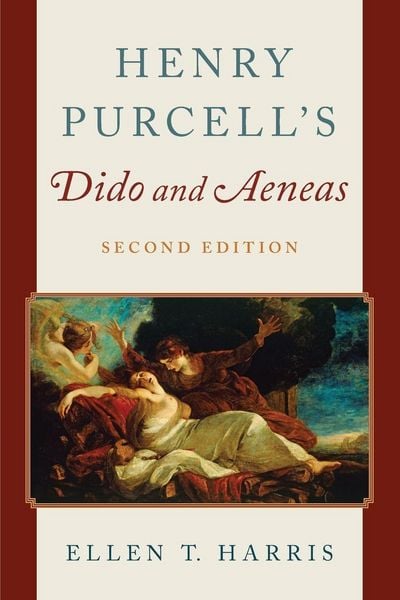
Henry Purcell's Dido and Aeneas
-
- Hardcover
- Taschenbuch ausgewählt
- eBook
-
Sprache:Englisch
89,99 €
inkl. gesetzl. MwSt.,
Beschreibung
Produktdetails
Einband
Taschenbuch
Erscheinungsdatum
01.12.2017
Verlag
Oxford University PressSeitenzahl
272
Maße (L/B/H)
23,4/15,6/1,6 cm
Gewicht
422 g
Auflage
2. überarbeitete Auflage
Sprache
Englisch
ISBN
978-0-19-027167-1
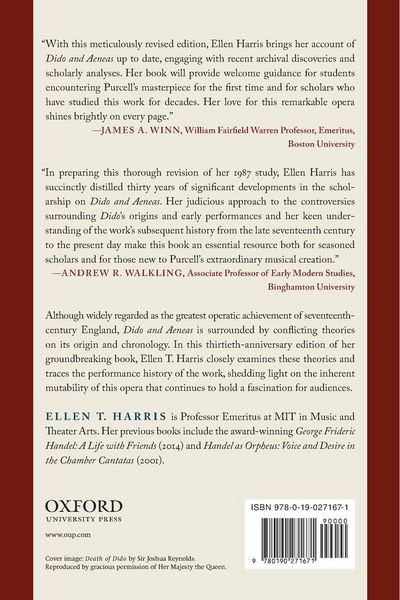
Purcell's Dido and Aeneas stands as the greatest operatic achievement of seventeenth-century England, and yet, despite its global renown, it remains cloaked in mystery. The date and place of its first performance cannot be fixed with precision, and the absolute accuracy of the surviving scores, which date from almost 100 years after the work was written, cannot be assumed. In this thirtieth-anniversary new edition of her book, Ellen Harris closely examines the many theories that have been proposed for the opera's origin and chronology, considering the opera both as political allegory and as a positive exemplar for young women. Her study explores the work's historical position in the Restoration theater, revealing its roots in seventeenth-century English theatrical and musical traditions, and carefully evaluates the surviving sources for the various readings they offer-of line designations in the text (who sings what), the vocal ranges of the soloists, the use of dance and chorus, and overall layout. It goes on to provide substantive analysis of Purcell's musical declamation and use of ground bass. In tracing the performance history of Dido and Aeneas, Harris presents an in-depth examination of the adaptations made by the Academy of Ancient Music at the end of the eighteenth century based on the surviving manuscripts. She then follows the growing interest in the creation of an "authentic" version in the nineteenth and early twentieth centuries through published editions and performance reviews, and considers the opera as an important factor in the so-called English Musical Renaissance. To a significant degree, the continuing fascination with Purcell's Dido and Aeneas rests on its apparent mutability, and Harris shows this has been inherent in the opera effectively from its origin.
Kundinnen und Kunden meinen
Verfassen Sie die erste Bewertung zu diesem Artikel
Helfen Sie anderen Kund*innen durch Ihre Meinung
Kurze Frage zu unserer Seite
Vielen Dank für Ihr Feedback
Wir nutzen Ihr Feedback, um unsere Produktseiten zu verbessern. Bitte haben Sie Verständnis, dass wir Ihnen keine Rückmeldung geben können. Falls Sie Kontakt mit uns aufnehmen möchten, können Sie sich aber gerne an unseren Kund*innenservice wenden.
zum Kundenservice