Produktbild: Mediterranean Slavery and World Literature

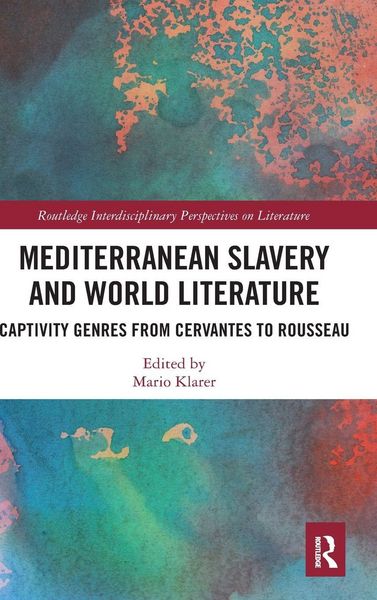
Mediterranean Slavery and World Literature Captivity Genres from Cervantes to Rousseau

233,99 €

inkl. gesetzl. MwSt., Versandkostenfrei


Beschreibung

Produktdetails

Einband

Gebundene Ausgabe

Erscheinungsdatum

18.11.2019

Abbildungen

schwarz-weiss Illustrationen

Herausgeber

Klarer Mario

Verlag

Taylor & Francis

Seitenzahl

338

Maße (L/B/H)

23,5/15,7/2,3 cm

Gewicht

589 g

Sprache

Englisch

ISBN

978-1-138-29123-2

Beschreibung

Produktdetails

Einband

Gebundene Ausgabe

Erscheinungsdatum

18.11.2019

Abbildungen

schwarz-weiss Illustrationen

Herausgeber

Klarer Mario

Verlag

Taylor & Francis

Seitenzahl

338

Maße (L/B/H)

23,5/15,7/2,3 cm

Gewicht

589 g

Sprache

Englisch

ISBN

978-1-138-29123-2

Herstelleradresse

Libri GmbH
Europaallee 1
36244 Bad Hersfeld
DE

Email: gpsr@libri.de

Kundinnen und Kunden meinen

0 Bewertungen

Informationen zu Bewertungen

Zur Abgabe einer Bewertung ist eine Anmeldung im Konto notwendig. Die Authentizität der Bewertungen wird von uns nicht überprüft. Wir behalten uns vor, Bewertungstexte, die unseren Richtlinien widersprechen, entsprechend zu kürzen oder zu löschen.

Die Bewertungen sind nach Format, Anzahl Sterne und Datum sortiert.

Verfassen Sie die erste Bewertung zu diesem Artikel

Helfen Sie anderen Kund*innen durch Ihre Meinung

Kundinnen und Kunden meinen

0 Bewertungen filtern

Die Leseprobe wird geladen.
  • Produktbild: Mediterranean Slavery and World Literature
  • Introduction

    Mario Klarer

    Part 1

    Accounts and Authenticities

    Before Barbary Captivity Narratives: Slavery, Ransom, and the Economy of Christian Virtue in The Good Gerhard (c. 1220) by Rudolf of Ems

    Mario Klarer

    Toward a New Literary History of Captivity: Adventure and Generic Hybridity in the Late Sixteenth Century

    Marcus Hartner

    Swedish Barbary Captivity Tales: From Letters to Literature (1650–1770)

    Joachim Östlund

    Part 2

    Genesis and Genres

    Cervantes’ Algerian Swan Song: The Birth of Los Baños de Argel and Its Positive Portrayal of Jews

    Michael Ross Gordon

    Female Captivity in Penelope Aubin's The Noble Slaves (1722) and Elizabeth Marsh's The Female Captive (1769)

    Stefanie Fricke

    A Dystopia as Utopia: The Algerian City of Oran and Annette von Droste-Hülshoff’s The Jew’s Beech

    Magnus Ressel

    Part 3

    Transformations and Translations

    The Free Slave: Morality, Neostoicism, and Publishing Strategy in Emanuel d’Aranda’s Algiers and it’s Slavery (1640-82)

    Lisa F. Kattenberg

    The Robinsonade as a Literary Avatar of Early Nineteenth-Century Barbary Captivity Narration

    Robert Spindler

    Part 4

    Media and Markets

    Mozart, Islam, and the Hangman of Salzburg

    Kurt Palm

    Images from the Dey’s Court: The Artist as Slave in Algiers

    Ernstpeter Ruhe

    Jonathan Cowdery’s American Captives in Tripoli (1806): Experience of the Frigate Philadelphia Officers (1803-05)

    Lotfi Ben Rejeb

    Part 5

    Captives and Concepts

    Of Cross and Crescent: Analogies of Violence and the Topos of "Barbary Captivity" in Samuel Sewall’s The Selling of Joseph (1700), with a Postscript on Benjamin Franklin

    Carsten Junker

    Defoe, Slavery, and Barbary

    G. A. Starr

    Émile in Chains: A New Perspective on Rousseau, Slavery, and Hegel’s Phenomenology

    Jeremy D. Popkin