Gutscheinbedingungen

**Gültig bis 24.09.2026 ab einem Mindestbestellwert von 30€ auf Spielzeug, Schreibwaren, Filme, Geschenke & Trends, Musik, tolino eReader & Zubehör, Hörbücher und Hörbuch-Downloads, nicht preisgebundene Bücher und Kalender online auf thalia.at und in der Thalia App. Einzelne Artikel können ausgeschlossen sein. Aufgrund der Buchpreisbindung sind deutschsprachige Bücher und eBooks ausgenommen. Zusätzlich ausgenommen sind Abos & Flatrates, Games, Geschenkkarten/-boxen, Shelfies, Software, Zeitschriften sowie einzelne Artikel von tonies®. Pro Einkauf einmal einlösbar. Click & Collect nur bei Onlinevorabzahlung möglich. Keine Barauszahlung. Nicht kombinierbar mit anderen Aktionen und Gutscheinen. Gutschein wird auf max. 500€ Bestellwert angerechnet. Nicht gültig für Versandkosten und Services. Preisgebundene Artikel sind vom Mindestbestellwert ausgeschlossen.

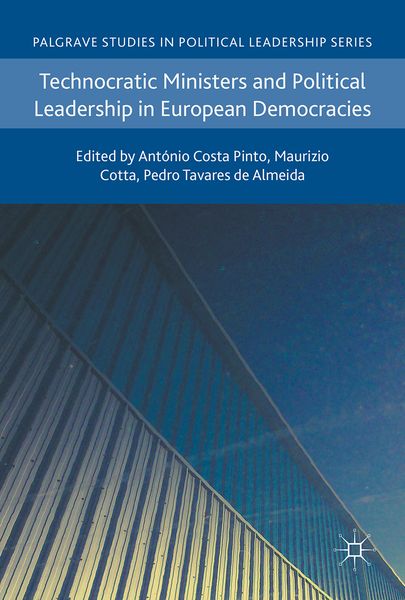
Produktbild: Technocratic Ministers and Political Leadership in European Democracies
- 10%

Technocratic Ministers and Political Leadership in European Democracies

10% sparen

157,99 € UVP 175,99 €

inkl. gesetzl. MwSt., Versandkostenfrei


Beschreibung

Produktdetails

Einband

Gebundene Ausgabe

Erscheinungsdatum

02.10.2017

Abbildungen

XIV, 295 p. 12 illus., 10 illus. in color.

Herausgeber

António Costa Pinto + weitere

Verlag

Springer

Seitenzahl

295

Maße (L/B/H)

21,6/15,3/2,2 cm

Gewicht

518 g

Auflage

1st ed. 2018

Sprache

Englisch

ISBN

978-3-319-62312-2

Beschreibung

Portrait


António Costa Pinto
is Research Professor at the Institute of Social Sciences, University of Lisbon, Portugal. He has published on authoritarianism, political elites, democratization and transitional justice. He co-edited
Who Governs Southern Europe? Regime Change and Ministerial Recruitment, 1850-2000
(2003; first reprint, 2012) and
Dealing with the Legacy of Authoritarianism: The “Politics of the Past” in Southern European Democracies
(2013) (with L. Morlino).


Maurizio Cotta
is Professor of Political Science at the University of Siena, Italy. His research interests include the comparative study of political elites, political institutions and Italian politics. He has co-edited and co-authored many books, namely
Parliamentary Representatives in Europe
(2000),
Democratic Representation: Diversity, Change and Convergence
(2007), and
Political Institutions of Italy
(2007) (with L. Verzichelli).


Pedro Tavares de Almeida
is Professor of Political Science at NOVA University of Lisbon, Portugal. His research interests focus on elite recruitment, elections and political representation. He has co-edited
Who Governs Southern Europe? Regime Change and Ministerial Recruitment, 1850-2000
(2003; first reprint, 2012),
Perspectives of National Elites on European Citizenship
(2012) and
The Politics of Representation: Elections and Parliamentarism in Portugal and Spain, 1875-1926
(2017).


Produktdetails

Einband

Gebundene Ausgabe

Erscheinungsdatum

02.10.2017

Abbildungen

XIV, 295 p. 12 illus., 10 illus. in color.

Herausgeber

Verlag

Springer

Seitenzahl

295

Maße (L/B/H)

21,6/15,3/2,2 cm

Gewicht

518 g

Auflage

1st ed. 2018

Sprache

Englisch

ISBN

978-3-319-62312-2

Herstelleradresse

Springer-Verlag GmbH
Tiergartenstr. 17
69121 Heidelberg
DE

Email: ProductSafety@springernature.com

Noch keine Bewertungen vorhanden

Verfassen Sie die erste Bewertung zu diesem Artikel

Helfen Sie anderen Kundinnen und Kunden durch Ihre Meinung.

Kundinnen und Kunden meinen

Bewertungen (0)

  • Produktbild: Technocratic Ministers and Political Leadership in European Democracies

  • 1. Beyond Party Government? Technocratic trends in society and in the executive; 
    António Costa Pinto, Maurizio Cotta and Pedro Tavares de Almeida.- 
    2. Non-Partisan Ministers under the French Fifth Republic (1959-2013); 
    Marie-Hélène Bruère and Daniel Gaxie
    .- 
    3. No More Political Insiders? Ministerial selection in Sweden during the post-WWII period; 
    Hanna Back and Thomas Persson
    .- 
    4. Shades of Technocracy. The varying use of non-partisan ministers in Italy; 
    Luca Verzichelli and Maurizio Cotta
    .- 
    5. The Primacy of Experts? Non-partisan ministers in Portuguese democracy; 
    António Costa Pinto and Ped
    ro Tavares de Almeida
    .- 
    6. The Selection and Deselection of Technocratic Ministers in Democratic Spain; 
    Juan Rodríguez Teruel and Miguel Jerez
    .- 
    7. Recruitment and Careers of Ministers in Central Eastern Europe and Baltic Countries; 
    Elena Semenova
    .- 
    8. Variations in the Expert Ministerial Frameworkin Hungary and Romania: Personal and institutional explanations; 
    Gabriella Ilonszki and Laurentiu Stefan
    .- 
    9. Turkey’s Ministerial Elites: The growing importance of technical expertise; 
    Sabri Sayari and Hasret Dikici Bilgin
    .- 
    10. Technocratic government
    versus
    party government? Non-partisan ministers and the changing parameters of political leadership in European democracies; 
    Maurizio Cotta.