KI-Beratung Beta

Gutscheinbedingungen

**Gültig bis 18.11.2026 auf englischsprachige Klassiker (klassiker-32728) online auf thalia.at und in der Thalia App. Einzelne Artikel können ausgeschlossen sein. Ausgenommen sind preisgebundene Artikel & eBooks. Pro Einkauf einmal einlösbar. Click & Collect nur bei Onlinevorabzahlung möglich. Keine Barauszahlung. Nicht kombinierbar mit anderen Aktionen und Gutscheinen. Gutschein wird auf max. 500€ Bestellwert angerechnet. Nicht gültig für Geschenkkarten, Versandkosten und Services.

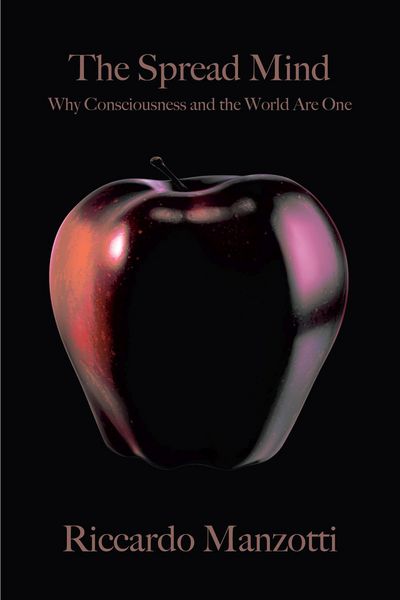
Produktbild: The Spread Mind

The Spread Mind Why Consciousness and the World Are One

29,99 €

inkl. gesetzl. MwSt., zzgl. Versandkosten


  • Kostenlose Lieferung ab 30 € Einkaufswert
  • Versandkostenfrei für Bonuscard-Kund*innen

Produktdetails

Einband

Gebundene Ausgabe

Erscheinungsdatum

23.01.2018

Abbildungen

Illustrationen, nicht spezifiziert

Verlag OR Books

Produktdetails

Einband

Gebundene Ausgabe

Erscheinungsdatum

23.01.2018

Abbildungen

Illustrationen, nicht spezifiziert

Verlag OR Books
Seitenzahl

304

Maße (L/B/H)

21,6/14,6/3,8 cm

Gewicht

490 g

Sprache

Englisch

ISBN

978-1-944869-49-6

Herstelleradresse

Libri GmbH
Europaallee 1
36244 Bad Hersfeld
DE

Email: gpsr@libri.de

Noch keine Bewertungen vorhanden

Verfassen Sie die erste Bewertung zu diesem Artikel

Helfen Sie anderen Kundinnen und Kunden durch Ihre Meinung.

Kundinnen und Kunden meinen

Bewertungen (0)

  • Produktbild: The Spread Mind
  • 1. The Spread Mind
    1.1 What, where and when is experience?
    1.2 Experience is the object
    1.3 I am world
    1.4 A better object?
    1.5 Nothing appears, everything takes place
    1.6 Appearance is reality
    1.7 Shangri-La

    2. The Spread Object
    2.1 The fridge-light model of the object
    2.2 Traditional and actual spread objects
    2.3 Senses as multiple objects
    2.4 Phenomenal is physical
    2.5 The last Ptolemaic stand
    2.6 Percipere est esse
    3. The causal geometry of experience
    3.1 Stretching over space and time
    3.2 Glass, mirrors and beyond
    3.3 A storage-less model of memory
    3.4 Dreams and hallucinations as spatiotemporal kaleidoscopes
    3.5 The causal argument revisited
    3.6 Return to Shangri-La

    4. Illusions
    4.1 Proxy and alleged properties
    4.2 Illusions as misbeliefs
    4.3 A zoo of illusions
    4.4 Benham's Top
    4.5 A comparison with other accounts

    5. Hallucinations and dreams
    5.1 Ordinary and extraordinary hallucinations
    5.2 Gerrymandered objects and direct brain stimulation
    5.3 Double preemption
    5.4 A continuum - from objects to hallucinations
    5.5 The common kind assumption

    6. A zoo of objects and experiences
    6.1 The myth of endogenous mental experience
    6.2 Phosphenes and blindness
    6.3 Visual images and congenitally blinds
    6.4 Geometric hallucinations
    6.5 Impossible, forbidden and Martian colors
    6.6 Additions and subtractions
    6.7 Afterimages
    6.8 The myth of supersaturated red
    6.9 Filling in
    6.10 Innate phantom limbs

    7. Joint causation and wholes
    7.1 Actual existence
    7.2 Objects and wholes
    7.3 Joint causation
    7.4 No time, no wholes
    7.5 The cause of the cause is the effect
    8. The spread now
    8.1 The present is not punctual
    8.2 The spread now
    8.3 Now is relative and multiple
    8.4 Present is near past and past is far present
    8.5 Pastness has no color
    8.6 The time-gap argument
    8.7 Time is an ocean, the present is its shore
    9. In nature, identity is the only relation
    9.1 A is A
    9.2 Thou shalt have no other relations before me
    9.3 Kinds of representations
    9.4 Brains as world makers
    10. Look at the universe and you'll see yourself
    References