• Produktbild: Biotransformations in Organic Chemistry
  • Produktbild: Biotransformations in Organic Chemistry

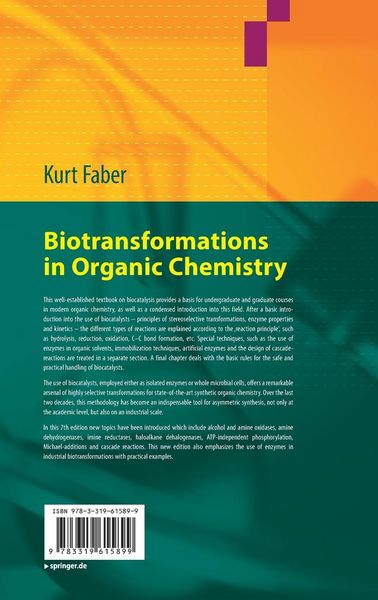
Biotransformations in Organic Chemistry A Textbook

128,99 €

inkl. gesetzl. MwSt., Versandkostenfrei


Beschreibung

Produktdetails

Einband

Gebundene Ausgabe

Erscheinungsdatum

11.01.2018

Abbildungen

XI, 327 illus., 314 illus. in color., schwarz-weiss Illustrationen, farbige Illustrationen

Verlag

Springer

Seitenzahl

434

Maße (L/B/H)

24,1/16/3 cm

Gewicht

808 g

Auflage

7th ed. 2018

Sprache

Englisch

ISBN

978-3-319-61589-9

Beschreibung

Produktdetails

Einband

Gebundene Ausgabe

Erscheinungsdatum

11.01.2018

Abbildungen

XI, 327 illus., 314 illus. in color., schwarz-weiss Illustrationen, farbige Illustrationen

Verlag

Springer

Seitenzahl

434

Maße (L/B/H)

24,1/16/3 cm

Gewicht

808 g

Auflage

7th ed. 2018

Sprache

Englisch

ISBN

978-3-319-61589-9

Herstelleradresse

Springer-Verlag KG
Sachsenplatz 4-6
1201 Wien
AT

Email: GPSR Kontakt

Noch keine Bewertungen vorhanden

Verfassen Sie die erste Bewertung zu diesem Artikel

Helfen Sie anderen Kundinnen und Kunden durch Ihre Meinung.

Kundinnen und Kunden meinen

Bewertungen (0)

  • Produktbild: Biotransformations in Organic Chemistry
  • Produktbild: Biotransformations in Organic Chemistry
  • 1        Introduction and Background Information

    1.1 Introduction..........................................................................................

    1.2 Common Prejudices Against Enzymes...............................................

    1.3 Advantages and Disadvantages of Biocatalysts..................................

    1.3.1 Advantages of Biocatalysts........................................................

    1.3.2 Disadvantages of Biocatalysts...................................................

    1.3.3 Isolated Enzymes vs. Whole Cell Systems.........................

    1.4 Enzyme Properties and Nomenclature...............................................

    1.4.1 Structural Biology in a Nutshell..............................

    1.4.2 Mechanistic Aspects of Enzyme Catalysis...........................

    1.4.3 Classification and Nomenclature............................................

    1.4.4 Coenzymes.......................................................................

    1.4.5 Enzyme Sources..............................................................

    References..... ...................................................................................


    2 Biocatalytic Applications

    2.1 Hydrolytic Reactions..........................................................................

    2.1.1 Mechanistic and Kinetic Aspects.............................................

    2.1.2 Hydrolysis of the Amide Bond................................................

    2.1.3 Ester Hydrolysis.......................................................................

    2.1.3.1       Esterases and Proteases.............................................

    2.1.3.2       Lipases.......................................................................

    2.1.3.3       Hydrolysis of Lactones.......................................................................

    2.1.4 Hydrolysis and Formation of Phosphate Esters......................

    2.1.5 Hydrolysis of Epoxides...........................................................

    2.1.6 Hydrolysis of Nitriles..............................................................

    2.2 Reduction Reactions..........................................................................

    2.2.1 Recycling of Cofactors............................................................

    2.2.2 Reduction of Aldehydes and Ketones Using Isolated Enzymes.....................................................

    2.2.3 Reduction of Aldehydes and Ketones Using Whole Cells....

    2.2.4 Reduction of C=N Bonds .......................

    2.2.5 Reduction of C=C-Bonds .......................

    2.3 Oxidation Reactions..........................................................................

    2.3.1 Oxidation of Alcohols and Aldehydes...................................

    2.3.2 Oxidation of Amines ...................................

    2.3.3 Oxygenation Reactions...........................................................

    2.3.3.1       Hydroxylation of Alkanes........................................

    2.3.3.2       Hydroxylation of Aromatic Compounds.................

    2.3.3.3       Epoxidation of Alkenes............................................

    2.3.3.4       Sulfoxidation Reactions............................................

    2.3.3.5       Baeyer-Villiger Reactions.........................................

    2.3.3.6       Formation of Hydroperoxides.............................................

    2.3.3.7       Dihydroxylation of Aromatic Compounds and Conjugated C=C Bonds...............

    2.3.4 Peroxidation Reactions............................................................

    2.4 Formation of Carbon-Carbon Bonds.................................................

    2.4.1 Aldol Reactions.......................................................................

    2.4.2 Thiamine-Dependent Acyloin and Benzoin Reactions.........

    2.5 Addition and Elimination Reactions.................................................

    2.5.1 Addition of Water........................................................

    2.5.2 Addition of Ammonia..........................................................

    2.5.3 Cyanohydrin Formation and Henry Reaction...........................................

    2.5.4 Michael-Type Additions............................................

    2.6 Transfer Reactions.............................................................

    2.6.1 Glycosyl Transfer Reactions..............................................

    2.6.1.1       Glycosyl Transferases........................................

    2.6.1.2       Glycoside phosphorylases and Trans-glycosidases........................................

    2.6.1.3       Glycosidases........................................

    2.6.2 Amino Transfer Reactions...................................................

    2.7 Halogenation and Dehalogenation Reactions...................................

    2.7.1 Halogenation...........................................................................

    2.7.2 Dehalogenation.......................................................................

    References.......................................................................................


    3        Special Techniques

    3.1 Enzymes in Organic Solvents..........................................................

    3.1.1 Ester Synthesis........................................................................

    3.1.2 Lactone Synthesis...................................................................

    3.1.3 Amide Synthesis.....................................................................

    3.1.4 Peptide Synthesis....................................................................

    3.1.5 Peracid Synthesis....................................................................

    3.1.6 Redox Reactions.....................................................................

    3.1.7 Medium Engineering...............................................................

    3.2 Cascade Reactions...............................................................

    3.3 Immobilization..................................................................................

    3.4 Artificial and Modified Enzymes.....................................................

    3.4.1 Artificial Enzyme Mimics.....................................................

    3.4.2  Modified Enzymes..........................................................                              

    3.4.2.1       Chemically Modified Enzymes................................

    3.4.2.2       Genetically Modified Enzymes................................

    3.4.3 Catalytic Antibodies................................................................

    References........................................................................................


    4        State of the Art and Outlook.................................................................


    5        Appendix

    5.1 Basic Rules for Handling Biocatalysts..............................................

    5.2 Abbreviations....................................................................................

    5.3 Suppliers of Enzymes.......................................................................

    5.4 Commonly Used Enzyme Preparations...........................................

    5.5 Major Culture Collections................................................................

    5.6 Pathogenic Bacteria and Fungi........................................................