KI-Beratung Beta

Gutscheinbedingungen

**Gültig bis 18.11.2026 auf englischsprachige Klassiker (klassiker-32728) online auf thalia.at und in der Thalia App. Einzelne Artikel können ausgeschlossen sein. Ausgenommen sind preisgebundene Artikel & eBooks. Pro Einkauf einmal einlösbar. Click & Collect nur bei Onlinevorabzahlung möglich. Keine Barauszahlung. Nicht kombinierbar mit anderen Aktionen und Gutscheinen. Gutschein wird auf max. 500€ Bestellwert angerechnet. Nicht gültig für Geschenkkarten, Versandkosten und Services.

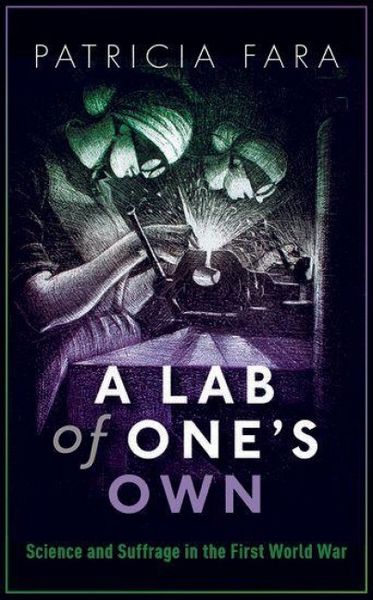
Produktbild: A Lab of One's Own

A Lab of One's Own Science and Suffrage in the First World War

27,99 €

inkl. gesetzl. MwSt., zzgl. Versandkosten


  • Kostenlose Lieferung ab 30 € Einkaufswert
  • Versandkostenfrei für Bonuscard-Kund*innen

Beschreibung

Many extraordinary female scientists, doctors, and engineers tasted independence and responsibility for the first time during the First World War. How did this happen? Patricia Fara reveals how suffragists, such as Virginia Woolf's sister, Ray Strachey, had already aligned themselves with scientific...

Beschreibung

Many extraordinary female scientists, doctors, and engineers tasted independence and responsibility for the first time during the First World War. How did this happen? Patricia Fara reveals how suffragists, such as Virginia Woolf's sister, Ray Strachey, had already aligned themselves with scientific and technological progress, and that during the dark years of war they mobilized women to enter conventionally male domains such as science and medicine. Fara tells the stories of women such as: mental health pioneer Isabel Emslie, chemist Martha Whiteley, a co-inventor of tear gas, and botanist Helen Gwynne Vaughan. Women were now carrying out vital research in many aspects of science, but could it last? Though suffragist Millicent Fawcett declared triumphantly that 'the war revolutionised the industrial position of women. It found them serfs, and left them free', the outcome was very different. Although women had helped the country to victory and won the vote for those over thirty, they had lost the battle for equality. Men returning from the Front reclaimed their jobs, and conventional hierarchies were re-established even though the nation now knew that women were fully capable of performing work traditionally reserved for men. Fara examines how the bravery of these pioneer women scientists, temporarily allowed into a closed world before the door clanged shut again, paved the way for today's women scientists. Yet, inherited prejudices continue to limit women's scientific opportunities.

Rezension

[An] interesting study. Lucy Lethbridge, The Financial Times

Produktdetails

Einband

Gebundene Ausgabe

Erscheinungsdatum

01.03.2018

Abbildungen

23 black & white illustrations

Verlag Oxford University Press

Produktdetails

Einband

Gebundene Ausgabe

Erscheinungsdatum

01.03.2018

Abbildungen

23 black & white illustrations

Verlag Oxford University Press
Seitenzahl

352

Maße (L/B/H)

22,3/0,4/3,8 cm

Gewicht

490 g

Sprache

Englisch

ISBN

978-0-19-879498-1

Herstelleradresse

Libri GmbH
Europaallee 1
36244 Bad Hersfeld
DE

Email: gpsr@libri.de

Noch keine Bewertungen vorhanden

Verfassen Sie die erste Bewertung zu diesem Artikel

Helfen Sie anderen Kundinnen und Kunden durch Ihre Meinung.

Kundinnen und Kunden meinen

Bewertungen (0)

Die Leseprobe wird geladen.
  • Produktbild: A Lab of One's Own
    • Preserving the Past, Facing the Future
    • 1: Snapshots: Suffrage and Science at Cambridge
    • 2: A Divided Nation: Class, Gender, and Science in Early Twentieth-Century Britain
    • 3: Subjects of Science: Biological Justifications of Women's Status
    • Abandoning Domesticity, Working for the Vote
    • 4: A New Century: Voting for Science
    • 5: Factories of Science: Women Work for War
    • 6: Ray Costelloe / Strachey: The Life of a Mathematical Suffragist
    • Corridors of Science, Crucibles of Power
    • 7: Scientists in Petticoats: Women and Science Before the War
    • 8: A Scientific State: Technological Warfare in the Early Twentieth Century
    • 9: Taking Over: Women, Science and Power During the War
    • 10: Chemical Campaigners: Ida Smedley and Martha Whiteley
    • Scientific Warfare, Wartime Welfare
    • 11: Soldiers of Science: Scientific Women Fighting on the Home Front
    • 12: Scientists in Khaki: Mona Geddes and Helen Gwynne-Vaughan
    • 13: Medical Recruits: Scientists Care for the Nation
    • 14: From Scotland to Sebastopol: The Wartime Work of Dr Isabel Emslie Hutton
    • Citizens of Science in a Post-War World
    • 15: Inter-War Normalities: Scientific Women and Struggles for Equality
    • 16: Lessons of Science: Learning from the Past to Improve the Future
    • Bibliography