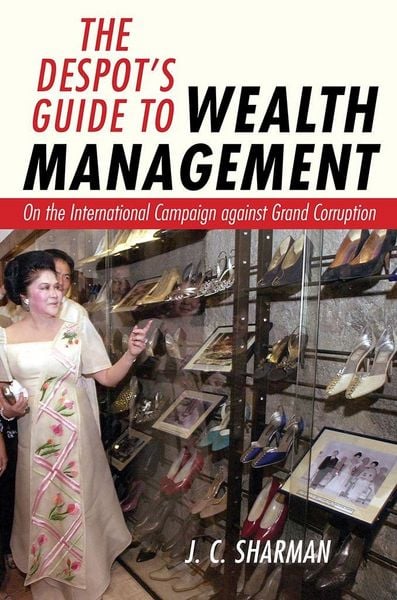
The Despot's Guide to Wealth Management On the International Campaign against Grand Corruption
-
Form:Einzelkauf Download
-
Sprache:Englisch
-
eBook Format:ePUB
- PDF 165,95 €
- ePUB 14,29 € ausgewählt
14,29 €
inkl. gesetzl. MwSt.Beschreibung
Produktdetails
Format
ePUB
Kopierschutz
Nein
Family Sharing
Nein
Text-to-Speech
Ja
Erscheinungsdatum
07.03.2017
Verlag
Cornell University PressSeitenzahl
274 (Printausgabe)
Dateigröße
1047 KB
Sprache
Englisch
EAN
9781501708435
An unprecedented new international moral and legal rule forbids one state from hosting money stolen by the leaders of another state. The aim is to counter grand corruption or kleptocracy ("rule by thieves"), when leaders of poorer countries-such as Marcos in the Philippines, Mobutu in the Congo, and more recently those overthrown in revolutions in the Arab world and Ukraine-loot billions of dollars at the expense of their own citizens. This money tends to end up hosted in rich countries. These host states now have a duty to block, trace, freeze, and seize these illicit funds and hand them back to the countries from which they were stolen.
In The Despot's Guide to Wealth Management, J. C. Sharman asks how this anti-kleptocracy regime came about, how well it is working, and how it could work better. Although there have been some real achievements, the international campaign against grand corruption has run into major obstacles. The vested interests of banks, lawyers, and even law enforcement often favor turning a blind eye to foreign corruption proceeds. Recovering and returning looted assets is a long, complicated, and expensive process.
Sharman used a private investigator, participated in and observed anti-corruption policy, and conducted more than a hundred interviews with key players. He also draws on various journalistic exposés, whistle-blower accounts, and government investigations to inform his comparison of the anti-kleptocracy records of the United States, Britain, Switzerland, and Australia. Sharman calls for better policing, preventative measures, and use of gatekeepers like bankers, lawyers, and real estate agents. He also recommends giving nongovernmental organizations and for-profit firms more scope to independently investigate corruption and seize stolen assets.
Noch keine Bewertungen vorhanden
Verfassen Sie die erste Bewertung zu diesem Artikel
Helfen Sie anderen Kundinnen und Kunden durch Ihre Meinung.
Kurze Frage zu unserer Seite
Vielen Dank für Ihr Feedback
Wir nutzen Ihr Feedback, um unsere Produktseiten zu verbessern. Bitte haben Sie Verständnis, dass wir Ihnen keine Rückmeldung geben können. Falls Sie Kontakt mit uns aufnehmen möchten, können Sie sich aber gerne an unseren Kund*innenservice wenden.
zum Kundenservice