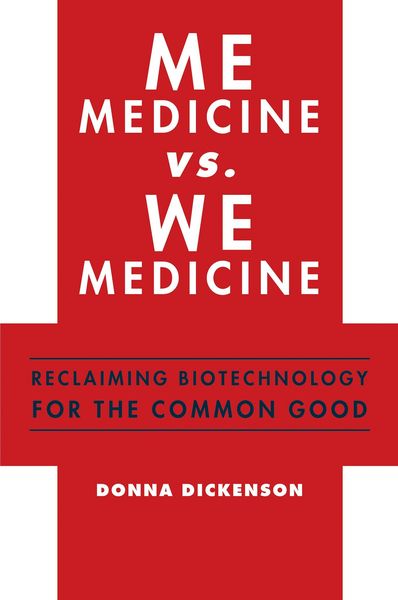
Me Medicine vs. We Medicine Reclaiming Biotechnology for the Common Good
30,40 €
inkl. gesetzl. MwSt.Beschreibung
Produktdetails
Format
ePUB
Kopierschutz
Nein
Family Sharing
Nein
Text-to-Speech
Ja
Erscheinungsdatum
18.06.2013
Verlag
Columbia University PressSeitenzahl
296 (Printausgabe)
Dateigröße
786 KB
Sprache
Englisch
EAN
9780231534413
Personalized healthcare-or what the award-winning author Donna Dickenson calls "Me Medicine"-is radically transforming our longstanding "one-size-fits-all" model. Technologies such as direct-to-consumer genetic testing, pharmacogenetically developed therapies in cancer care, private umbilical cord blood banking, and neurocognitive enhancement claim to cater to an individual's specific biological character, and, in some cases, these technologies have shown powerful potential. Yet in others they have produced negligible or even negative results. Whatever is behind the rise of Me Medicine, it isn't just science. So why is Me Medicine rapidly edging out We Medicine, and how has our commitment to our collective health suffered as a result?
In her cogent, provocative analysis, Dickenson examines the economic and political factors fueling the Me Medicine phenomenon and explores how, over time, this paradigm shift in how we approach our health might damage our individual and collective well-being. Historically, the measures of "We Medicine," such as vaccination and investment in public-health infrastructure, have radically extended our life spans, and Dickenson argues we've lost sight of that truth in our enthusiasm for "Me Medicine."
Dickenson explores how personalized medicine illustrates capitalism's protean capacity for creating new products and markets where none existed before-and how this, rather than scientific plausibility, goes a long way toward explaining private umbilical cord blood banks and retail genetics. Drawing on the latest findings from leading scientists, social scientists, and political analysts, she critically examines four possible hypotheses driving our Me Medicine moment: a growing sense of threat; a wave of patient narcissism; corporate interests driving new niche markets; and the dominance of personal choice as a cultural value. She concludes with insights from political theory that emphasize a conception of the commons and the steps we can take to restore its value to modern biotechnology.
Noch keine Bewertungen vorhanden
Verfassen Sie die erste Bewertung zu diesem Artikel
Helfen Sie anderen Kundinnen und Kunden durch Ihre Meinung.
Kurze Frage zu unserer Seite
Vielen Dank für Ihr Feedback
Wir nutzen Ihr Feedback, um unsere Produktseiten zu verbessern. Bitte haben Sie Verständnis, dass wir Ihnen keine Rückmeldung geben können. Falls Sie Kontakt mit uns aufnehmen möchten, können Sie sich aber gerne an unseren Kund*innenservice wenden.
zum Kundenservice