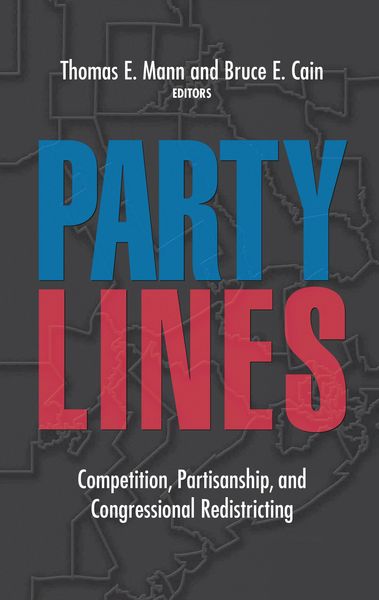
Party Lines Competition, Partisanship, and Congressional Redistricting
-
- Taschenbuch
- eBook ausgewählt
-
Form:Einzelkauf Download
-
Sprache:Englisch
24,20 €
inkl. gesetzl. MwSt.Beschreibung
Produktdetails
Format
Kopierschutz
Ja
Family Sharing
Nein
Text-to-Speech
Nein
Erscheinungsdatum
31.05.2008
Herausgeber
Thomas E. Mann + weitereVerlag
Bloomsbury eBooks USSeitenzahl
125 (Printausgabe)
Dateigröße
702 KB
Auflage
1. Auflage
Sprache
Englisch
EAN
9780815797920
The legitimacy of the American electoral system depends on sustaining reasonable levels of fairness, accountability, responsiveness, and common sense. Recent Congressional elections fly in the face of those requirements, however, with a startling lack of competition, growing ideological polarization, and a fierce struggle between the parties to manipulate the electoral rules of the game. Party Lines addresses these problems head on in an authoritative and timely analysis of redistricting in the United States. The practice of state legislatures redrawing district lines after the decennial census has long been a controversial aspect of our governing system. Recent developments have added new urgency to earlier debates. The sorry spectacle of mid-decade partisan gerrymandering in Texas renewed public attention to the potential problems of redistricting, reinforcing the view that it is unfairly dominated by self-serving elected officials and parties. The perfunctory character of Congressional elections is another growing problem¿in 2002, only four House incumbents were defeated in the general election, the lowest in American history. Despite a hotly contested presidential contest in 2004, that number increased by only three. In Pa rty Lines, eminent political analysts explain the legal and political history of redistricting since the one person¿one vote revolution in the 1960s and place it in the larger context of American politics. The authors document the impact of redistricting on competition, polarization, and partisan fairness, and they assess the role technology played in the redistricting process. The final chapter analyzes options for reform, including most importantly the use of independent redistricting commissions as an alternative to the normal state legislative process. Redistricting reform is no panacea but it is a start toward ensuring that American voters still have the largest say in who will represent them. Contributors include Micah
Noch keine Bewertungen vorhanden
Verfassen Sie die erste Bewertung zu diesem Artikel
Helfen Sie anderen Kundinnen und Kunden durch Ihre Meinung.
Kurze Frage zu unserer Seite
Vielen Dank für Ihr Feedback
Wir nutzen Ihr Feedback, um unsere Produktseiten zu verbessern. Bitte haben Sie Verständnis, dass wir Ihnen keine Rückmeldung geben können. Falls Sie Kontakt mit uns aufnehmen möchten, können Sie sich aber gerne an unseren Kund*innenservice wenden.
zum Kundenservice