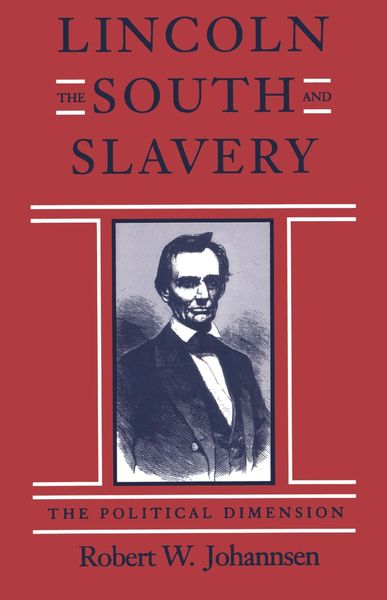
Lincoln, the South, and Slavery The Political Dimension
-
- Taschenbuch
- eBook ausgewählt
-
Form:Einzelkauf Download
-
Sprache:Englisch
20,10 €
inkl. gesetzl. MwSt.Beschreibung
Produktdetails
Format
ePUB
Kopierschutz
Ja
Family Sharing
Nein
Text-to-Speech
Ja
Erscheinungsdatum
01.10.1993
Verlag
Penguin Random House South AfricaSeitenzahl
144 (Printausgabe)
Dateigröße
1844 KB
Sprache
Englisch
EAN
9780807155523
In 1858, Abraham Lincoln declared his hatred for the institution of slavery, likening his feelings of opposition to those of the abolitionists. Although the fact that Lincoln always disliked slavery is indisputable, the idea that he always opposed it with the zeal and fervor of the abolitionists remains questionable. Only four years prior to his bold declaration, Lincoln admittedly paid little attention to slavery, viewing it as only a minor issue. But in the six years preceding his presidency, his antislavery stance underwent dramatic change. Fueled by political ambition, Lincoln's argument against slavery and his prescription for dealing with it moved from what he initially labeled a middle-ground stance to a more radical position. Robert W. Johannsen's Lincoln, the South, and Slavery traces the political dimension of Lincoln's antislavery stance as it evolved from the passage of the Kansas-Nebraska Act in 1854 to his election as president in 1860.
Whereas previous scholars have largely ignored the political character of Lincoln's antislavery argument, Johannsen sees Lincoln as an astute and ambitious politician whose statements where shaped and directed by the time's ever-changing political exigencies and considerations. Johannsen does not demean the quality of Lincoln's sincerity or downgrade the importance of his moral convictions on the slavery issue, but he does suggest that politics played a larger role than previously acknowledged in the form these convictions took.
The four chapters that compose this work connect Lincoln's position with his attitude toward the South and Southerners, from his initial appeal to Southerners at a time when he sought to revitalize the dying Whig party, through his deepening involvement in the Republican party, to his final belief that the South and Southern interests no longer needed to be considered as factors determining his national political success. Johannsen focuses on Lincoln's debut in 1854 as an antislavery speaker, on the development of his stand for the ultimate extinction of slavery, on his espression of the doctrine of the irrepressible conflict, and finally on Lincoln's and the South's perceptions of each other in 1860.
As no other work has done, Lincoln, the South, and Slavery shows how Lincoln, in response to the demands of politics, became increasingly anti-slavery and anti-Southern during the 1850s. It will be a welcome contribution to the ongoing debate about the enigma of Lincoln and about his role in the coming of the Civil War.
Kundinnen und Kunden meinen
Verfassen Sie die erste Bewertung zu diesem Artikel
Helfen Sie anderen Kund*innen durch Ihre Meinung
Kurze Frage zu unserer Seite
Vielen Dank für Ihr Feedback
Wir nutzen Ihr Feedback, um unsere Produktseiten zu verbessern. Bitte haben Sie Verständnis, dass wir Ihnen keine Rückmeldung geben können. Falls Sie Kontakt mit uns aufnehmen möchten, können Sie sich aber gerne an unseren Kund*innenservice wenden.
zum Kundenservice