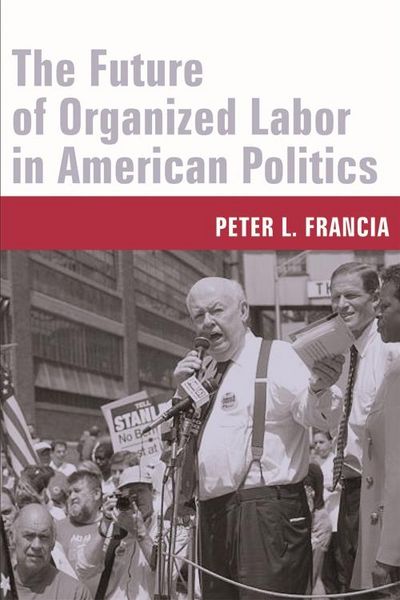
The Future of Organized Labor in American Politics
-
- Einzelkauf Download ausgewählt
-
Sprache:Englisch
50,90 €
inkl. gesetzl. MwSt.Beschreibung
Produktdetails
Format
ePUB
Kopierschutz
Nein
Family Sharing
Nein
Text-to-Speech
Ja
Erscheinungsdatum
01.02.2006
Verlag
Columbia University PressSeitenzahl
224 (Printausgabe)
Dateigröße
3285 KB
Sprache
Englisch
EAN
9780231503938
In 1995, promising a more active political presence for unions, John Sweeney was elected president of the AFL-CIO. Labor would develop a "new voice," one that could not be ignored or taken for granted by Democratic and Republican politicians. However, by the summer of 2005 opposition to Sweeney's leadership threatened to divide the labor movement.
In The Future of Organized Labor in American Politics, Peter L. Francia discusses the effects of Sweeney's controversial tenure as president and assesses labor's influence on American political elections and legislation. Drawing on interviews with union and business leaders, as well as campaign-finance and public-opinion data, Francia argues that Sweeney has employed a more effective and expansive grassroots political operation than his predecessors. He challenges critics who dismiss Sweeney's efforts as a failure but cautions that the decline in union membership presents a serious crisis for the labor movement.
When unions emphasize "grassroots" strategies they can effectively compete against the financial power of big business and can make a significant difference in congressional politics. Francia analyzes organized labor's political activities, its coalitions with other interest groups, and its influence on voter turnout, election results, and votes in Congress. He also examines the effects of Sweeney's embrace of progressive causes and labor's increasing willingness to challenge Democrats who vote against labor's interests.
For all his successes, Sweeney's tenure has not been without its problems. Labor's presence in American politics is threatened by shrinking membership in unions. Francia suggests that if unions want to remain a viable political force in congressional politics, they must devote more resources to organizing workers.
Noch keine Bewertungen vorhanden
Verfassen Sie die erste Bewertung zu diesem Artikel
Helfen Sie anderen Kundinnen und Kunden durch Ihre Meinung.
Kurze Frage zu unserer Seite
Vielen Dank für Ihr Feedback
Wir nutzen Ihr Feedback, um unsere Produktseiten zu verbessern. Bitte haben Sie Verständnis, dass wir Ihnen keine Rückmeldung geben können. Falls Sie Kontakt mit uns aufnehmen möchten, können Sie sich aber gerne an unseren Kund*innenservice wenden.
zum Kundenservice