KI-Beratung Beta

Gutscheinbedingungen

**Gültig bis 11.11.2026 auf Spielzeug, Schreibwaren, Filme, Geschenke & Trends, Musik, tolino eReader & Zubehör, Hörbücher und Hörbuch-Downloads, nicht preisgebundene Bücher und Kalender online auf thalia.at und in der Thalia App. Einzelne Artikel können ausgeschlossen sein. Aufgrund der Buchpreisbindung sind deutschsprachige Bücher und eBooks ausgenommen. Zusätzlich ausgenommen sind Abos & Flatrates, Games, Geschenkkarten/-boxen, Shelfies, Software, Zeitschriften sowie einzelne Artikel von tonies®. Pro Einkauf einmal einlösbar. Click & Collect nur bei Onlinevorabzahlung möglich. Keine Barauszahlung. Nicht kombinierbar mit anderen Aktionen und Gutscheinen. Gutschein wird auf max. 500€ Bestellwert angerechnet. Nicht gültig für Versandkosten und Services.

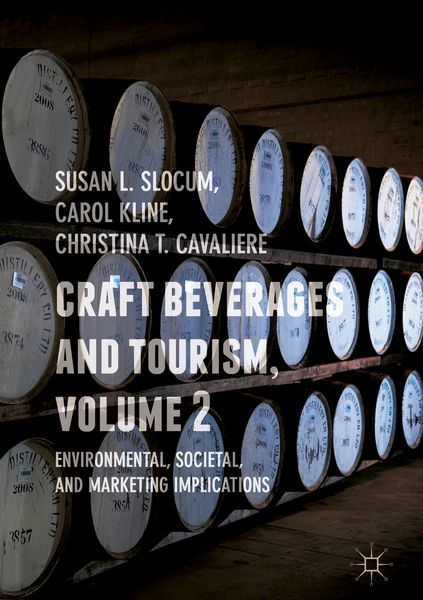
Produktbild: Craft Beverages and Tourism, Volume 2

Craft Beverages and Tourism, Volume 2 Environmental, Societal, and Marketing Implications

118,99 €

inkl. gesetzl. MwSt., Versandkostenfrei


Beschreibung

Produktdetails

Einband

Gebundene Ausgabe

Erscheinungsdatum

10.08.2017

Abbildungen

XVI, 228 p. 10 illus., 5 illus. in color.

Herausgeber

Susan L. Slocum + weitere

Verlag

Springer

Seitenzahl

228

Maße (L/B/H)

21,6/15,3/1,8 cm

Gewicht

394 g

Auflage

1st ed. 2018

Sprache

Englisch

ISBN

978-3-319-57188-1

Beschreibung

Portrait


Susan L. Slocum is Assistant Professor in the Department of Tourism and Event Management at George Mason University, VA, USA. She studies sustainable tourism development and has worked with farmers and rural communities in the UK, Tanzania, and the Intermountain Western United States.  She is the co-author of Scientific Tourism: Researchers as Travellers (with Carol Kline) and has authored foundational articles on craft beer tourism.


Carol Kline is Associate Professor in the Department of Management at Appalachian State University, NC, USA. Her research interests include rural and sustainable tourism development related to food, farms, entrepreneurship, and tourism’s connection with community. She is the co-author of Scientific Tourism: Researchers as Travellers (with Susan L. Slocum) and has authored foundation articles on craft beer tourism.


Christina T. Cavaliere is Assistant Professor of Hospitality and Tourism Management Studies at Stockton University, NJ, USA. Her research interests include tourism and climate change, local economies, sustainable agriculture, and permaculture. She has designed and implemented conservation projects, field training, and research with partners in over thirty-five countries on six continents.


Produktdetails

Einband

Gebundene Ausgabe

Erscheinungsdatum

10.08.2017

Abbildungen

XVI, 228 p. 10 illus., 5 illus. in color.

Herausgeber

Verlag

Springer

Seitenzahl

228

Maße (L/B/H)

21,6/15,3/1,8 cm

Gewicht

394 g

Auflage

1st ed. 2018

Sprache

Englisch

ISBN

978-3-319-57188-1

Herstelleradresse

Springer-Verlag GmbH
Europaplatz 3
69115 Heidelberg
DE

Email: ProductSafety@springernature.com

Noch keine Bewertungen vorhanden

Verfassen Sie die erste Bewertung zu diesem Artikel

Helfen Sie anderen Kundinnen und Kunden durch Ihre Meinung.

Kundinnen und Kunden meinen

Bewertungen (0)

  • Produktbild: Craft Beverages and Tourism, Volume 2

  • 1. Introduction.- 2. Brewing Green: Sustainability in the Craft Beer Movement.- 3. Craft Beer Enthusiasts' Support for Neolocalism and Environmental Causes.- 4. Pure Michigan Beer? Tourism, Craft Breweries, and Sustainability.- 5. Representing Rurality: Cider Mills and Agritourism.- 6. Developing Social Capital in Craft Beer Tourism Markets .- 7. New Jersey Craft Distilleries: Sense of place and sustainability.- 8. Drink Tourism: A Profile of the Intoxicated Traveler.-  9. Craft Brewing Festivals.- 10. (Micro)movements and Microbrew: On craft beer, tourism trails, and material transformations in three urban industrial sites.-11. Brewing a Beer Industry in Asheville, North Carolina.- 12. An Exploration of the Motivations Driving New Business Start-up in the United States Craft Brewing Industry.- 13. Conclusion.