KI-Beratung Beta

Gutscheinbedingungen

**Gültig bis 18.11.2026 auf englischsprachige Klassiker (klassiker-32728) online auf thalia.at und in der Thalia App. Einzelne Artikel können ausgeschlossen sein. Ausgenommen sind preisgebundene Artikel & eBooks. Pro Einkauf einmal einlösbar. Click & Collect nur bei Onlinevorabzahlung möglich. Keine Barauszahlung. Nicht kombinierbar mit anderen Aktionen und Gutscheinen. Gutschein wird auf max. 500€ Bestellwert angerechnet. Nicht gültig für Geschenkkarten, Versandkosten und Services.

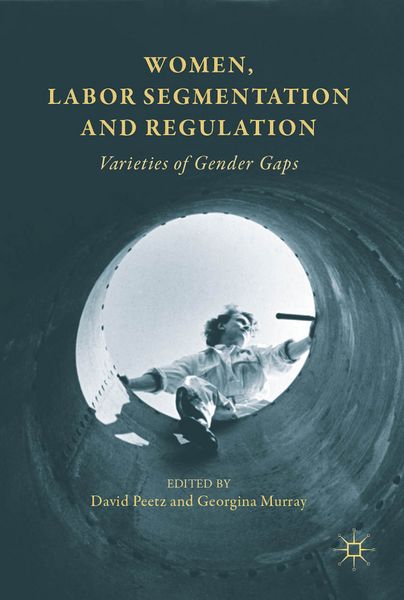
Produktbild: Women, Labor Segmentation and Regulation

Women, Labor Segmentation and Regulation Varieties of Gender Gaps

77,99 €

inkl. gesetzl. MwSt., Versandkostenfrei


Beschreibung

This book re-shapes thinking on ‘gender gaps’—differences between men and women in their incomes, their employment and their conditions of work. It shows how the interaction between regulation distance and content, labor segmentation and norms helps us understand various aspects of gender gaps. 

 ...

Beschreibung

This book re-shapes thinking on ‘gender gaps’—differences between men and women in their incomes, their employment and their conditions of work. It shows how the interaction between regulation distance and content, labor segmentation and norms helps us understand various aspects of gender gaps. 


It brings together leading authors from industrial relations, sociology, politics, and feminist economics, who outline the roles the family, state public policy, trade unions and class play in creating gender gaps, and consider the lessons from international comparisons.  While many studies have focused on the role of society or organizations, this book also pays attention to the role of
occupations
in promoting and reinforcing gender gaps, discussing groups such as apparel outworkers, film and video workers, care workers, public-sector professionals like librarians, chief executives, academics, and coal miners.


Thisbook will be of interest to practitioners, policy makers, academics and students interested in understanding why inequality between men and women persists today—and what might be done about it.


Rezension

“This is an interesting and timely book, given the obligation in the UK for large organizations to publish their (admittedly skimpy) gender pay gap data, and the prevalence in the media of stories about women in the media and elsewhere being paid less than colleagues. … this book should be essential reading for those interested in their abolition.” (Harriet Bradley, Journal of Social Policy, Vol. 48 (2), April, 2019)

Portrait


David Peetz is Professor of Employment Relations at Griffith University, Nathan, Australia. He is the author of 
Unions in a Contrary World and Brave New Workplace
, co-author of 
Women of the Coal Rushes
 and a co-researcher at the Interuniversity Research Centre on Globalization and Work, Montreal.  


Georgina Murray is Associate Professor at Griffith University, Nathan, Australia. She is the author of many articles and papers, as well as 
Capitalist Networks and Social Class in Australia and New Zealand
, co-author of
 Women of the Coal Rushes
, and co-editor of F
inancial Elites and Transnational Business: Who Rules the World?
.   


Produktdetails

Einband

Gebundene Ausgabe

Erscheinungsdatum

18.04.2017

Abbildungen

XXIII, 271 p. 11 illus., 1 illus. in color.

Herausgeber David Peetz + weitere

Produktdetails

Einband

Gebundene Ausgabe

Erscheinungsdatum

18.04.2017

Abbildungen

XXIII, 271 p. 11 illus., 1 illus. in color.

Herausgeber
Verlag Palgrave Macmillan US
Seitenzahl

271

Maße (L/B/H)

21,6/15,3/2,1 cm

Gewicht

459 g

Sprache

Englisch

ISBN

978-1-137-56122-0

Herstelleradresse

Palgrave Macmillan
Tiergartenstr. 17
69121 Heidelberg
DE

Email: ProductSafety@springernature.com

Noch keine Bewertungen vorhanden

Verfassen Sie die erste Bewertung zu diesem Artikel

Helfen Sie anderen Kundinnen und Kunden durch Ihre Meinung.

Kundinnen und Kunden meinen

Bewertungen (0)

  • Produktbild: Women, Labor Segmentation and Regulation

  • Part I: Concepts.- 
    Regulation Distance, Labor Segmentation, and Gender Gaps.- Gender and Class Relations.- Regulating for Equality: Modalities of Regulation and Gender Gaps.- The Changing Sexual Politics of Gender Regulation by Unions.- Employment Regulation and Worker-Carers: Reproducing Gender Inequality in the Domestic and Market Spheres?.- A Cross-National Comparison of Gender Gaps.- 
    Part II: Occupations.- 
    Structuring Gender Relations Among Coal Mine Workers.- Female-Dominated Regulation-Proximate Occupations: Librarians and Other Public-Sector Professionals.- Academics: How Career Structures and Segmentation Undermine Pay Regulation.- Why Do Women at the Top of Organizations Do Worse?.-  A Comparison of Australian and Indian Women Garment and Footwear Homeworkers.- Policy Ecologies, Gender, Work, and Regulation Distance in Film and TV Production.- 
    Part III: Conclusions.- 
    The Persistenceof Gender Gaps.