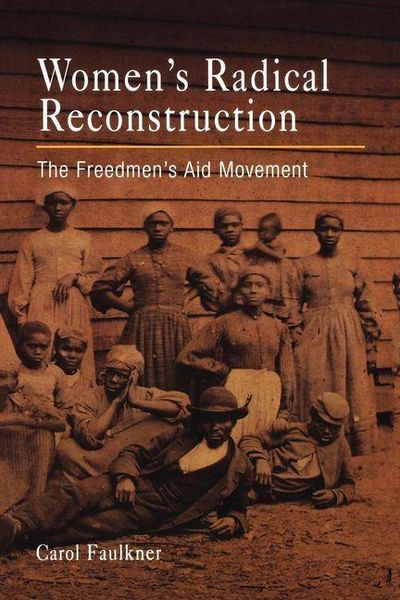
Women's Radical Reconstruction The Freedmen's Aid Movement
-
- Taschenbuch
- eBook ausgewählt
-
Form:Einzelkauf Download
-
Sprache:Englisch
34,09 €
inkl. gesetzl. MwSt.Beschreibung
Produktdetails
Format
ePUB
Kopierschutz
Nein
Family Sharing
Nein
Text-to-Speech
Ja
Erscheinungsdatum
19.04.2013
Verlag
Nyu PressSeitenzahl
208 (Printausgabe)
Sprache
Englisch
EAN
9780812203912
In this first critical study of female abolitionists and feminists in the freedmen's aid movement, Carol Faulkner describes these women's radical view of former slaves and the nation's responsibility to them. Moving beyond the image of the Yankee schoolmarm, Women's Radical Reconstruction demonstrates fully the complex and dynamic part played by Northern women in the design, implementation, and administration of Reconstruction policy. This absorbing account illustrates how these activists approached women's rights, the treatment of freed slaves, and the federal government's role in reorganizing Southern life.
Like Radical Republicans, black and white women studied here advocated land reform, political and civil rights, and an activist federal government. They worked closely with the military, the Freedmen's Bureau, and Northern aid societies to provide food, clothes, housing, education, and employment to former slaves. These abolitionist-feminists embraced the Freedmen's Bureau, seeing it as both a shield for freedpeople and a vehicle for women's rights. But Faulkner rebuts historians who depict a community united by faith in free labor ideology, describing a movement torn by internal tensions.
The author explores how gender conventions undermined women's efforts, as military personnel and many male reformers saw female reformers as encroaching on their territory, threatening their vision of a wage labor economy, and impeding the economic independence of former slaves. She notes the opportunities afforded to some middle-class black women, while also acknowledging the difficult ground they occupied between freed slaves and whites. Through compelling individual examples, she traces how female reformers found their commitment to gender solidarity across racial lines tested in the face of disagreements regarding the benefits of charity and the merits of paid employment.
Noch keine Bewertungen vorhanden
Verfassen Sie die erste Bewertung zu diesem Artikel
Helfen Sie anderen Kundinnen und Kunden durch Ihre Meinung.
Kurze Frage zu unserer Seite
Vielen Dank für Ihr Feedback
Wir nutzen Ihr Feedback, um unsere Produktseiten zu verbessern. Bitte haben Sie Verständnis, dass wir Ihnen keine Rückmeldung geben können. Falls Sie Kontakt mit uns aufnehmen möchten, können Sie sich aber gerne an unseren Kund*innenservice wenden.
zum Kundenservice