KI-Beratung Beta

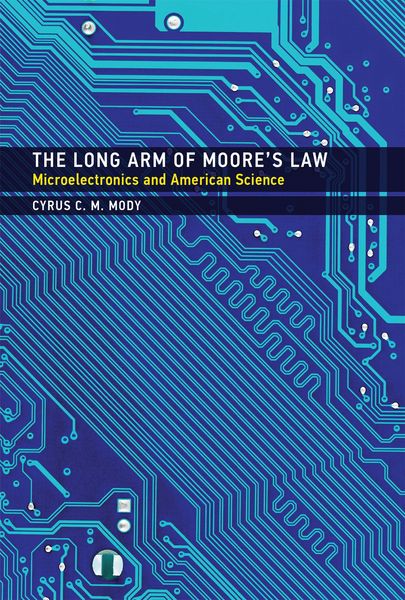
Produktbild: The Long Arm of Moore's Law

The Long Arm of Moore's Law Microelectronics and American Science

Aus der Reihe Inside Technology

47,80 €

inkl. gesetzl. MwSt.

Beschreibung

How, beginning in the mid 1960s, the US semiconductor industry helped shape changes in American science, including a new orientation to the short-term and the commercial.

Since the mid 1960s, American science has undergone significant changes in the way it is organized, funded, and practiced. These changes...

Beschreibung

How, beginning in the mid 1960s, the US semiconductor industry helped shape changes in American science, including a new orientation to the short-term and the commercial.

Since the mid 1960s, American science has undergone significant changes in the way it is organized, funded, and practiced. These changes include the decline of basic research by corporations; a new orientation toward the short-term and the commercial, with pressure on universities and government labs to participate in the market; and the promotion of interdisciplinarity. In this book, Cyrus Mody argues that the changes in American science that began in the 1960s co-evolved with and were shaped by the needs of the “civilianized” US semiconductor industry.

In 1965, Gordon Moore declared that the most profitable number of circuit components that can be crammed on a single silicon chip doubles every year. Mody views “Moore's Law” less as prediction than as self-fulfilling prophecy, pointing to the enormous investments of capital, people, and institutions the semiconductor industry required—the “long arm” of Moore's Law that helped shape all of science.

Mody offers a series of case studies in microelectronics that illustrate the reach of Moore's Law. He describes the pressures on Stanford University's electrical engineers during the Vietnam era, IBM's exploration of alternatives to semiconductor technology, the emergence of consortia to integrate research across disciplines and universities, and the interwoven development of the the molecular electronics community and associated academic institutions as the vision of a molecular computer informed the restructuring of research programs.

Produktdetails

Format

ePUB

Kopierschutz

Ja

Family Sharing

Ja

Text-to-Speech

Ja

Produktdetails

Format

ePUB

Format

eBooks im ePUB-Format erlauben eine dynamische Anpassung des Inhalts an die jeweilige Display-Größe des Lesegeräts. Das Format eignet sich daher besonders für das Lesen auf mobilen Geräten, wie z.B. Ihrem tolino, Tablets oder Smartphones.

Kopierschutz

Ja

Kopierschutz

Zum Lesen dieses eBooks auf eReadern außerhalb der tolino Familie sowie am PC benötigen Sie eine Adobe ID. Weitere Hinweise zum Lesen von kopiergeschützten eBooks finden Sie unter Hilfe/Downloads.

Family Sharing

Ja

Family Sharing

Mit Family Sharing können Sie eBooks innerhalb Ihrer Familie (max. sechs Mitglieder im gleichen Haushalt) teilen. Sie entscheiden selbst, welches Buch Sie mit welchem Familienmitglied teilen möchten. Auch das parallele Lesen durch verschiedene Familienmitglieder ist durch Family Sharing möglich. Um eBooks zu teilen oder geteilt zu bekommen, muss jedes Familienmitglied ein Konto bei Thalia oder einem anderen tolino-Buchhändler haben. Weitere Informationen finden Sie unter Hilfe/Family-Sharing.

Text-to-Speech

Ja

Text-to-Speech

Bedeutet Ihnen Stimme mehr als Text? Mit der Funktion Text-to-Speech können Sie sich im tolino webReader und in der aktuellen Thalia – Lesen & Hören App das eBook vorlesen lassen. Weitere Informationen finden Sie unter Hilfe/Text-to-Speech.

Erscheinungsdatum

02.12.2016

Verlag Mit Press
Seitenzahl

304 (Printausgabe)

Dateigröße

1729 KB

Sprache

Englisch

EAN

9780262341417

Barrierefreiheit
  • keine Information zur Barrierefreiheit bekannt

Noch keine Bewertungen vorhanden

Verfassen Sie die erste Bewertung zu diesem Artikel

Helfen Sie anderen Kundinnen und Kunden durch Ihre Meinung.

Kundinnen und Kunden meinen

Bewertungen (0)

Weitere Artikel finden Sie in

Die Leseprobe wird geladen.
  • Produktbild: The Long Arm of Moore's Law