Beschreibung
Produktdetails
Format
ePUB 3
Kopierschutz
Ja
Family Sharing
Ja
Text-to-Speech
Ja
Erscheinungsdatum
07.10.2016
Verlag
Mit PressSeitenzahl
272 (Printausgabe)
Dateigröße
753 KB
Sprache
Englisch
EAN
9780262335652
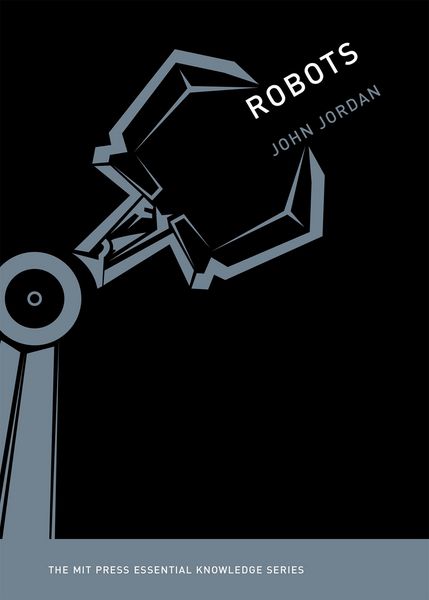
Robots are entering the mainstream. Technologies have advanced to the point of mass commercializationRoomba, for exampleand adoption by governmentsmost notably, their use of drones. Meanwhile, these devices are being received by a public whose main sources of information about robots are the fantasies of popular culture. We know a lot about C-3PO and Robocop but not much about Atlas, Motoman, Kiva, or Beamreal-life robots that are reinventing warfare, the industrial workplace, and collaboration. In this book, technology analyst John Jordan offers an accessible and engaging introduction to robots and robotics, covering state-of-the-art applications, economic implications, and cultural context.
Jordan chronicles the prehistory of robots and the treatment of robots in science fiction, movies, and televisionfrom the outsized influence of Mary Shelley's Frankenstein to Isaac Asimov's I, Robot (in which Asimov coined the term robotics). He offers a guided tour of robotics today, describing the components of robots, the complicating factors that make robotics so challenging, and such applications as driverless cars, unmanned warfare, and robots on the assembly line.
Roboticists draw on such technical fields as power management, materials science, and artificial intelligence. Jordan points out, however, that robotics design decisions also embody such nontechnical elements as value judgments, professional aspirations, and ethical assumptions, and raise questions that involve law, belief, economics, education, public safety, and human identity. Robots will be neither our slaves nor our overlords; instead, they are rapidly becoming our close companions, working in partnership with uswhether in a factory, on a highway, or as a prosthetic device. Given these profound changes to human work and life, Jordan argues that robotics is too important to be left solely to roboticists.
Noch keine Bewertungen vorhanden
Verfassen Sie die erste Bewertung zu diesem Artikel
Helfen Sie anderen Kundinnen und Kunden durch Ihre Meinung.
Kurze Frage zu unserer Seite
Vielen Dank für Ihr Feedback
Wir nutzen Ihr Feedback, um unsere Produktseiten zu verbessern. Bitte haben Sie Verständnis, dass wir Ihnen keine Rückmeldung geben können. Falls Sie Kontakt mit uns aufnehmen möchten, können Sie sich aber gerne an unseren Kund*innenservice wenden.
zum Kundenservice