Gutscheinbedingungen

**Gültig bis 25.06.2026 auf fremdsprachige Bücher online auf thalia.at und in der Thalia App. Einzelne Artikel können ausgeschlossen sein. Ausgenommen sind preisgebundene Artikel & eBooks. Pro Einkauf einmal einlösbar. Click & Collect nur bei Onlinevorabzahlung möglich. Keine Barauszahlung. Nicht kombinierbar mit anderen Aktionen und Gutscheinen. Gutschein wird auf max. 500€ Bestellwert angerechnet. Nicht gültig für Geschenkkarten, Versandkosten und Services.

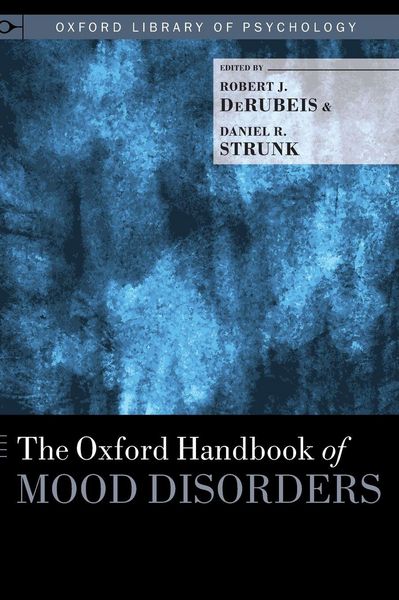
Produktbild: Oxford Handbook of Mood Disorders

Oxford Handbook of Mood Disorders

231,99 €

inkl. gesetzl. MwSt., Versandkostenfrei


Beschreibung

Produktdetails

Einband

Gebundene Ausgabe

Erscheinungsdatum

01.05.2017

Herausgeber

DeRubeis Robert J. + weitere

Verlag

Oxford Academic

Seitenzahl

536

Maße (L/B/H)

26/18,3/3,3 cm

Gewicht

1134 g

Sprache

Englisch

ISBN

978-0-19-997396-5

Beschreibung

Produktdetails

Einband

Gebundene Ausgabe

Erscheinungsdatum

01.05.2017

Herausgeber

Verlag

Oxford Academic

Seitenzahl

536

Maße (L/B/H)

26/18,3/3,3 cm

Gewicht

1134 g

Sprache

Englisch

ISBN

978-0-19-997396-5

Herstelleradresse

Libri GmbH
Europaallee 1
36244 Bad Hersfeld
DE

Email: gpsr@libri.de

Kundinnen und Kunden meinen

0 Bewertungen

Informationen zu Bewertungen

Zur Abgabe einer Bewertung ist eine Anmeldung im Konto notwendig. Die Authentizität der Bewertungen wird von uns nicht überprüft. Wir behalten uns vor, Bewertungstexte, die unseren Richtlinien widersprechen, entsprechend zu kürzen oder zu löschen.

Die Bewertungen sind nach Format, Anzahl Sterne und Datum sortiert.

Verfassen Sie die erste Bewertung zu diesem Artikel

Helfen Sie anderen Kund*innen durch Ihre Meinung

Kundinnen und Kunden meinen

0 Bewertungen filtern

Die Leseprobe wird geladen.
  • Produktbild: Oxford Handbook of Mood Disorders
    • Part I. Overview

    • 1. Introduction to Mood Disorders

    • Daniel R. Strunk and Robert J. DeRubeis

    • Part II. Phenomenology, Classification, Epidemiology, and Assessment

    • 2. History of Depression

    • Allan V. Horwitz, Jerome C. Wakefield, and Lorenzo Lorenzo-Luaces

    • 3. The Evolution of Depressive Phenotypes

    • Paul W. Andrews and Zachary Durisko

    • 4. Phenomenology and Course of the Mood Disorders

    • Daniel R. Strunk and Katherine E. Sasso

    • 5. Sex, Sexual Orientation, and Depression

    • Katie A. McLaughlin and Mark L. Hatzenbuehler

    • 6. Suicide

    • Matt S. Michaels, Carol Chu, and Thomas E. Joiner, Jr.

    • 7. Disordered Mood in Cultural-Historical Context

    • Andrew G. Ryder, Yue Zhao, and Yulia E. Chentsova-Dutton

    • 8. Uncomplicated Depression as Normal Sadness: Re-thinking the Boundary between Normal and Disordered Depression

    • Jerome C. Wakefield, Allan V. Horwitz, and Lorenzo Lorenzo-Luaces

    • 9. The Diagnosis and Assessment of Mood Disorders

    • Catherine D'Avanzato and Mark Zimmerman

    • Part III. Etiologic, Vulnerability, and Risk Factors

    • 10. Genetics of Bipolar and Unipolar Disorders

    • Wade Berrettini and Falk W. Lohoff

    • 11. Environmental Risk and Protection in Unipolar Depression

    • Scott M. Monroe and Lori F. Cummins

    • 12. Environmental Risk and Protective Factors in Bipolar Disorder

    • Sheri L. Johnson, Anda Gershon, and Kaja R. Johnson

    • 13. Cognitive Vulnerability and Unipolar Depression

    • Lauren B. Alloy, Lyn Y. Abramson, Jonathan P. Stange, and Rachel H. Salk

    • 14. Personality and Depression

    • Jay C. Fournier and Tony Z. Tang

    • Part IV. Interpersonal and Intra-individual Processes

    • 15. Interpersonal Perspectives on Depression

    • Mark A. Whisman

    • 16. Information Processing in Mood Disorders

    • Jonathan P. Roiser and Barbara J. Sahakian

    • 17. Neuroendocrine and Neurochemical Processes in Depression

    • Philip J. Cowen

    • 18. Neuropsychological Mechanisms of Depression and Treatment

    • Catherine J. Harmer and Abigail Pringle

    • 19. Neural Structure and Organization of Mood Pathology

    • Brianne M. Disabato, Isabelle E. Bauer, Jair C. Soares, and Yvette I. Sheline

    • Part V. Subtypes and sub-populations

    • 20. Persistent Depressive Disorder

    • Daniel N. Klein and Sarah R. Black

    • 21. Premenstrual Dysphoric Disorder

    • Ellen W. Freeman

    • 22. Seasonal Affective Disorder

    • Kelly J. Rohan and Jennifer N. Rough

    • 23. Postpartum Mood Disorders

    • Jennifer E. McCabe-Beane and Michael W. O'Hara

    • 24. Depression during Childhood and Adolescence

    • Benjamin L. Hankin

    • 25. Bipolar Disorder during Childhood and Adolescence

    • Mary A. Fristad and Elizabeth A. Nick

    • 26. Mood Disorders in Late Life

    • Patricia A. Arean, Eric Lenze, and Joaquin A. Anguera

    • Part VI. Common Comorbidities

    • 27. Anxiety and Depression

    • Ayelet Meron Ruscio and Gabriela Kattan Khazanov

    • 28. Personality Disorders and Disorders of Mood

    • Jennifer S. Cheavens and Sophie A. Lazarus

    • 29. Substance Use Disorders and Disorders of Mood

    • Carl W. Lejuez, Laura MacPherson, and Anahi Collado-Rodriguez

    • 30. Depressive Syndromes and Medical Comorbidities

    • Derek R. Hopko, Crystal C. McIndoo, and Audrey A. File

    • Part VII. Prevention and Treatment of Mood Disorders

    • 31. Prevention of Depression

    • Steven M. Brunwasser and Judy Garber

    • 32. Pharmacological Interventions for Depression

    • Richard C. Shelton

    • 33. Pharmacotherapy of Bipolar Disorder

    • Jay D. Amsterdam and Janusz K. Rybakowski

    • 34. Brain Stimulation Treatments for Depression

    • Mark S. George, E. Baron Short, and Suzanne E. Kerns

    • 35. Cognitive Therapy of Depression

    • Daniel R. Strunk, Abby D. Adler, and Steven D. Hollon

    • 36. Behavior Therapy of Depression

    • Samuel H. Hubley and Sona Dimidjian

    • 37. Acceptance-Based Interventions

    • Robert D. Zettle and Suzanne R. Gird

    • 38. Psychodynamic and Interpersonal Psychotherapies

    • Jacques P. Barber, Sigal Zilcha-Mano, and Michael J. Constantino

    • 39. Humanistic and Experiential Approaches

    • Jeanne Watson and Alberta E. Pos

    • 40. Self-Directed Approaches to the Treatment of Depression

    • Pim Cuijpers and Annet M. Kleiboer

    • 41. Toward a Rational Model of Depression Treatment

    • Nicholas R. Forand, David A. Richards, Marcus J. H. Huibers, and Claudi L. H. Bockting

    • 42. Psychosocial Approaches to the Treatment and Prevention of Bipolar Disorder

    • Noreen A. Reilly-Harrington

    • Index