KI-Beratung Beta

Gutscheinbedingungen

**Gültig am 27.11.2026 auf Spielzeug, Schreibwaren, Filme, Geschenke & Trends, Musik, tolino eReader & Zubehör, Hörbücher und Hörbuch-Downloads, nicht preisgebundene Bücher und Kalender online auf thalia.at und in der Thalia App. Einzelne Artikel können ausgeschlossen sein. Aufgrund der Buchpreisbindung sind deutschsprachige Bücher und eBooks ausgenommen. Zusätzlich ausgenommen sind Abos & Flatrates, Games, Geschenkkarten/-boxen, Shelfies, Software, Zeitschriften sowie einzelne Artikel von tonies®. Pro Einkauf einmal einlösbar. Click & Collect nur bei Onlinevorabzahlung möglich. Keine Barauszahlung. Nicht kombinierbar mit anderen Aktionen und Gutscheinen. Gutschein wird auf max. 500€ Bestellwert angerechnet. Nicht gültig für Versandkosten und Services.

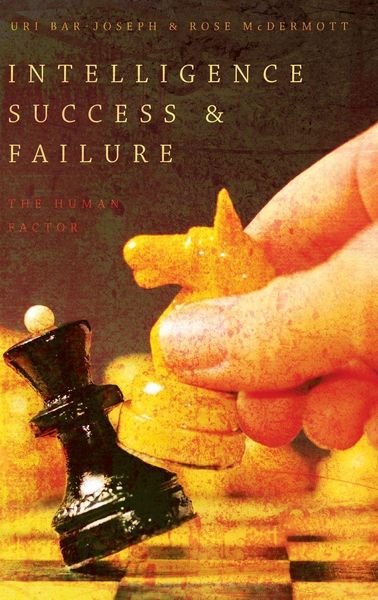
Produktbild: Intelligence Success and Failure

Intelligence Success and Failure

267,99 €

inkl. gesetzl. MwSt., Versandkostenfrei


Beschreibung

The study of strategic surprise has long concentrated on important failures that resulted in catastrophes such as Pearl Harbor and the September 11th attacks, and the majority of previously published research in the field determines that such large-scale military failures often stem from defective information-processing...

Beschreibung

The study of strategic surprise has long concentrated on important failures that resulted in catastrophes such as Pearl Harbor and the September 11th attacks, and the majority of previously published research in the field determines that such large-scale military failures often stem from defective information-processing systems. Intelligence Success and Failure challenges this common assertion that catastrophic surprise attacks are the unmistakable products of warning failure alone. Further, Uri Bar-Joseph and Rose McDermott approach this topic uniquely by highlighting the successful cases of strategic surprise, as well as the failures, from a psychological perspective. This book delineates the critical role of individual psychopathologies in precipitating failure by investigating important historical cases. Bar-Joseph and McDermott use six particular military attacks as examples for their analysis, including: "Barbarossa," the June 1941 German invasion of the USSR (failure); the fall-winter 1941 battle for Moscow (success); the Arab attack on Israel on Yom Kippur 1973 (failure); and the second Egyptian offensive in the war six days later (success). From these specific cases and others, they analyze the psychological mechanisms through which leaders assess their own fatal mistakes and use the intelligence available to them. Their research examines the factors that contribute to failure and success in responding to strategic surprise and identify the learning process that central decision makers use to facilitate subsequent successes. Intelligence Success and Failure presents a new theory in the study of strategic surprise that claims the key explanation for warning failure is not unintentional action, but rather, motivated biases in key intelligence and central leaders that null any sense of doubt prior to surprise attacks.

Produktdetails

Einband

Gebundene Ausgabe

Erscheinungsdatum

15.03.2016

Verlag Oxford Academic
Seitenzahl

280

Produktdetails

Einband

Gebundene Ausgabe

Erscheinungsdatum

15.03.2016

Verlag Oxford Academic
Seitenzahl

280

Maße (L/B/H)

24/16,1/2 cm

Gewicht

587 g

Sprache

Englisch

ISBN

978-0-19-934173-3

Herstelleradresse

Libri GmbH
Europaallee 1
36244 Bad Hersfeld
DE

Email: gpsr@libri.de

Noch keine Bewertungen vorhanden

Verfassen Sie die erste Bewertung zu diesem Artikel

Helfen Sie anderen Kundinnen und Kunden durch Ihre Meinung.

Kundinnen und Kunden meinen

Bewertungen (0)

Die Leseprobe wird geladen.
  • Produktbild: Intelligence Success and Failure
    • Contents
    • Introduction
    • Part One: The Theoretical Framework
    • Chapter I. Surprise Attack: A Framework for Discussion
    • Chapter II. Examining the Learning Process
    • Part Two: The Empirical Evidence
    • The First Dyad: Barbarossa and the Battle for Moscow
    • Case Study I: The Failure
    • Case Study II: Success: The Battle for Moscow
    • The Second Dyad: The USA in the Korean War
    • Case study I: Failing to Forecast the War
    • Case Study II: Failure II: The Chinese Intervention of Fall 1950
    • The Third Dyad: Intelligence Failure and Success in the War of Yom Kippur
    • Case Study I: The Failure
    • Case Study II: The Success
    • Chapter VI. Conclusions