Beschreibung
Produktdetails
Einband
Gebundene Ausgabe
Erscheinungsdatum
09.07.2010
Abbildungen
88 illus.
Verlag
Oxford AcademicSeitenzahl
330
Maße (L/B/H)
24/16,1/2,2 cm
Gewicht
661 g
Sprache
Englisch
ISBN
978-0-19-026974-6
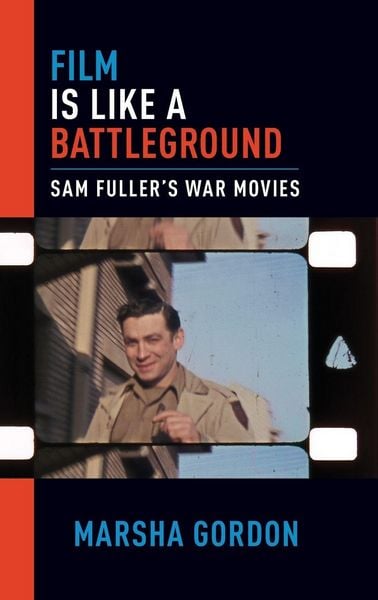
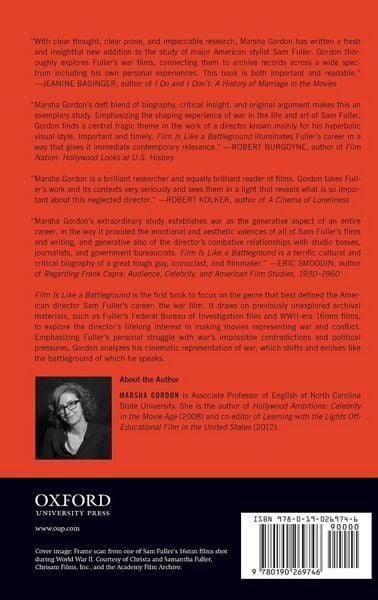
Film is Like a Battleground: Sam Fuller's War Movies is the first book to focus on the genre that best defined the American director's career: the war film. It draws on previously unexplored archival materials, such as Fuller's Federal Bureau of Investigation files and WWII-era amateur films, to explore the director's lifelong interest in making challenging, thought-provoking, and often politically dangerous movies about war.
After establishing the roots of Fuller's cinematographic schooling in the trenches during World War II, including careful consideration of his 16mm footage of a Nazi camp at the end of that war, Film is Like a Battleground explores Fuller's first forays into hot war representation in Hollywood with the pioneering Korean conflict films The Steel Helmet (1951) and Fixed Bayonets (1951). This pair of films introduced Fuller to his first run-ins with the American political machine when they triggered both FBI and Department of Defense investigations into his political sympathies and affiliations. Fuller's cold war films Pickup on South Street (1953) and, though it veers into hot war territory, Hell and High Water (1954) are Fuller's responses to the political pressures he had now personally experienced and resented. A chapter on Fuller's representation of pre-American-invasion Vietnam in China Gate (1957) alongside his unrealized Vietnam war screenplay, The Rifle (ca. late 1960s), illustrates the degree to which Fuller's representation of war and nation shifted even as he continued to probe war's impossible contradictions.
Film is Like a Battleground would be incomplete without a thorough exploration of the films depicting the war Fuller personally experienced and spent a lifetime contemplating, WWII. Verboten! (1959), Merrill's Marauder's (1962), and The Big Red One (1980) demonstrate Fuller's representation of a morally justifiable war. Fuller's 1959 CBS television pilot--Dogface--offers a glimpse at one of Fuller's failed attempts to bring his WWII story into American living rooms. The book concludes with a chapter about a documentary film made late in the director's life that returns Fuller to the actual site of the Nazi's Falkenau camp, at which he discusses his experiences there and that powerful, unforgettable footage he shot in the spring of 1945.
Noch keine Bewertungen vorhanden
Verfassen Sie die erste Bewertung zu diesem Artikel
Helfen Sie anderen Kundinnen und Kunden durch Ihre Meinung.
Kurze Frage zu unserer Seite
Vielen Dank für Ihr Feedback
Wir nutzen Ihr Feedback, um unsere Produktseiten zu verbessern. Bitte haben Sie Verständnis, dass wir Ihnen keine Rückmeldung geben können. Falls Sie Kontakt mit uns aufnehmen möchten, können Sie sich aber gerne an unseren Kund*innenservice wenden.
zum Kundenservice