Gutscheinbedingungen

**Gültig bis 25.08.2026 ab einem Mindestbestellwert von 30€ auf Spielzeug, Schreibwaren, Filme, Geschenke & Trends, Musik, tolino eReader & Zubehör, Hörbücher und Hörbuch-Downloads (außer Abo), nicht preisgebundene Bücher und Kalender online auf thalia.at und in der Thalia App. Einzelne Artikel können ausgeschlossen sein. Aufgrund der Buchpreisbindung sind deutschsprachige Bücher und eBooks ausgenommen. Zusätzlich ausgenommen sind preisgebundene Artikel, Abos & Flatrates, eBooks, Games, Geschenkkarten/-boxen, Shelfies, Software, Zeitschriften sowie einzelne Artikel von tonies®. Pro Einkauf einmal einlösbar. Click & Collect nur bei Onlinevorabzahlung möglich. Keine Barauszahlung. Nicht kombinierbar mit anderen Aktionen und Gutscheinen. Gutschein wird auf max. 500€ Bestellwert angerechnet. Nicht gültig für Versandkosten und Services. Preisgebundene Artikel sind vom Mindestbestellwert ausgeschlossen.

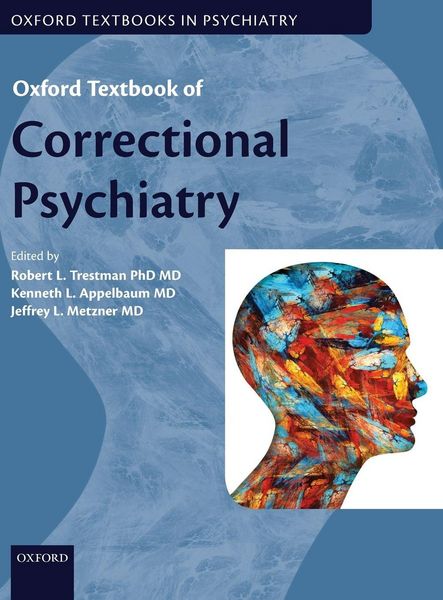
Produktbild: Oxford Textbook of Correctional Psychiatry

Oxford Textbook of Correctional Psychiatry

236,99 €

inkl. gesetzl. MwSt., Versandkostenfrei


Beschreibung

Produktdetails

Einband

Gebundene Ausgabe

Erscheinungsdatum

01.06.2015

Herausgeber

Robert Trestman + weitere

Verlag

Oxford Academic

Seitenzahl

460

Maße (L/B/H)

28,6/22,1/2,9 cm

Gewicht

1408 g

Sprache

Englisch

ISBN

978-0-19-936057-4

Beschreibung

Produktdetails

Einband

Gebundene Ausgabe

Erscheinungsdatum

01.06.2015

Herausgeber

Verlag

Oxford Academic

Seitenzahl

460

Maße (L/B/H)

28,6/22,1/2,9 cm

Gewicht

1408 g

Sprache

Englisch

ISBN

978-0-19-936057-4

Herstelleradresse

Libri GmbH
Europaallee 1
36244 Bad Hersfeld
DE

Email: gpsr@libri.de

Noch keine Bewertungen vorhanden

Verfassen Sie die erste Bewertung zu diesem Artikel

Helfen Sie anderen Kundinnen und Kunden durch Ihre Meinung.

Kundinnen und Kunden meinen

Bewertungen (0)

Die Leseprobe wird geladen.
  • Produktbild: Oxford Textbook of Correctional Psychiatry

    • Introduction


    • Section 1: Context and Perspective


    • 1. History of Imprisonment, Bruce Arrigo and S. LorÃ(c)n Trull


    • 2. Mental Illness Management in Corrections, Charles Scott and Brian Falls


    • 3. Formative Case Law and Litigation, Mohamedu F. Jones


    • 4. Human Rights, Jamie Fellner


    • 5. From the Inside Out: Perspectives of Past offenders, Brad Bogue and Robert L. Trestman


    • Section 2: Organization, Structure and Function of correctional Institutions


    • 6. Jails and Prisons, Joel Dvoskin and Melody C. Brown


    • 7. Working Inside The Walls, Bruce C. Gage,


    • 8. Ethics, Philip Candilis and Eric Huttenbach


    • 9. Communication, Dean Aufderheide


    • 10. Funding of Correctional Healthcare and Its Implications, Robert L. Trestman


    • Section 3: Patient Management Processes


    • 11. Screening and Assessments, Michael Maloney, Jeffrey Metzner and Joel Dvoskin


    • 12. Conducting Interviews, Li-Wen Lee


    • 13. Population Management, Robert L. Trestman and Kenneth L. Appelbaum


    • 14. Disciplinary Infractions and Restricted Housing, Mary Perrien and Maureen L. O'Keefe


    • 15. Community Re-Entry Preparation/ Coordination, Henry Dlugacz


    • Section 4: Common Management Issues


    • 16. Sleep, Bernice S Elger


    • 17. Detoxification or Supervised Withdrawal, Rebecca Lubelczyk


    • 18. Adjustment Disorders, Graham Glancy and Stefan Treffers


    • 19. Transition of Pharmacology From Community To Corrections, Robert L. Trestman


    • 20. Diagnostic Review and Revision, Sohrab Zahedi


    • 21. Diversion Programs and Alternatives To Incarceration, Merrill Rotter and Virginia Barber-Rioja


    • 22. Levels of Care, Jeffrey L. Metzner and Kenneth L. Appelbaum


    • 23. Evaluation of Malingering In Corrections, James L. Knoll


    • 24. Intoxication and Drugs in Facilities, Jason Ourada and Kenneth L. Appelbaum


    • Section 5: Emergencies


    • 25. Crisis Assessment and Management, Reena Kapoor


    • 26. Use of Restraint and Emergency Medication, Gerard Gagne


    • 27. Hospitalization, Michael Norko, Craig Burns and Charles Dike


    • Section 6: General Pharmacology Issues


    • 28. Formulary Management/ Pharmacy and Therapeutics Committees, Robert Berger, Robyn Wahl Phar and Paul Chaplin


    • 29. Hypnotic Agents and Controlled Substances, Ingrid Li, Arthur Brewer, and Rusty Reeves


    • 30. Medication Administration and Management: Directly Observed Therapy, Catherine Knox


    • 31. Prescribed Medication Abuse: Limitless Creativity, Tony Tamburello


    • Section 7: Disorders and Syndromes


    • 32. Diagnostic Prevalence and Comorbidity, Stuart Thomas,


    • 33. Psychotic Disorders, Johann Brink and Todd Tomita


    • 34. Mood Disorders, Jayesh Kamath and Ajay Shay


    • 35. Anxiety Disorders Including Post Traumatic Stress Disorder (PTSD), Catherine Lewis


    • 36. Personality Disorders, Sundeep Virdi and Robert L Trestman


    • 37. Attention Deficit Disorders, Kenneth L Appelbaum and Kevin Murphy


    • 38. General Medical Disorders With Psychiatric Implications, Warren J Fergusson and Erik Garcia


    • 39. Psychiatric Aspects of Pain Management, Robert L Trestman


    • Section 8: Psychotherapeutic Options


    • 40. Applicability of the Recovery Model in Corrections, Debra A Pinals and Joel T Andrade


    • 41. Individual Psychotherapy, James Knoll


    • 42. Group Psychotherapy, Shama Chaiken and Brittany Brizendine


    • Section 9: Suicide Risk Management


    • 43. Suicide Risk Management, Jeffrey L Metzner and Kerry Hughes


    • Section 10: Addictions Treatment


    • 44. Programming, Patrece Hairston and Ingrid A Binswanger


    • 45. Dual Diagnosis: Coordination between Disciplines, Faye S T Axman


    • 46. Pharmacotherapy For Substance Use Disorders Within Correctional Facilities, Sarah Wakeman and Josiah D Rich


    • 47. Transition to The Community, Jamie Meyer and Frederick Altice


    • Section 11: Aggression, Self-Injury and Misconduct


    • 48. Aggression, Robert L. Trestman


    • 49. Self-Injurious Behaviors, Kenneth L Appelbaum


    • 50. Behavior Management Plans, Henry Schmidt III and Andre M Ivanoff


    • Section 12: Distinct Populations


    • 51. Gender-Specific Treatment, Catherine Lewis


    • 52. Developmental Disabilities, Barbara E McDermott


    • 53. Traumatic Brain Injuries, Pamela Diamond


    • 54. Veterans, James F DeGroot


    • 55. Lesbian, Gay, Bisexual, Transsexual and Intersex Issues, Randi Kaufman, Kevin Kapila and Kenneth L Appelbaum


    • 56. Juveniles, Carl C Bell


    • 57. Geriatrics, Kristin G Cloyes and Kathy Burns


    • 58. Gangs, Annette Hanson


    • 59. Sex offenders, Fabian M Saleh, Albert Grudzinskas and H. Martin Malin


    • 60. Cultural Competence, Reena Kapoor and Ezra Griffith


    • Section 13: Special Topics


    • 61. Forensic Issues, Erik Roskes and Donna Vanderpool


    • 62. Psychological Testing, Ira Packer and Tasha Phillips


    • 63. Standards and Accreditation for Jails, Prisons, and Juvenile Facilities, Joseph Penn


    • 64. Hunger Strikes, Emily Keram


    • 65. Sexual Assaults, Robert W Dumond and Doris A. Dumond


    • 66. Systems Monitoring and Quality Improvement, Jeffrey L Metzner


    • 67. Leadership, Training and Educational Opportunities, Ray F Patterson


    • 68. Role of Clinical Trainees, Charles Scott and Brian Holoyda


    • 69. International Perspectives and Practice Differences, Lindsay Dg Thomson


    • 70. Research and Program Evaluation, Nancy Wolff


    • 71. The Future of Correctional Psychiatry: Evolving and Recommended Standards, Kenneth L Appelbaum, Jeffrey L Metzner and Robert L Trestman


    • Appendix 1: Resources, Stacey K Rich and Robert L Trestman